

The Twinkie Verdict: I’m Out — But I Get Why You Might Not Be
I read the whole label. I still understand the pull.

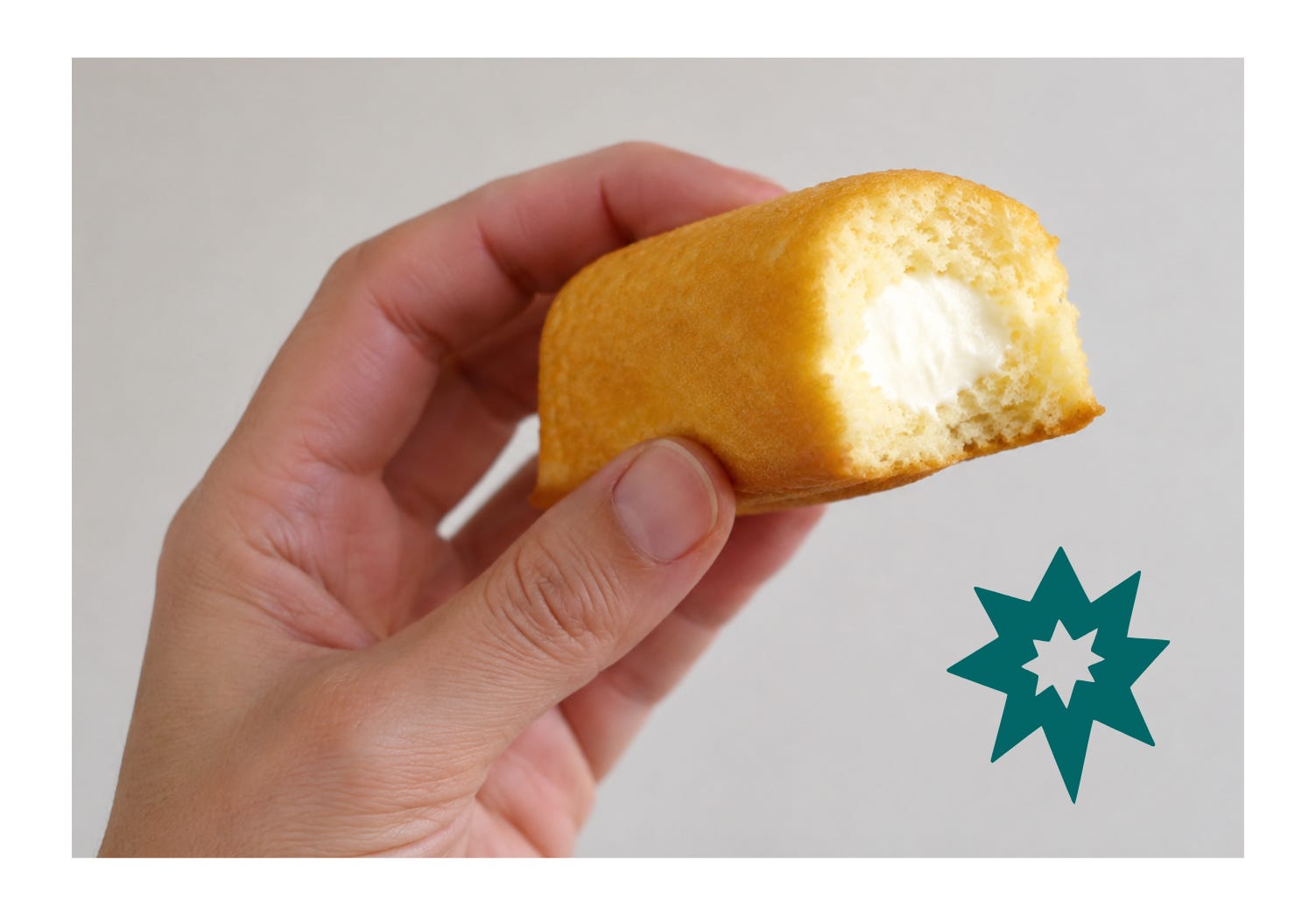
I have more Sicily food stories to tell, but I’m interrupting the sequence because an article hit me like a pie, or rather a Twinkie, in the face.
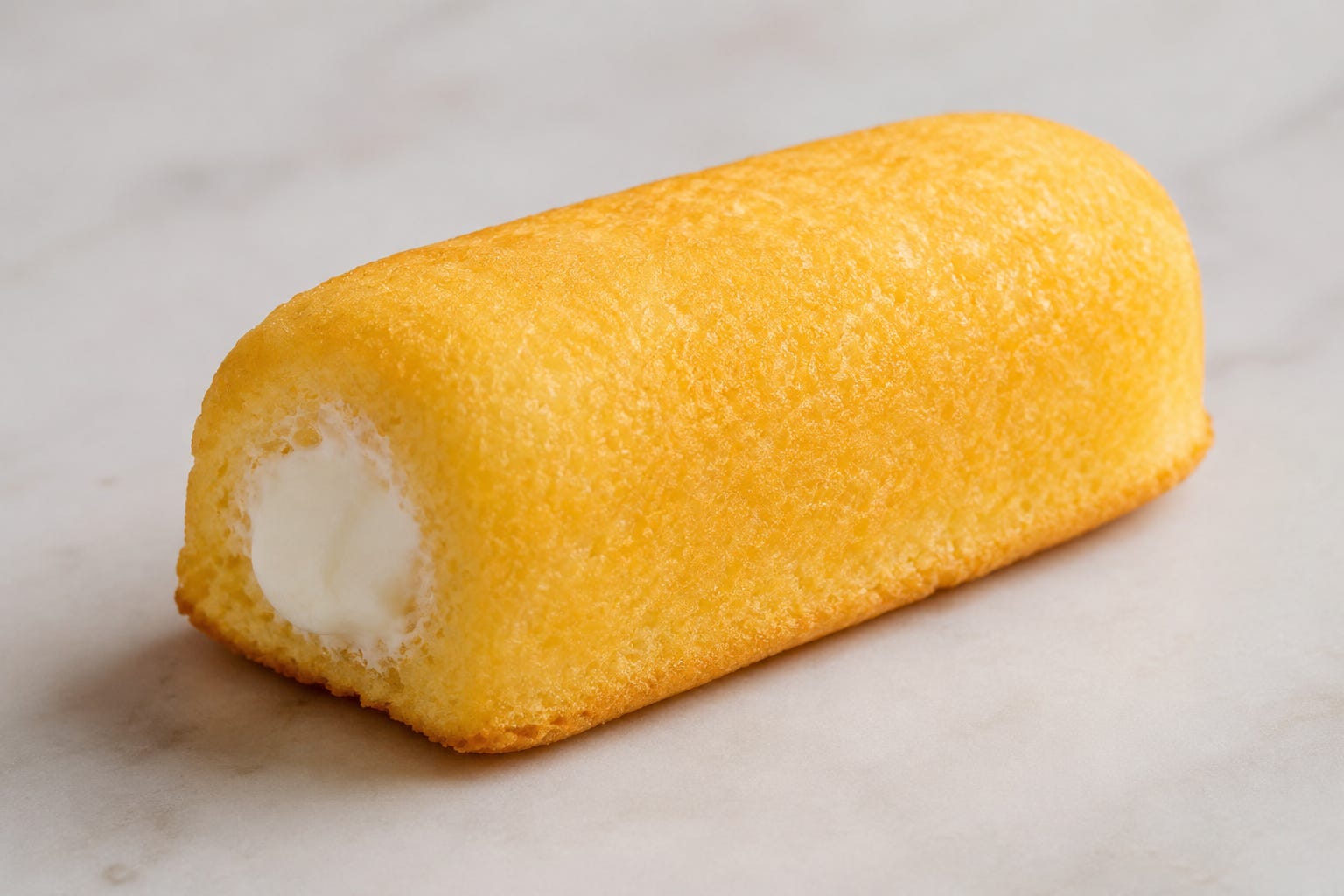
The Wall Street Journal’s Business & Retail section ran a story on Smucker’s problems with its acquisition of Hostess, the folks who have made Twinkies for nearly 100 years (96, to be precise: James Dewar invented them in 1930, filling them with banana cream until a banana shortage in World War II forced the switch to vanilla).
The Fine Print
I’d never eat a Twinkie, or recommend one, because of the ingredients. I value ingredients that are good for your body and taste good. I’m not against dessert. I’ve been working on a no-sugar carrot cake, a near total flop the first time around, which my husband Phil called an “experimental success.” He liked it, but said it wasn’t what you’d expect, and it wasn’t repeatable since I hadn’t written down the measurements. To me, it was more like a pudding cake. The latest revamp turned out pretty delicious. (I’ll try it again and hope to post it soon!) But Twinkies? As they say on Shark Tank: “For that reason (the ingredients), I’m out.”
The ingredients are: Sugar, Enriched Flour (Bleached Wheat Flour, Malted Barley Flour, Niacin, Ferrous Sulfate Or Reduced Iron, Thiamine Mononitrate, Riboflavin, Folic Acid), Water, High Fructose Corn Syrup, Tallow, Dextrose, Egg, Contains 2% Or Less Of: Soybean Oil, Modified Food Starch, Glycerine, Whey, Corn Starch, Salt, Corn Syrup Solids, Sodium Acid Pyrophosphate, Hydrogenated Tallow, Baking Soda, Cottonseed Oil, Soy Lecithin, Cellulose Gum, Sorbic Acid And Potassium Sorbate (To Retain Freshness), Sodium Stearoyl Lactylate, Polysorbate 60, Mono And Diglycerides, Xanthan Gum, Monocalcium Phosphate, Enzymes, Natural And Artificial Flavors, Yellow 5, Red 40.
To someone who tries to stick to real food, it reads more like a chemistry set, even if a tasty one that’s sold for a century. I still can’t wrap my head around how added sugars, high fructose corn syrup, emulsifiers, gums, preservatives, and dyes add to well-being. Plus, a Twinkie is all too sweet for my taste buds anyway.
“My recollection is they’re pretty tasty,” Phil said. “But today I won’t eat one because I don’t want to gain weight and I don’t want all that sugar.”
I’ll spare you the organ-by-organ rundown, but I don’t think that ingredient list is doing your body any favors. If you love them and eat a few a day, it’s worth reading up on your own.
My rule of thumb for a lot of food: If you don’t recognize what’s on the label, it might be time to put it back on the shelf.
Phil to the Defense
Yet the reviews about Twinkies on the Hostess site are largely glowing. I can see why, and I can’t.
For the “I can see why,” I asked Phil about Twinkies as a kid. His father brought them home from the back of the bakery, returned shelf items.
“We enjoyed them except for the ones we bit into that didn’t look right inside. I loved Twinkies as a kid.”
My childhood memories were different. My parents didn’t buy Twinkies. Mom made a cake or cupcakes; Grandma kept Chips Ahoy and Social Teas, but neither, as far as I remember, ever bought us a Twinkie.
Still, plenty of people do pick them up. The Hostess brand is a $1 billion business.
My counter: Think about your body. You’ve got just one. Put in what’s good, forget the rest. If you want a Twinkie for a treat, I won’t stop you, but keep in mind what’s in it.
What a Billion Dollars Bought
None of that is Smucker’s real headache. IT issues and other operational snags are dragging on Smucker’s $5 billion acquisition of Hostess. A Twinkie’s shelf life is 65 days, so it has to move faster than other Smucker products, which last a year or so. The IT and distribution fixes aren’t fully in place, according to the Journal. I was surprised to read that during the pandemic 70% of consumers were eating at least two snacks a day, but healthier-eating trends have slowed snacking overall, another challenge for the brand.
Here’s the thing, though: those snags aside, Twinkies are so woven into the culture that many people know exactly what’s in one and still reach for it. Phil put it bluntly: “When you need them, you gotta have them.” Smucker is betting its business on precisely that. As its CFO, Tucker Marshall, put it, “indulgent snacking is still important.”
Tempting Phil, I asked him again, despite his earlier resolution not to eat one today.
“Would you still eat a Twinkie today?”
“Well, are you offering one? If you are, we’ll talk.”
The nostalgia is sticky. Even the receptionist at my doctor’s office, when I asked if she ate Twinkies, blurted out a story about how she and her sister grew up on them, her sister especially. She tried one again recently and said they’ve changed: the taste was a little different and the size a little smaller than she remembered.
Those are issues for someone else’s articles!
Nostalgia, comfort, permission to indulge: that’s really what Smucker bought. The Hostess brand still moves a billion dollars even though you can’t defend it nutritionally. That was never the point. A Twinkie is what many people know and love. Not that I’m their marketing guru, but that’s what Smucker’s should unabashedly lean into.
That’s why, 100 years on, this beloved snack is still, as Smucker says, “important.”
Me, I’ll stick to the no-sugar carrot cake. Recipe coming soon!
If you enjoyed the article, please share a few thoughts!