One Large Cannolo
Attention to detail on ingredients, a hallmark of excellence in Sicily

I simply had to write about Vultaggio, a bar, pasticceria, gelateria, and tavola calda (hot-food counter) in Fulgatore, Sicily. It’s in the Province of Trapani, in inland Western Sicily.
We stopped for water and a snack. What I didn’t expect was to see the largest cannolo I’d seen in my life—ever. It was, how shall I say, a gigantic, colossal, mammoth, titanic cannolo.
It caught my dessert senses off guard. I had no way to measure it, but it had to be at least six inches long, maybe more. And it was tall too! More than an inch in height. How could one person eat it? Maybe it’s something you buy and share. It had to be a share, I kept thinking.
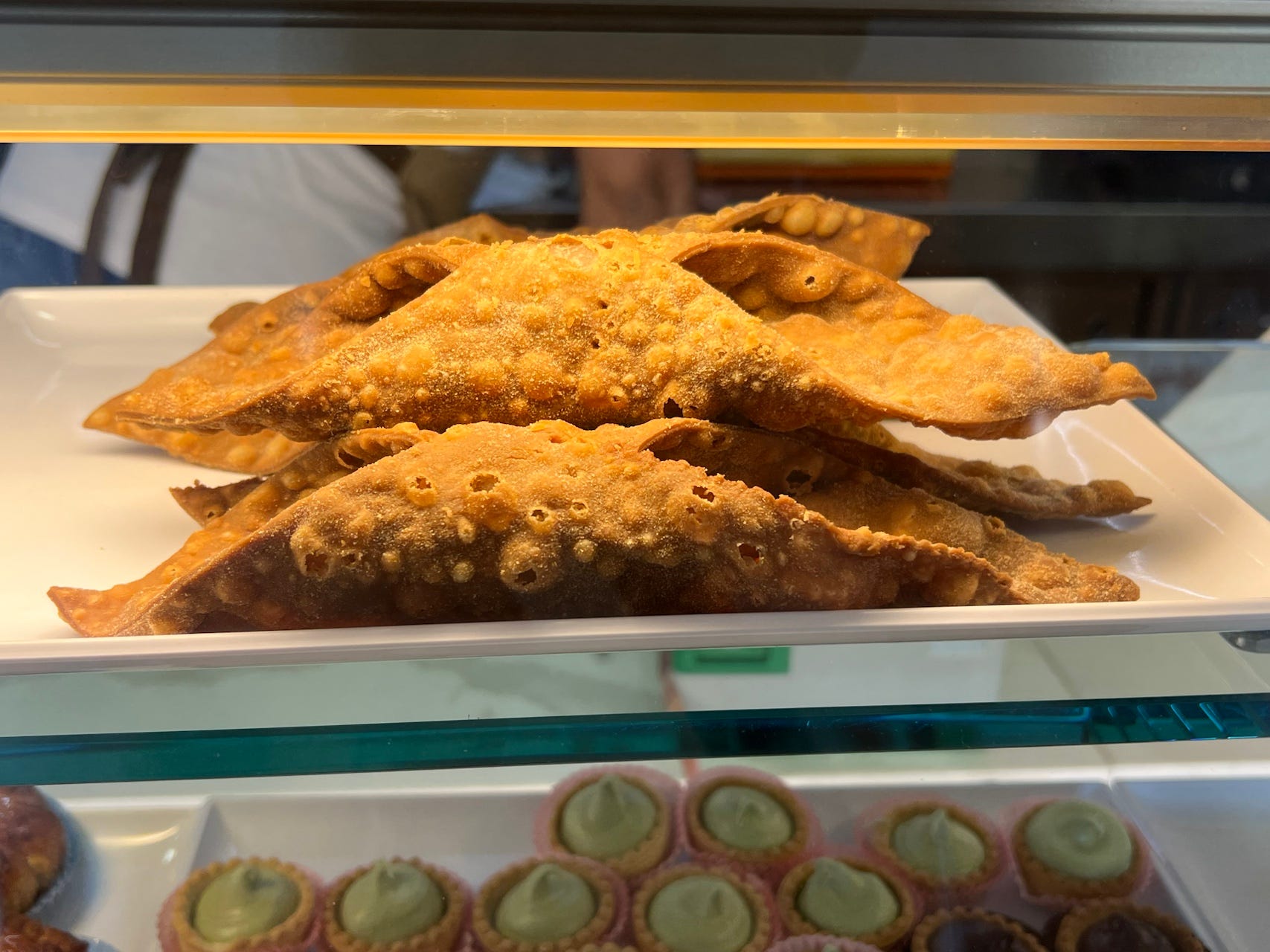
One thing I became sure of after translating some of the signs from Italian to English: the place is famous for them. Vultaggio has been making its cannoli since 1985. They call themselves “L’artigiano del cannolo,” or, literally, “the artisan of the cannolo.” And as I was to learn, they really are.
I had no idea there was even such a title, or that it was an “it” spot for renowned, authentic cannoli. It wasn’t on the list I brought with me from a Wall Street Journal article titled Sicily’s Superior Cannoli: A Guide for Connoisseurs – and Skeptics dated January 28, 2017, in which the author identified eleven locations to check out (we’d actually gotten to Noto, home to celebrated cannoli spots like Caffè Sicilia and Corrado Costanzo).
Interestingly, the author reached out to Fabrizia Lanza, who heads the Anna Tasca Lanza Cooking School, for advice. Lanza is quoted in the WSJ article as saying she wasn’t the right person to ask. She’d only had the ones using ricotta made from their farm’s own sheep’s milk and flour milled from their own wheat for the shell. Lanza did provide a good tip – don’t eat pre-filled cannoli. They can get soggy. Better to have them filled upon order.
The article, however, missed Bar Vultaggio Fulgatore, a gem of a shop that Phil, our dear friend and guide Gianluca, and I just happened upon on our way to Buseto Palizzolo for the ancient grains. Good fortune.
“Thanks to the treasured family recipe of its founder, Giovan Battista Vultaggio, and the constant attention to using the finest ingredients, our cannolo marries the crispness of the shell (“scorcia” in Sicilian dialect) with the creamy freshness of ricotta, enriched with dark chocolate chips,” read the sign in Italian in the shop.
The menu was rich and warm, just as the place was. We asked about it, and Gianluca told them how much I wanted to see them made. They agreed to take me into the back. Our experiences once again brought us into contact with gracious Sicilians, and in this case, they were happy to let me into their world of gigantic cannoli.
I practically tiptoed into the back, looking left and right. On the left were a massive mixer and a mixing bowl the size of a kitchen sink. Near the big mixing bowl sat containers of what looked like confectioners’ sugar and chocolate chips – tiny, delicious pebbles waiting to be sprinkled onto the edges of the ricotta peeking out from the shell on either side.
To the right was the cannoli workstation: a fryer and baskets against the wall, and a counter where cannoli sat in every stage – some filled for immediate sale, some fried, some shaped and waiting to be fried.
A man in a white t-shirt, gray pants, and a red apron stood over the hot oil, and I kept a small distance back. He was wearing a mask; when I asked about it, I was told the fryer can give off fumes.
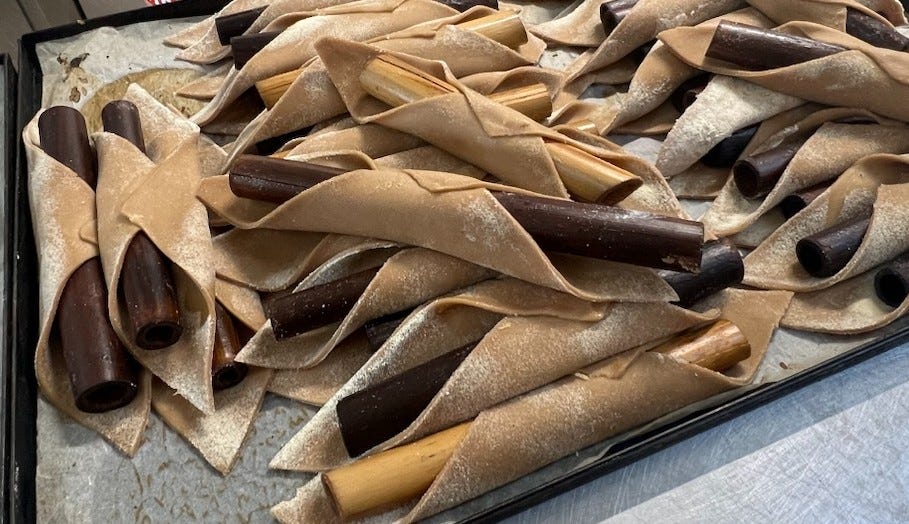
The shells on the counter were each shaped over a tube. The word cannolo, singular for cannoli, means “little tube.” It comes from the Italian canna, with roots in the Latin for reed or tube. Sicilians once wrapped the dough around canna reeds before lowering it into the oil.
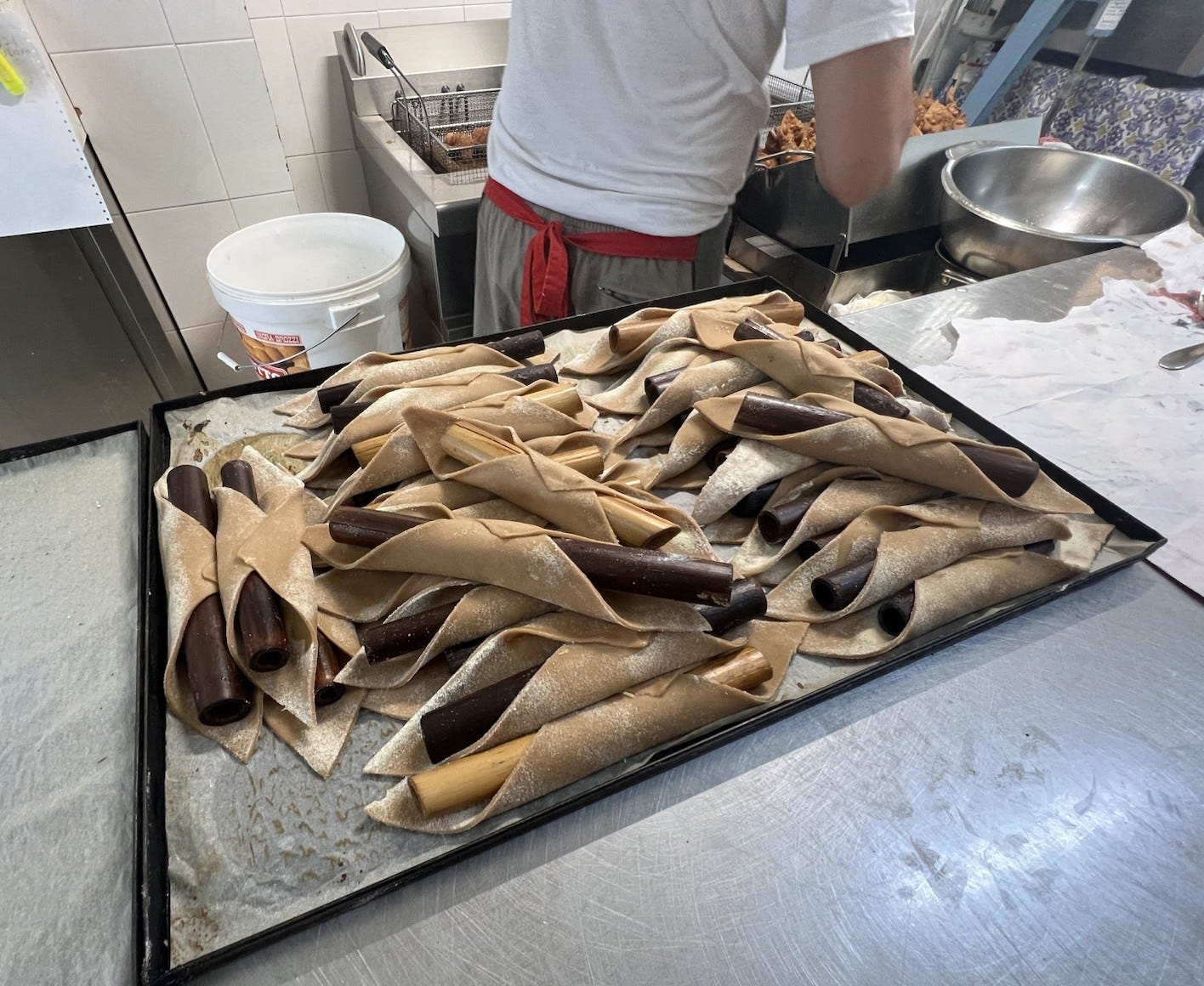
It was virtually the same here. The pastry dough was wrapped around cylinders. I assumed it hardened into shape, then was ready for the employee to lower into the hot oil. Some were already done, and he lifted them carefully from the basket onto a drying rack nearby.
I quietly stepped out and thanked the people in the shop. That was one for the books, I thought. Unexpected and interesting. Valuable on two fronts.
I picked up the menu and took a picture of it. It listed the ingredients for the shell, or scorcia in the Sicilian dialect (scorza in standard Italian). The shell is made with flour, wine vinegar, Marsala wine, sugar, lard, honey, and extra virgin olive oil. The filling, or ripieno, was made with sheep’s milk ricotta, sugar, chocolate, and vanilla.
Sheep’s milk ricotta is very traditional in Western Sicily and is considered one of the signs of authentic Sicilian cannoli. It’s also the attention to detail paid to ingredients, something I saw all over Sicily, and worth learning for any kitchen. It’s the details, the quality of the food you bring in, that can help your meals be the best they can be.
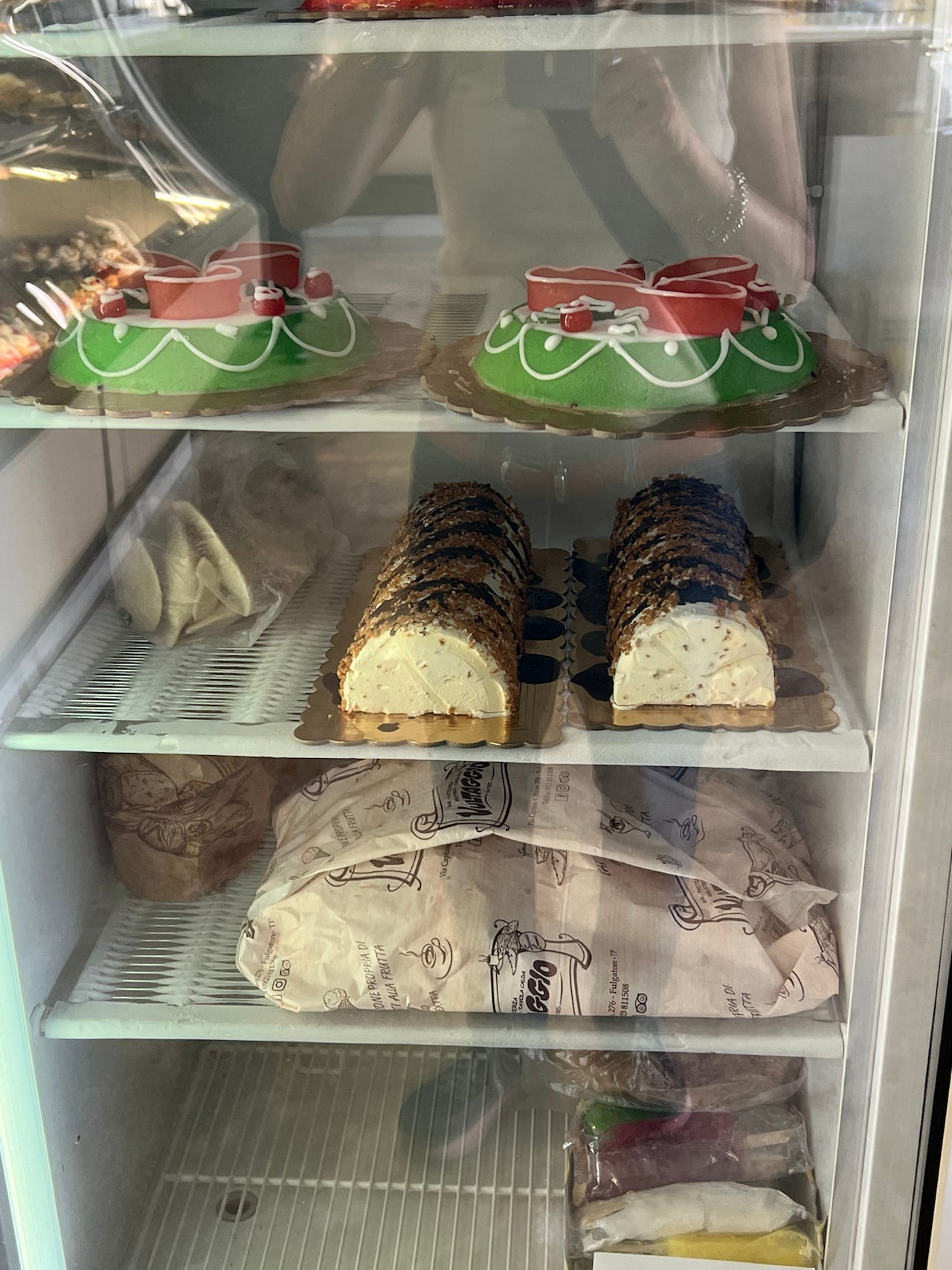
The menu also featured over thirty desserts – a mecca for beautiful sweets like cannolo siciliano (you know what this says in English), bignè (cream puffs), crostata di frutta (fruit tart), and cassata siciliana (Sicilian cassata cake). In the cookie case, I saw dots of orange, red, and white dancing across sugary tops of delectable bites.
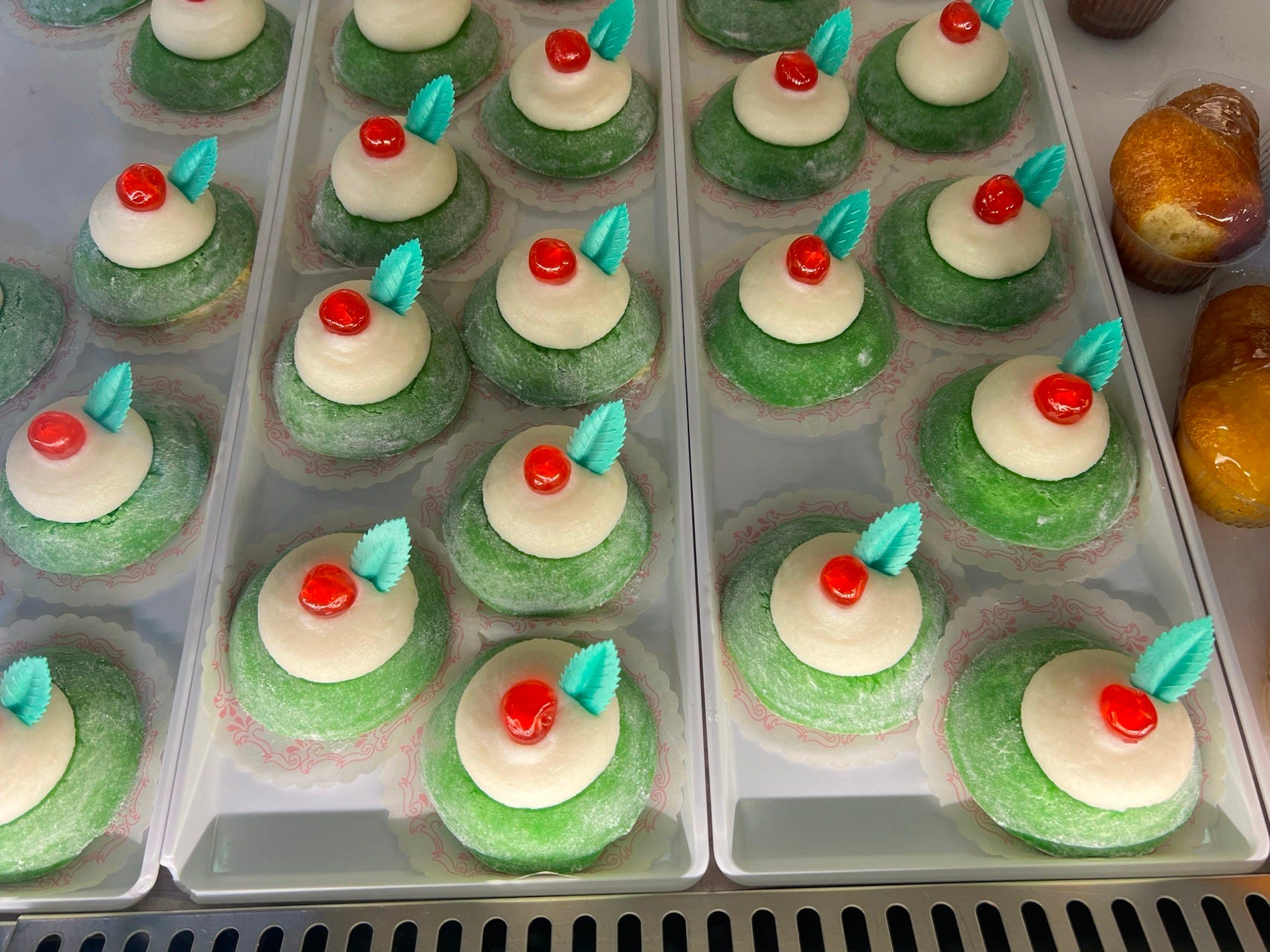
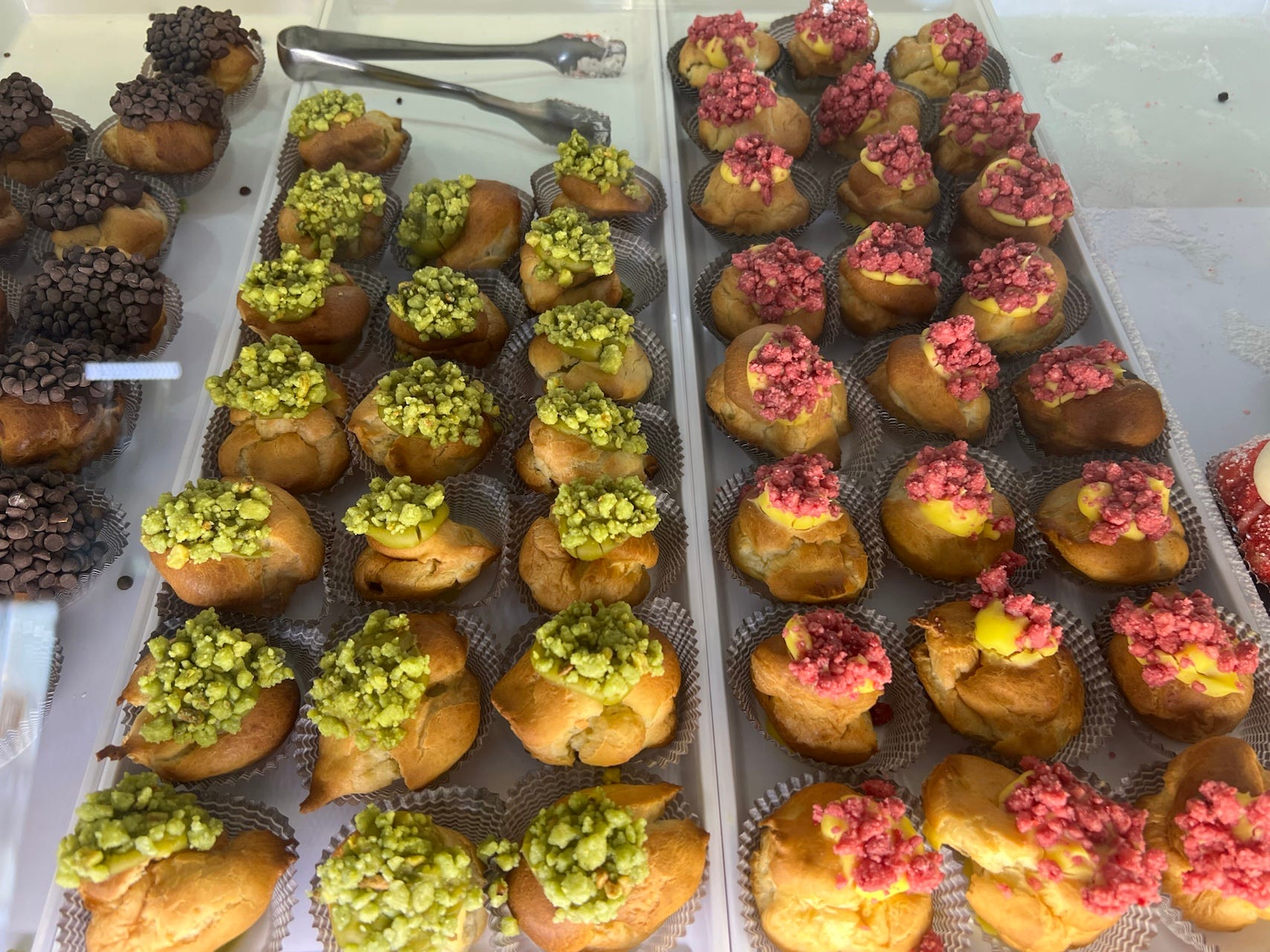
These precious desserts and the jumbo cannoli got me thinking about moderation. One of anything, or even a few, would probably be fine – shared. I couldn’t stop there, though. My head kept going back to that beautiful, hand-crafted oversized cannolo. I wondered whether a whole family might be the right group to share one. It might take me a month to finish it, picking at it with Phil.
But living well means allowing yourself a treat now and then, in this case, a very large one.