

Ithaca Is a Real Island. I Went There to Eat.
Director Christopher Nolan filmed The Odyssey on Favignana. I came for the food.

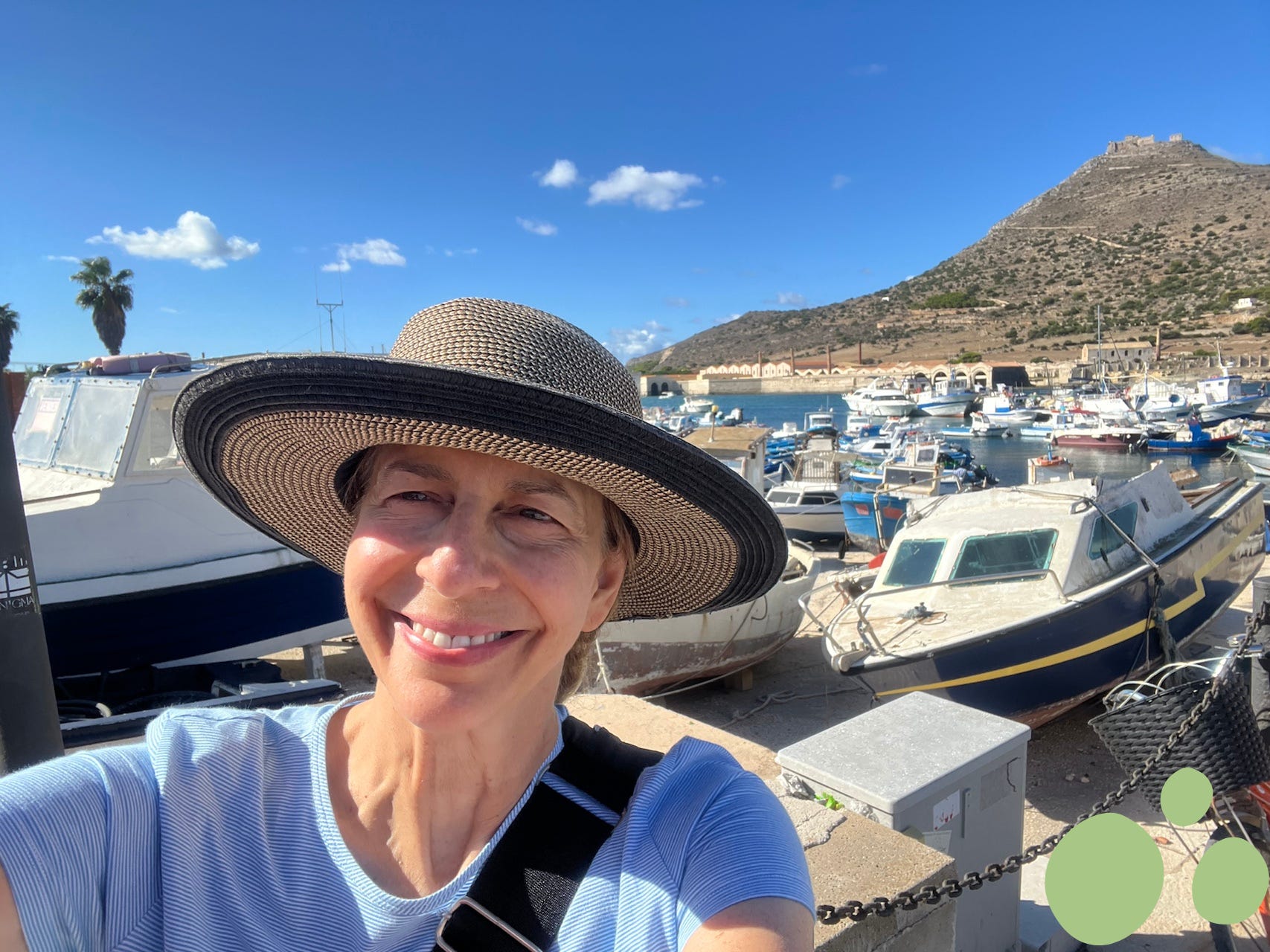
Christopher Nolan’s much-anticipated The Odyssey opened in theaters today. People wanting an epic adventure will be lined up for tickets, maybe around the block. But my heart goes to one of the places it was filmed: Favignana, part of our Sicilian exploration of food, sun, and sand. There were no famous names like Matt Damon, Anne Hathaway, or Zendaya on this journey – just Phil, me, and Gianluca, our friend and guide, and we fancied ourselves just as adventurous as the characters in Homer’s great classic.
In this commercial film, Favignana is portrayed as Ithaca, the home of Odysseus, the place he works to return to after 10 difficult years. You land on “Ithaca” as soon as you step off the ferry at the port in Favignana.
But the connection of the film to the island is even stronger when you look up. Cast your eyes past the sea of small fishing boats, past the defunct cannery that processed tuna—the island is most famous for that; it’s a museum and exhibition space now—toward the side of a mountain with brush, and a winding road that switches back and forth until you finally reach the Castle of Santa Caterina on Mount Santa Caterina. It’s used in the movie.
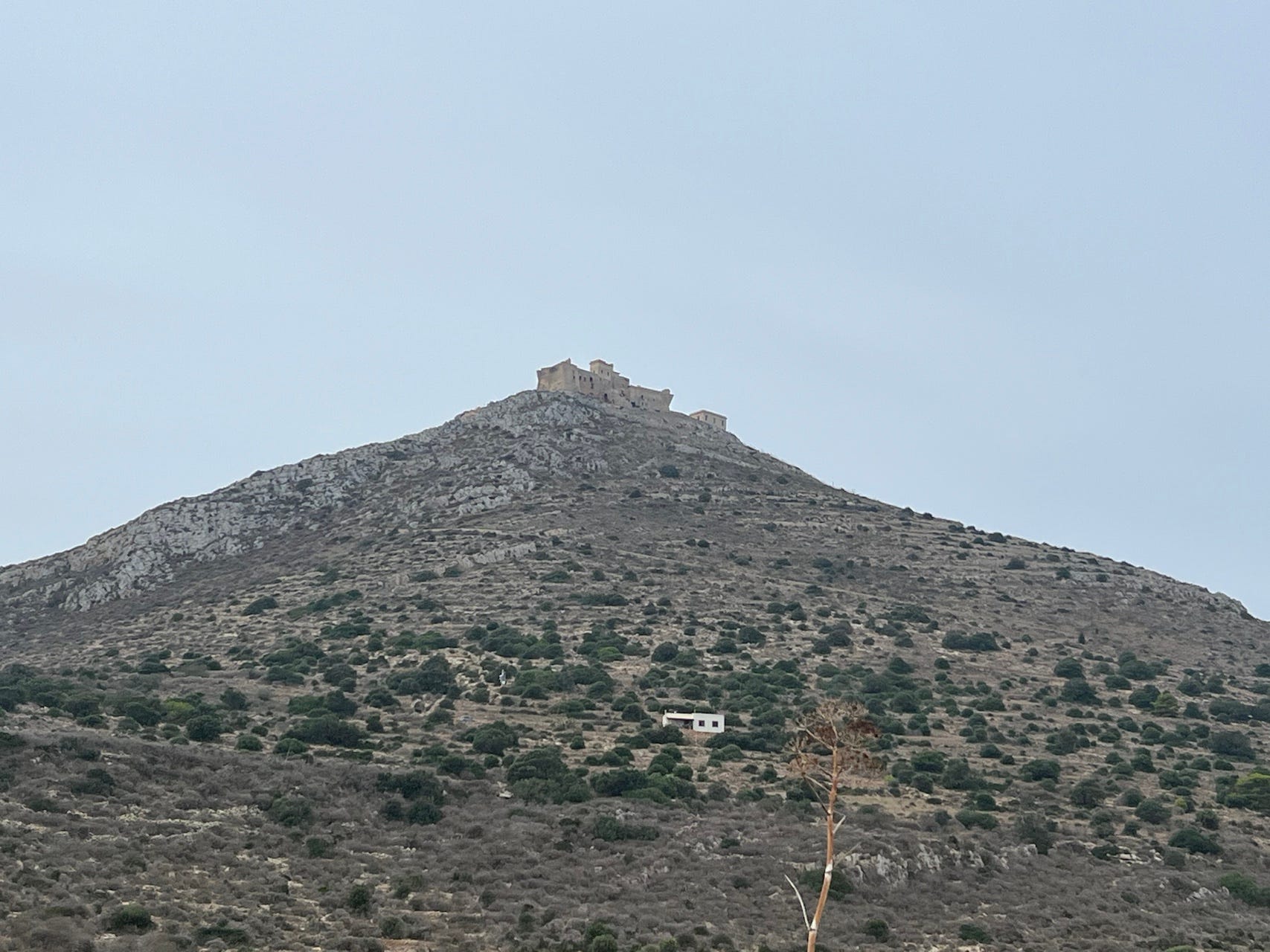
Like many things Sicilian, the castle has a colorful past, including service as a military base during World War II and, afterward, as a naval signal station. For decades since then, it has been abandoned, making it its own perfect Ithaca.
Now, thinking back on the castle, I can easily understand why the cast and crew, in their pre-publicity push for the film, mentioned the rigors of hiking up 45 minutes to an hour to shoot scenes there.
For me, at that moment on the port, seeing people milling around, some hopping on bikes, others zipping by in small cars, all I could think about was that I was here, finally; the weather was warm, and we’d be tasting fresh fish, caponata, anchovies, and handmade pasta. Just as important to me was a salty breeze standing on the sand and swimming in the island’s dreamy blue-hued waters. We’d see what we could sample over our time there.
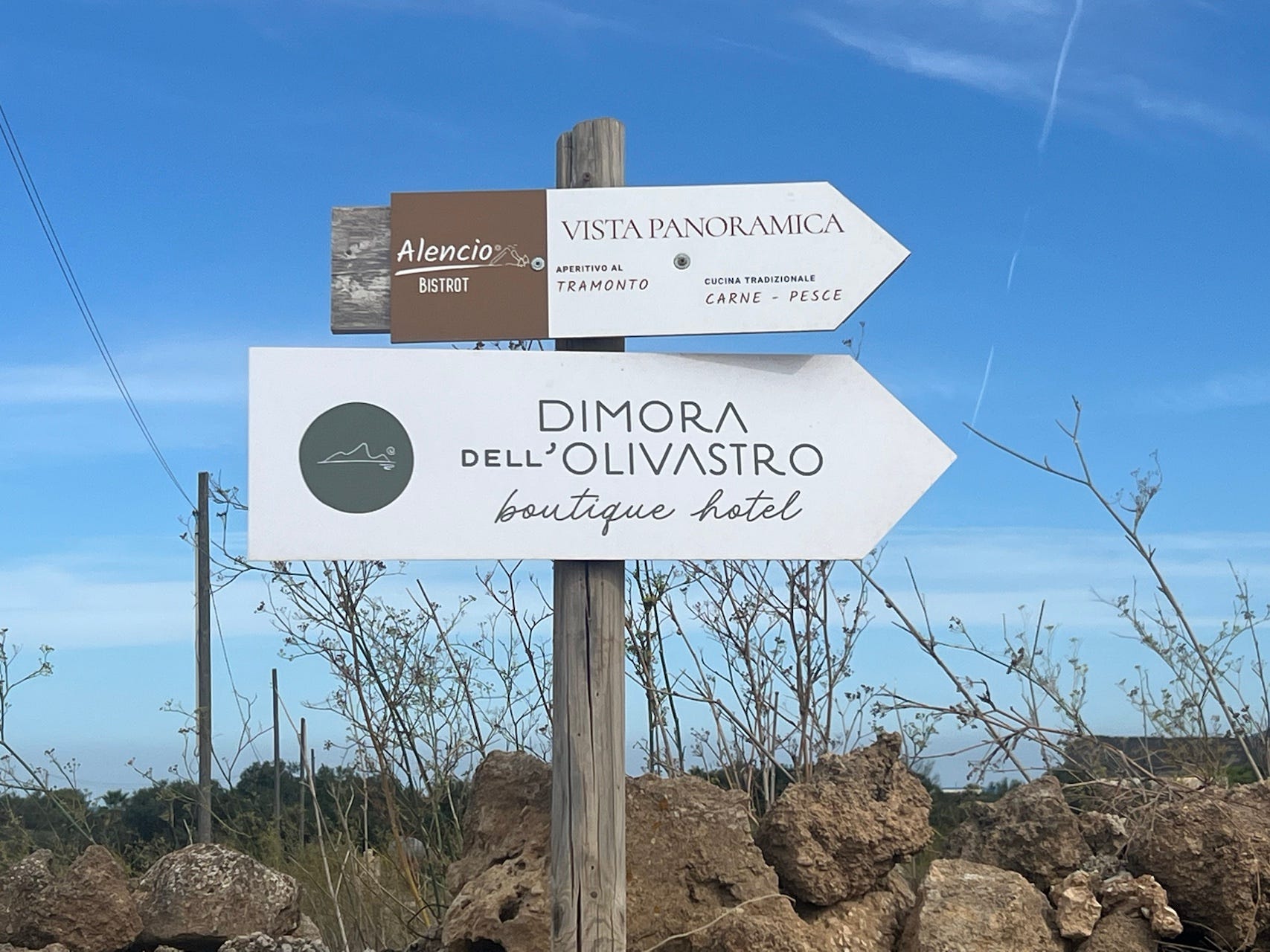
Dimora dell’Olivastro
In our home movie, our “castle” in Favignana was Dimora dell’Olivastro, the dwelling of the wild olive. Their logo shows a mountain, as it’s located at the foot of Mount Santa Caterina. Dimora dell’Olivastro’s white walls live among olive groves and local plants. The whole place, with its natural stone and foliage, blends seamlessly into the landscape.
Driving toward it, with trees and other foliage on either side of the road, vaguely reminded me of visiting Finca Vigía, Hemingway’s beloved home in San Francisco de Paula in Cuba. What made them feel oddly similar to me was the sense that you were being transported into some otherworldly place you sort of knew because, of course, we all know the beauty of trees and nature.
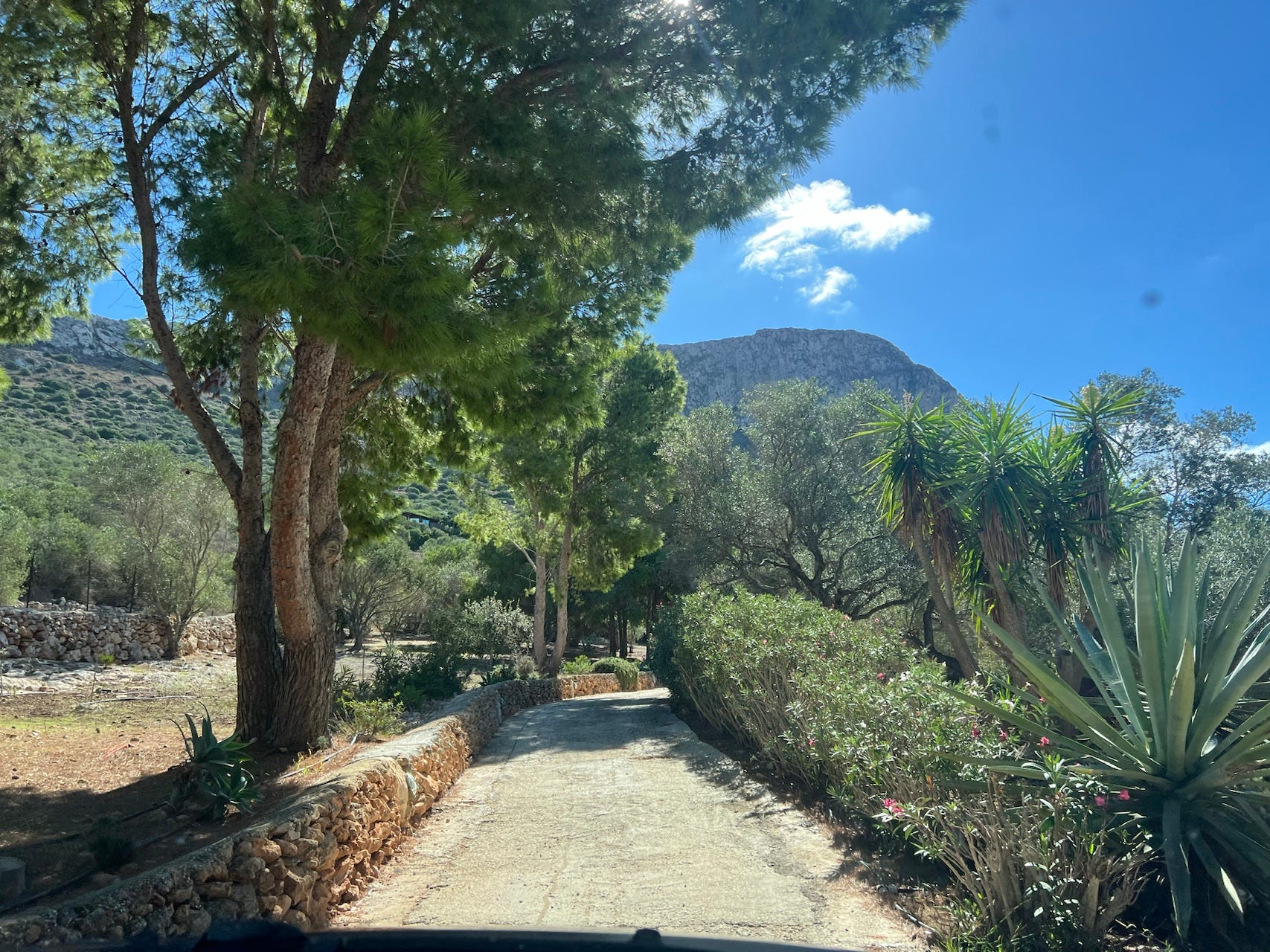
This is how I felt, but I realized the connection is probably even tighter when you know that Vigía translates to lookout and that you can see all the way to the city of Havana when you’re outside the home. In Favignana, Santa Caterina is believed to have been a Saracen watchtower and a station for naval signals, no longer in use. But if you stand at the top, you’re said to be rewarded with a view of the whole of Favignana and the rest of the Egadi islands. It’s the highest point of the island. Everything felt connected in my mind.
I didn’t think we needed to make that climb, especially because it was abandoned. And I was 100% sure Phil had no interest in that given we’d already taken 10,000-plus steps a day through mainland Sicily. As he said, "One look at that climb, and I was out.” We had plenty on our agenda, including a sail around the island for a day, and we wanted to try more food and experiences on the island.
Blend into your surroundings
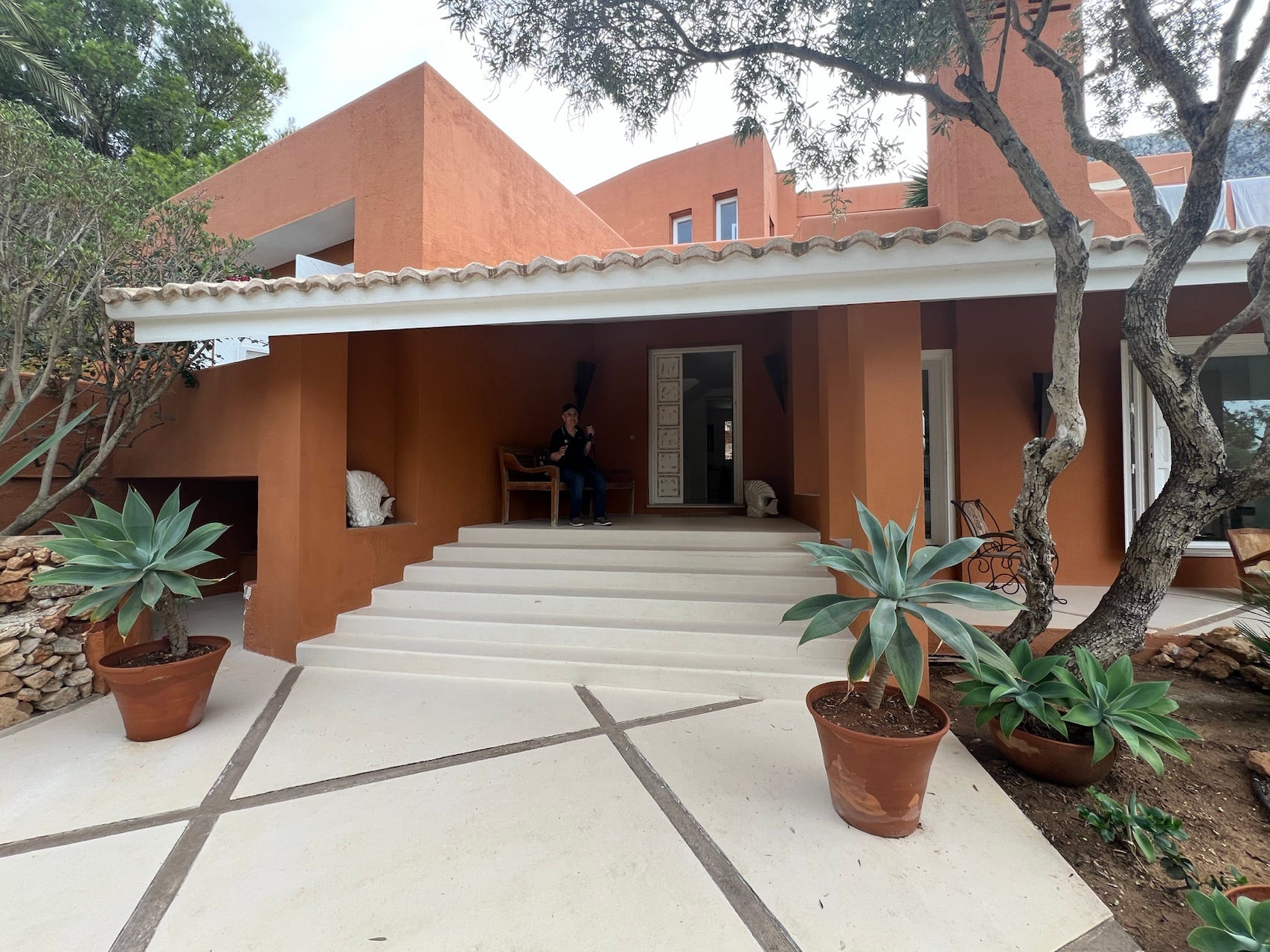
So let’s start with Dimora dell’Olivastro, home of the wild olive tree.
This little hotel has only six rooms and they are all named after plants that produce foods you can eat: Mandorlo, almond tree; Carrubo, carob tree; Agave, agave in English; Timo, thyme; Ficodindia, prickly pear (and if you come across a prickly pear chocolate bar from Modica, buy it, they’re delicious), and Olivo, olive tree.
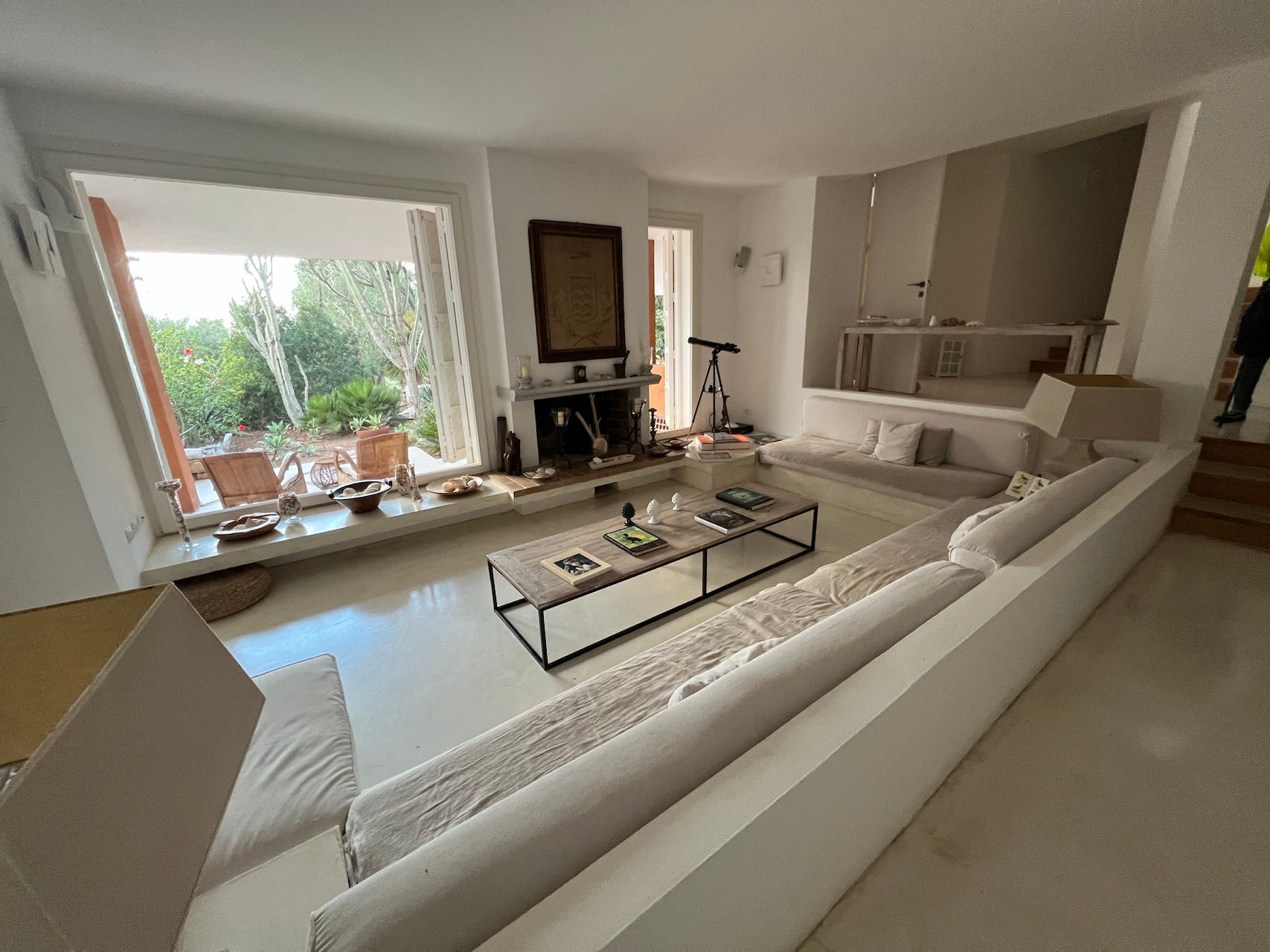
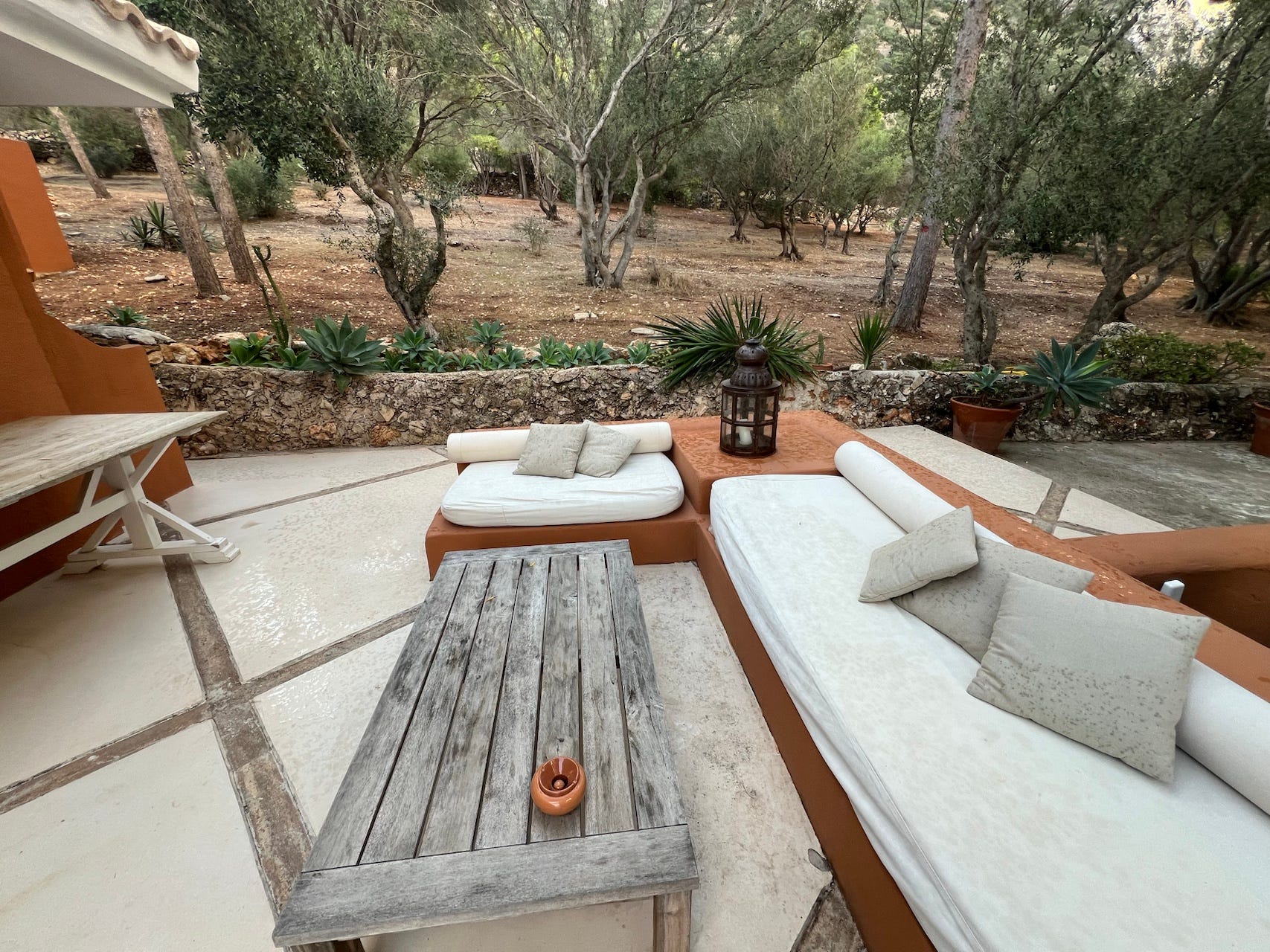
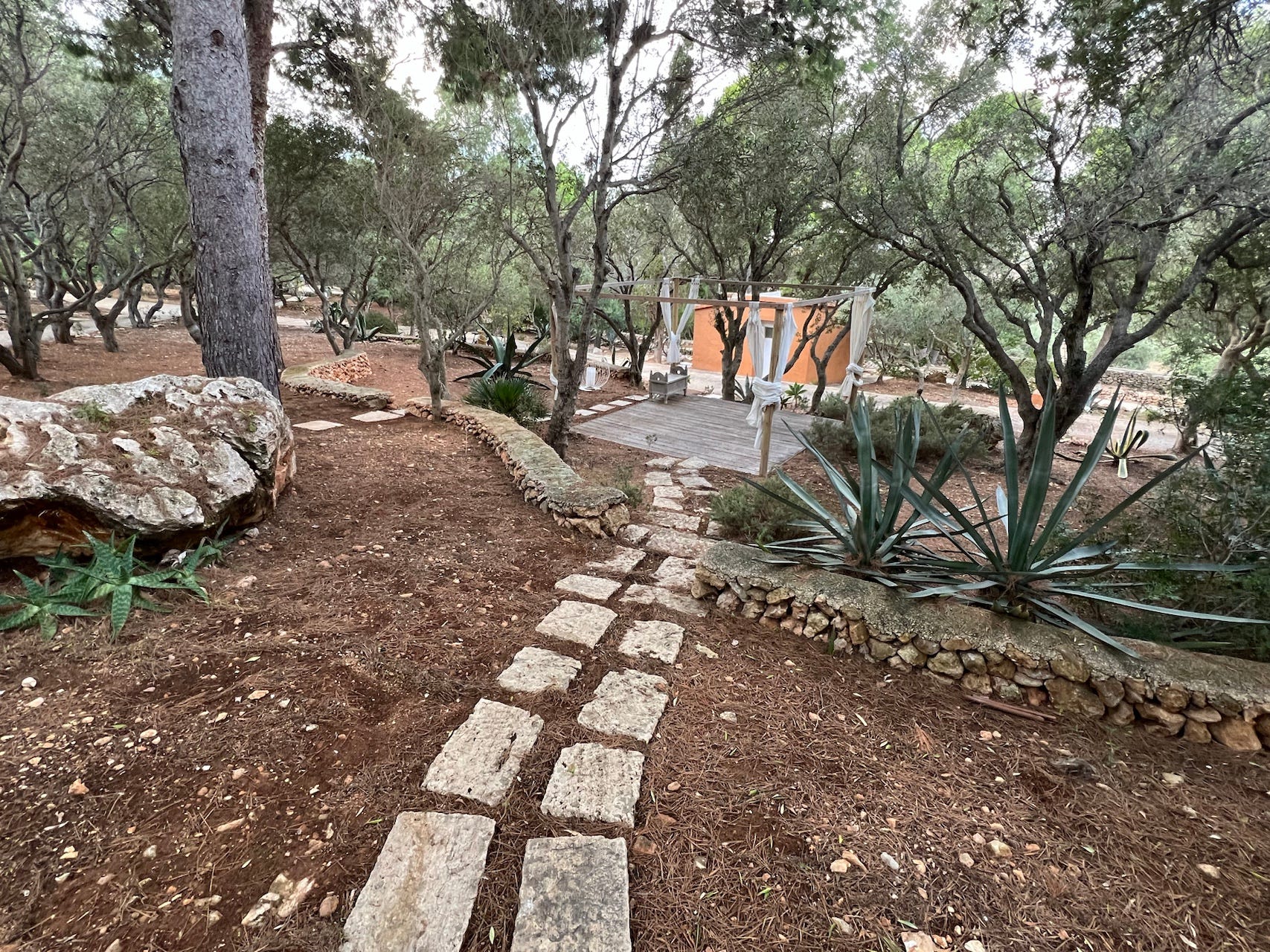
Aside from that lovely detail, Dimora dell’Olivastro had one of the coolest non-food things to me. There is a mattress, outside the room, past the glass doors of the terrace, to lie down, with your significant other (Phil) and gaze at the stars. We held hands.
We had something like that, albeit a bit more adventurous in the Namib Desert in Namibia. There we had to climb a ladder onto the flat rooftop of our cabin when it got dark (not easy with a flashlight in hand).
It was so cold up there, as the desert is at night, that we swapped romance for practicality and got ourselves back down the ladder in the middle of the night, when it was pitch black (and at this point, I pointed the flashlight while he stepped carefully to the bottom, and he pointed it my way after he was safely on flat ground). Miraculously, neither of us fell or broke our necks. Here in Favignana it was a lot easier. We just had to walk out the terrace door.
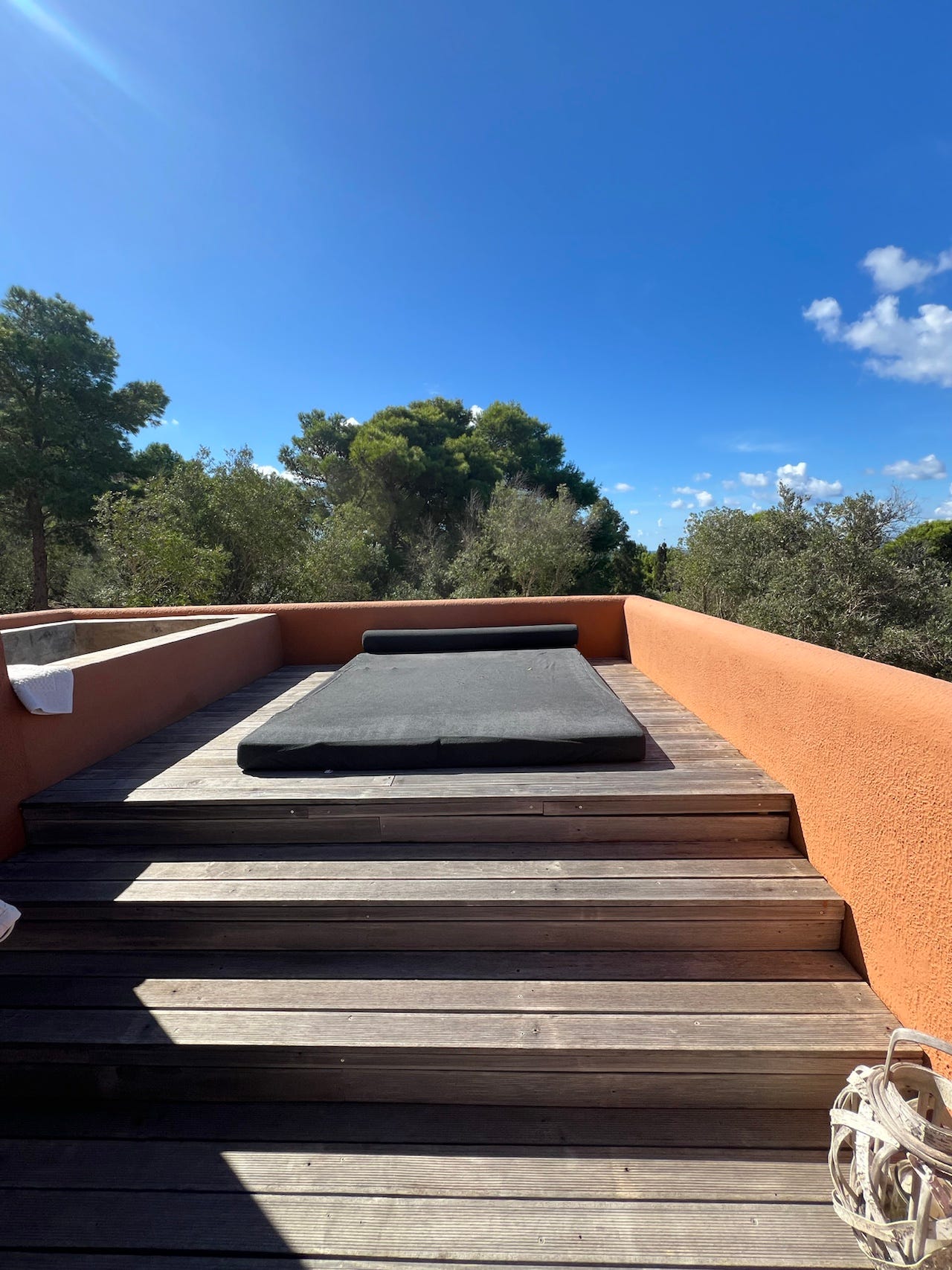
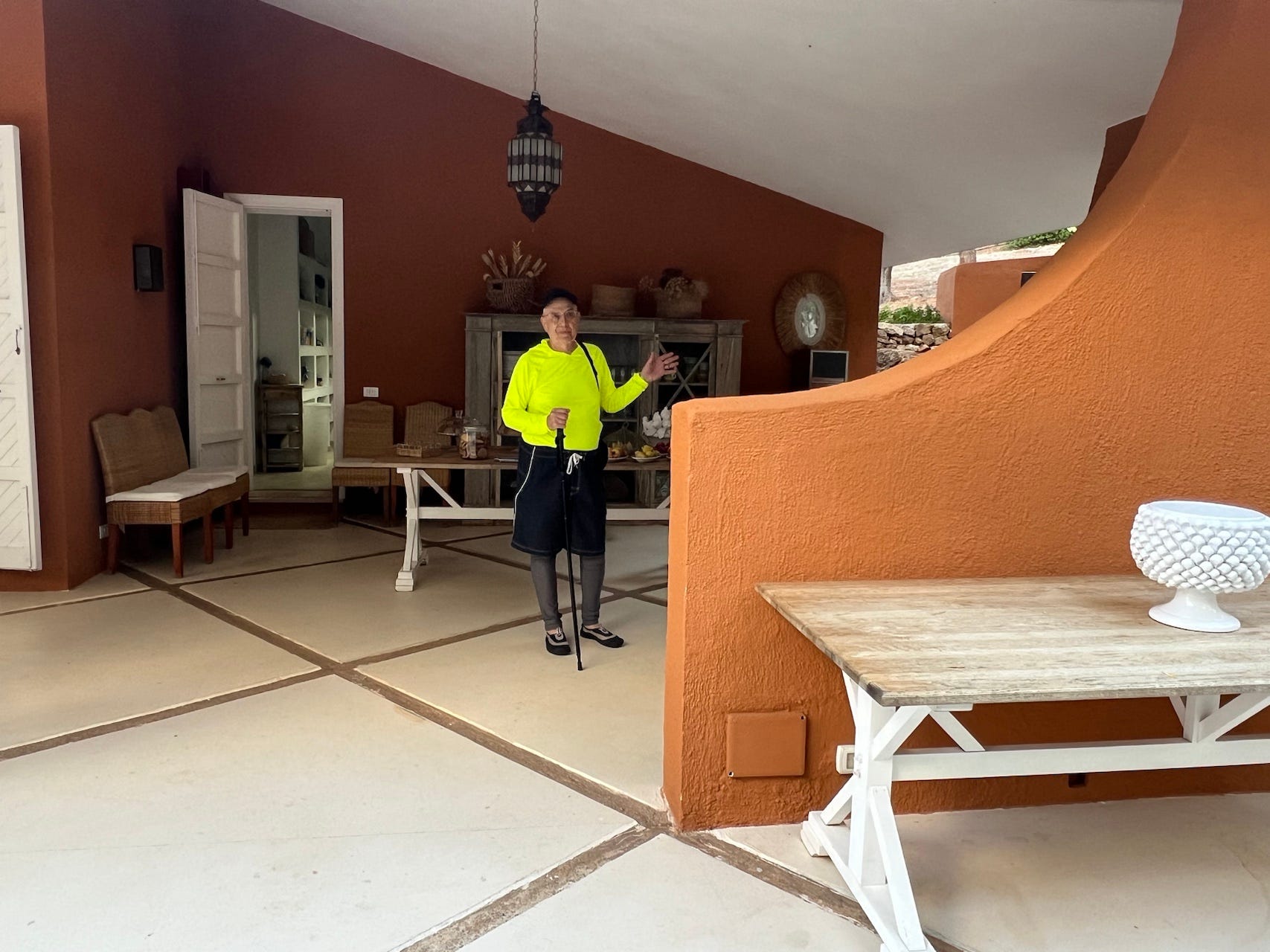
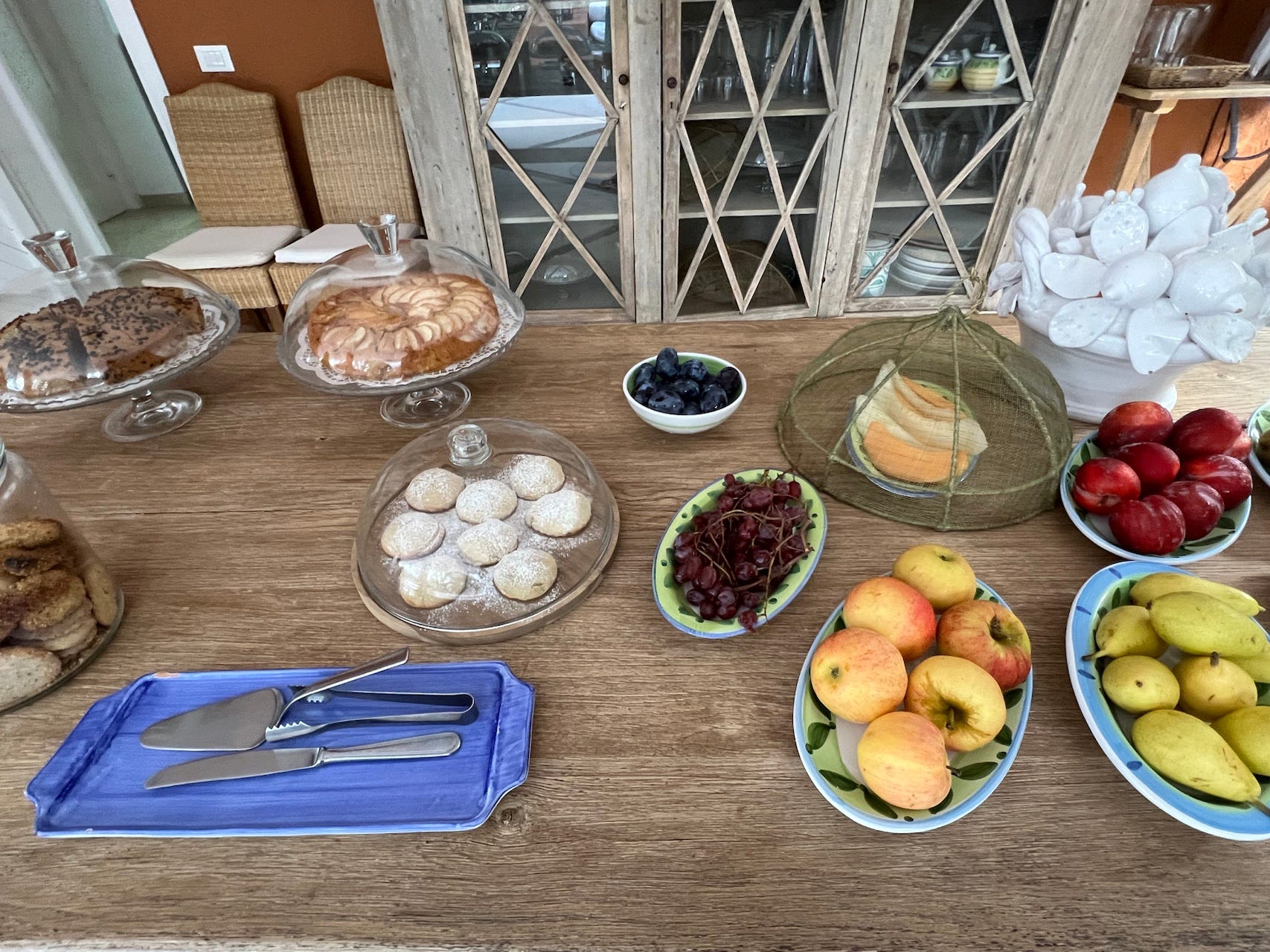
From the terrace, I could see the hotel grounds and the sea. The hotel has over 2,000 olive trees, and they extend down to the sea. Over 100 varieties of Mediterranean plants thrive in their gardens. Breakfast thrilled me with homemade cakes, jams, and breads made with Sicilian grains, Sicilian black bee honey, seasonal fruits, eggs from their free-range hens, and omelets with fresh herbs from their garden.
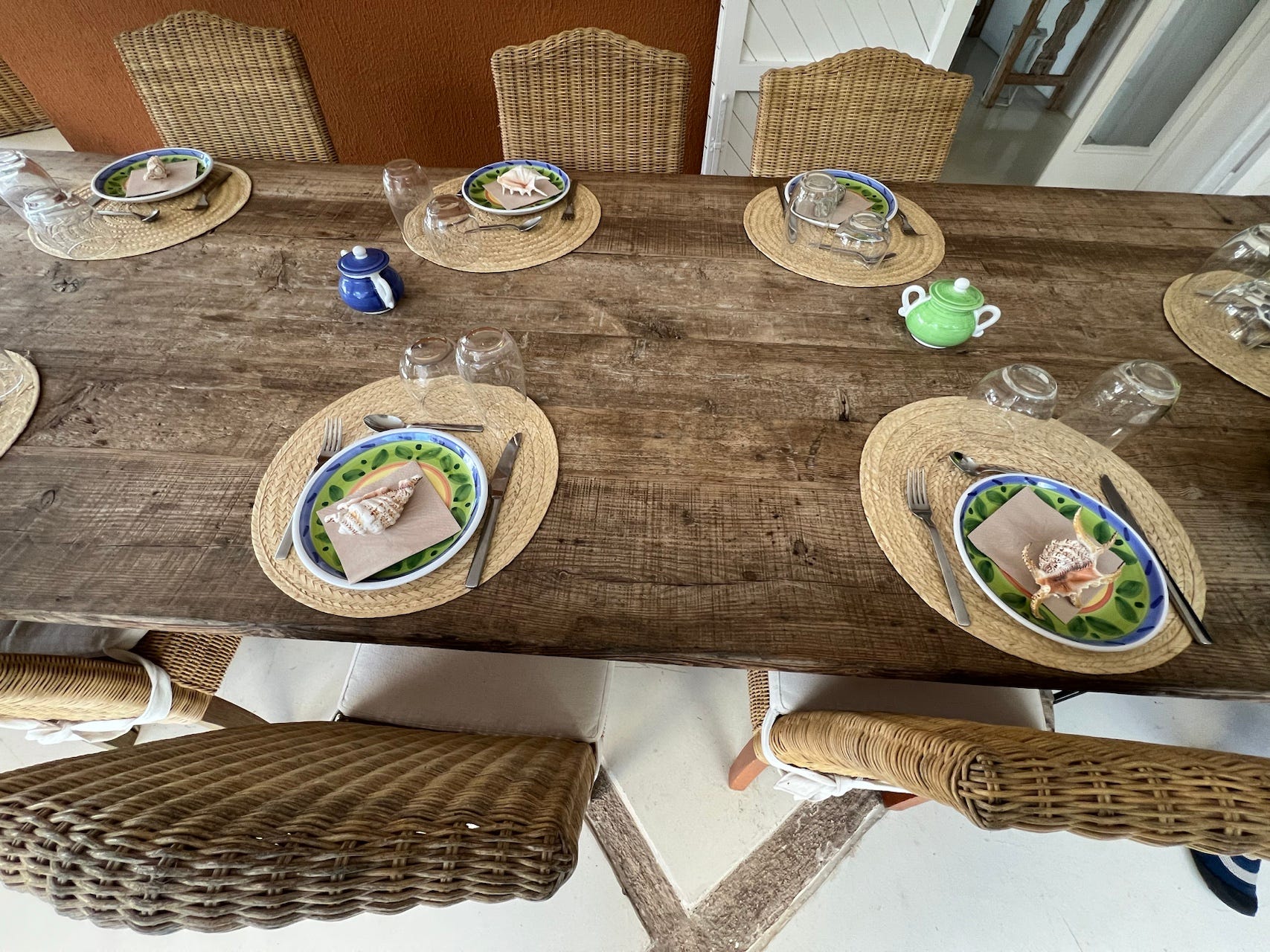
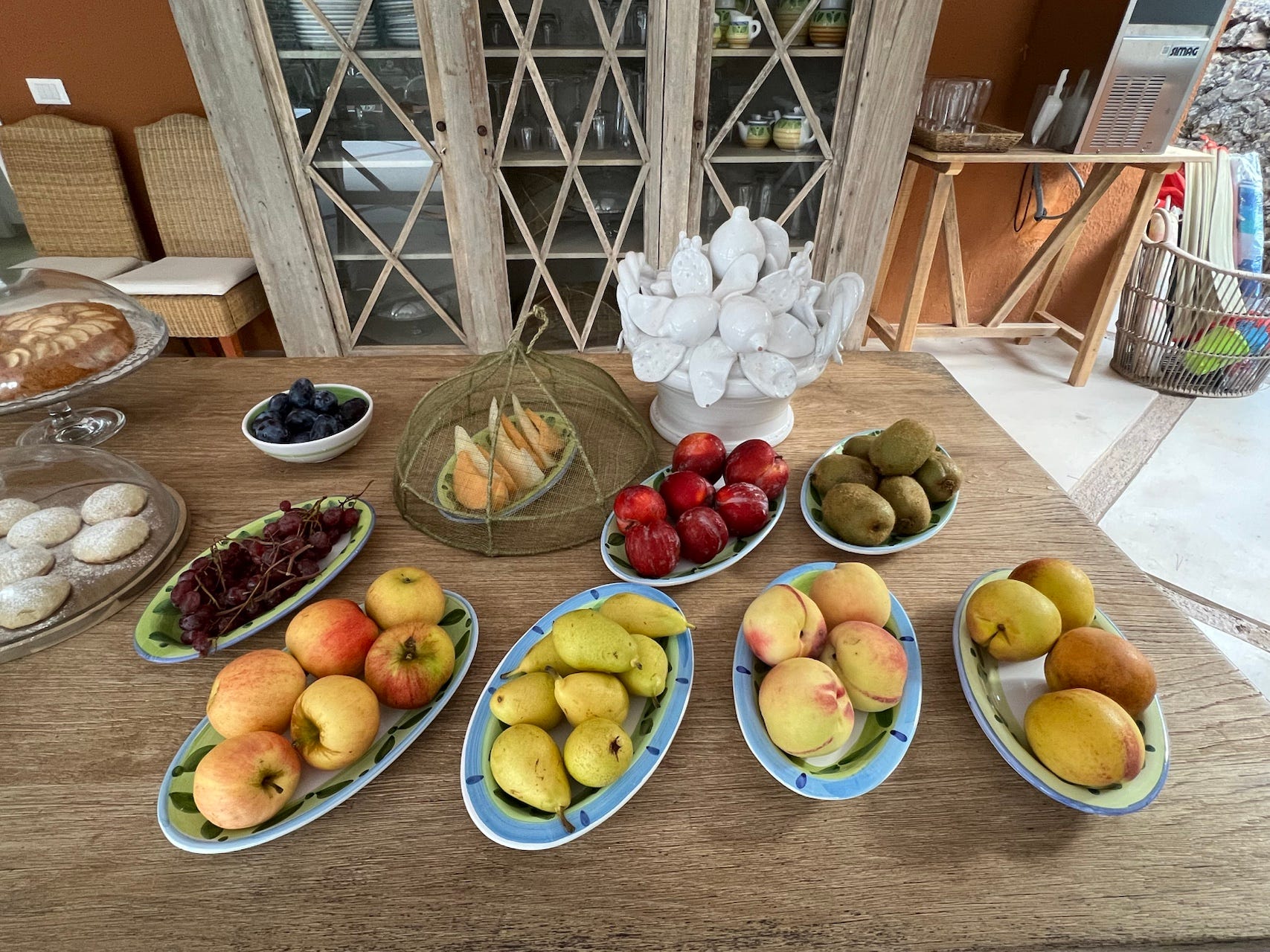
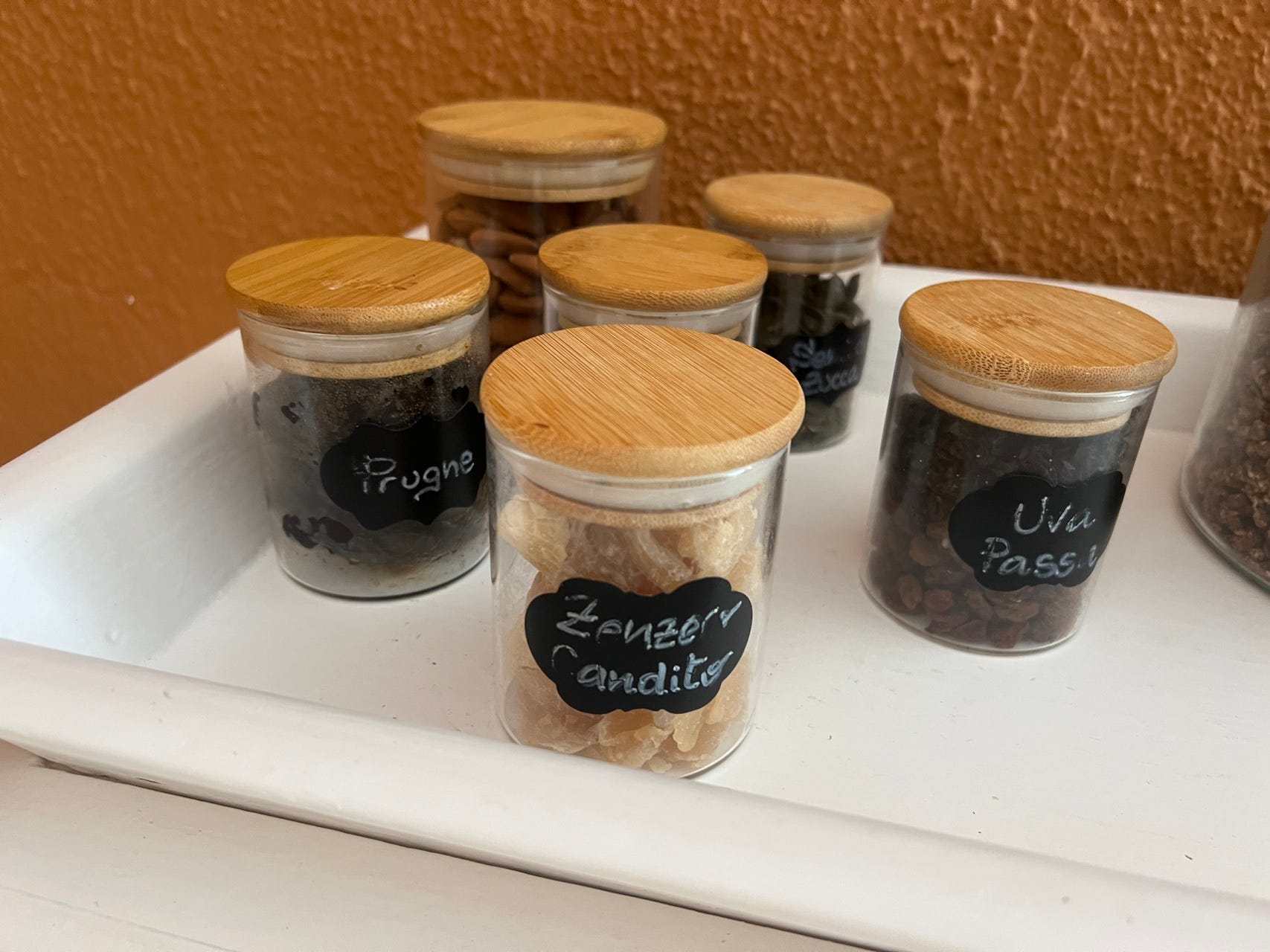
One of the things I loved about the breakfast setup was the small clear jars of fruit, nuts, and seeds. I’d already started something like that in my kitchen – I love being able to reach for healthy fats and natural sugars – but I expanded on it when I returned from Favignana. That way, every time I’m in the kitchen, I can enjoy the memory of Favignana’s focus on freshness and flavor.
Our kitchen is nowhere near the size of the one in Dimora dell’Olivastro, but our spirit and atmosphere are meant to greet anyone who enters with the same wholesome welcome. I believe you can do the same for your kitchen. The glass jars are reasonably priced on Amazon—that’s where I got them—and fun to fill (not with candy or processed foods, please!).
One of the places we sampled for lunch
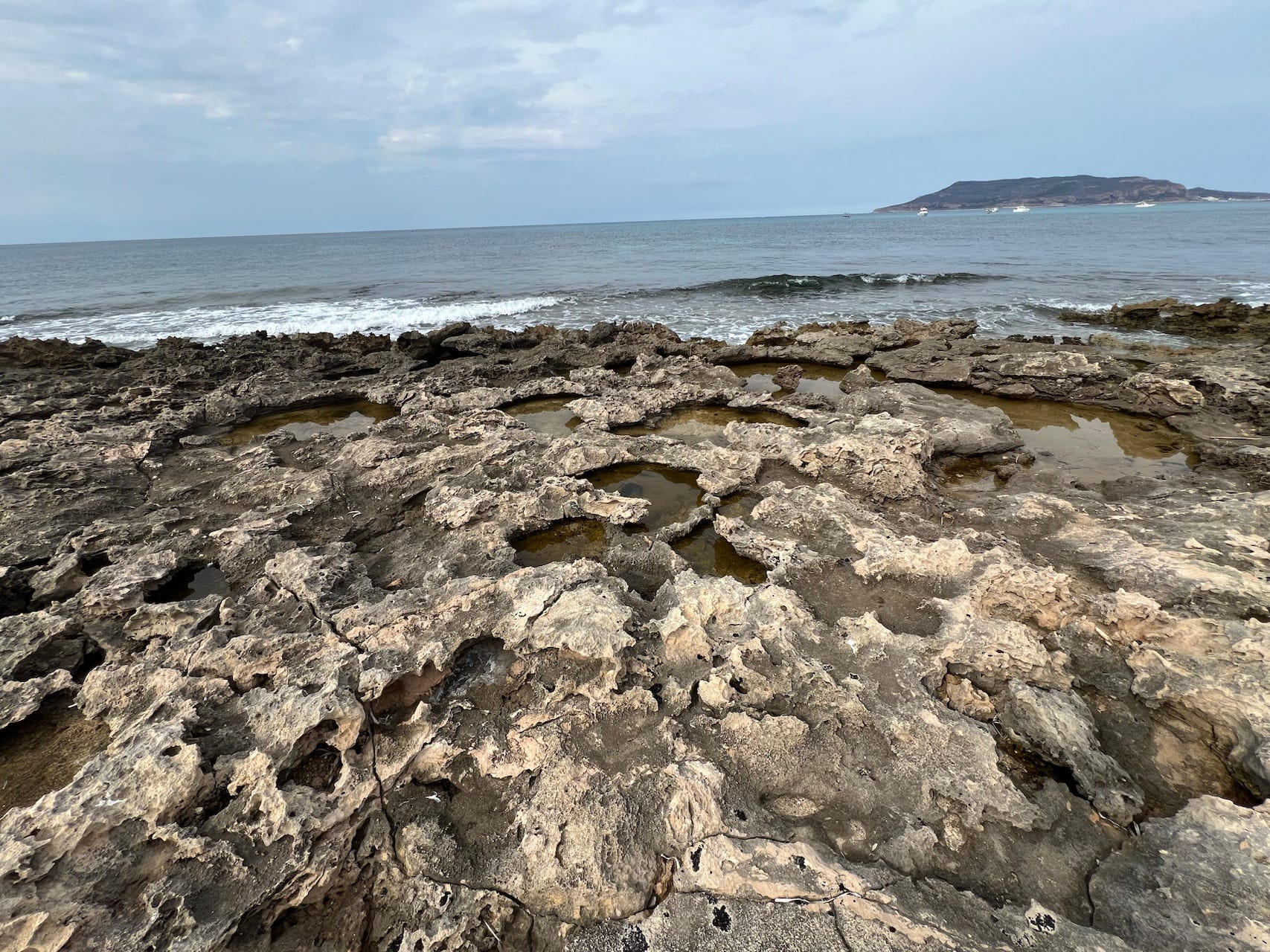
For a windswept lunch by the sea, we chose one of the hotel’s restaurants, Cibo chiacchiere e vino. It’s on the north-to-northwestern side of the island, which is a bit rugged. It offers views out to the other Egadi islands of Levanzo and Marettimo. And again, it blends a stone structure with low brush and the sea against the rocks in the background.
Even though we sat a distance from the sea, we watched it move, hard and fast, then slower. A strength to be reckoned with. No wonder Matt Damon, or rather Odysseus, had such a hard time navigating it home in the movie. You will get to your destiny when Poseidon says so. And that’s why it took ten years to get home to Ithaca!
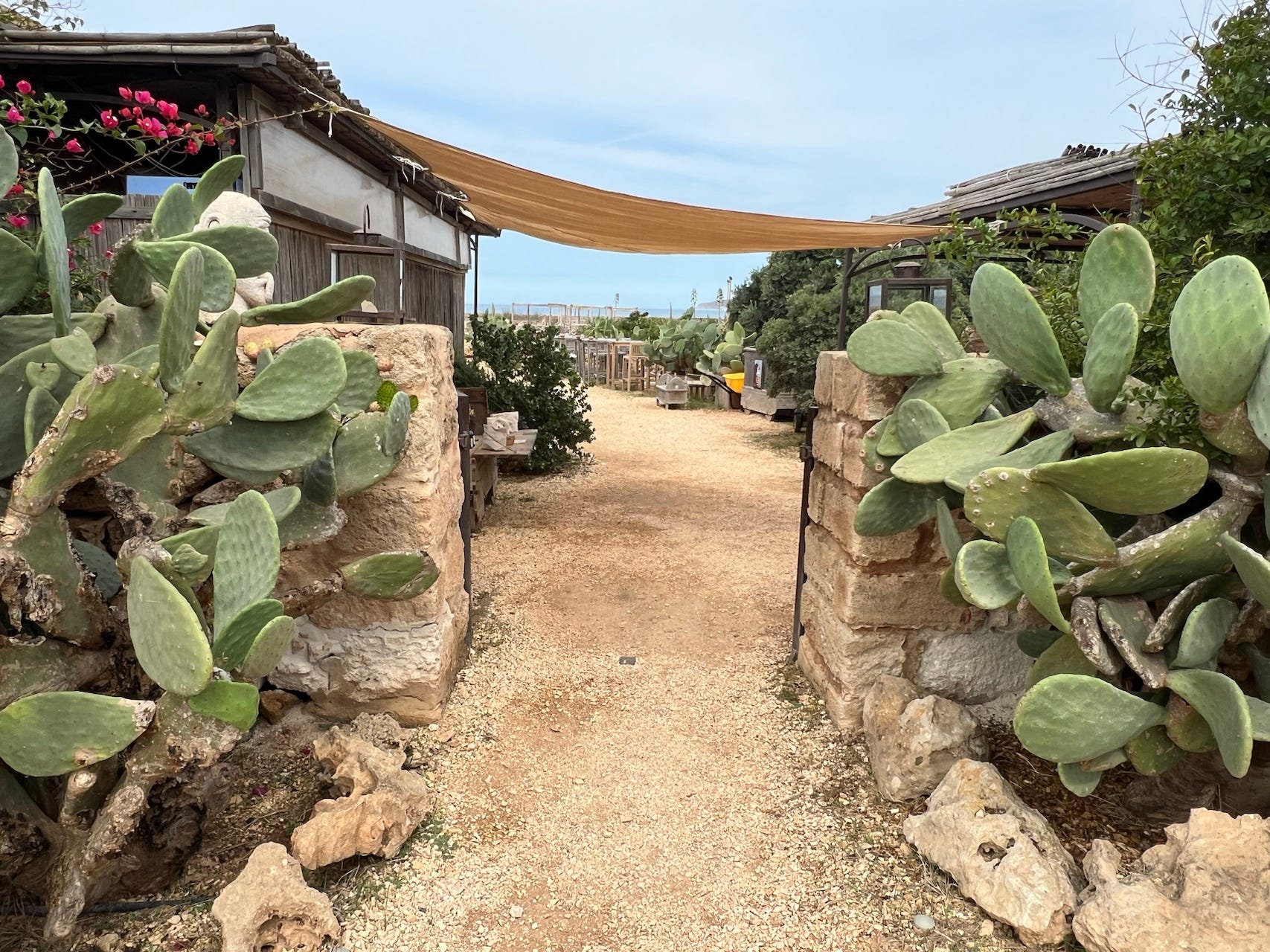
We entered the restaurant through a pathway lined by cactus on either side. A cloth canvas overhead shields the sun a bit at the entrance and is over a tiny table with a few items for sale. The restaurant has indoor seating, but there’s also an outdoor space with gray tables, chairs, and couches. And beyond that, the sea.
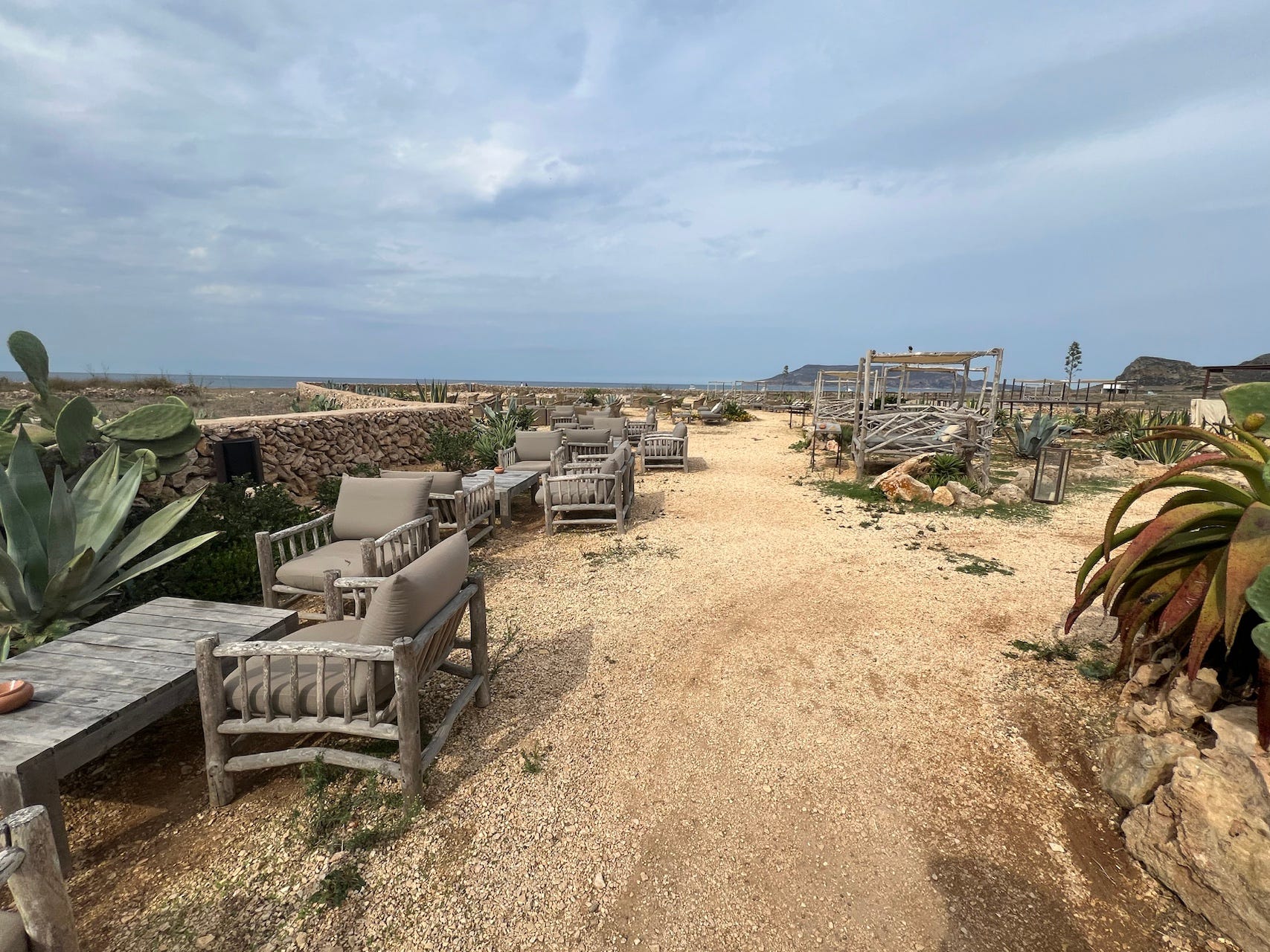
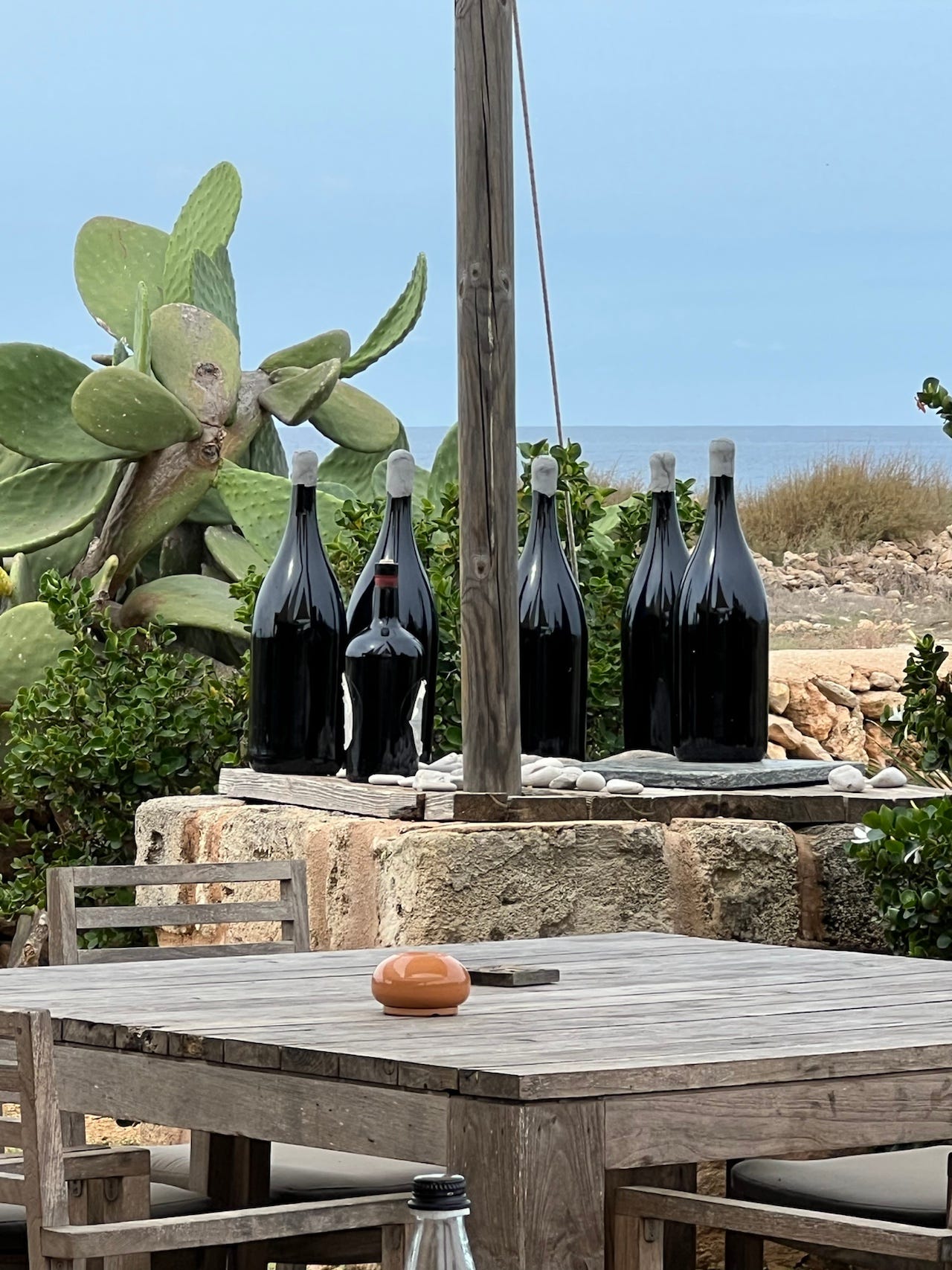
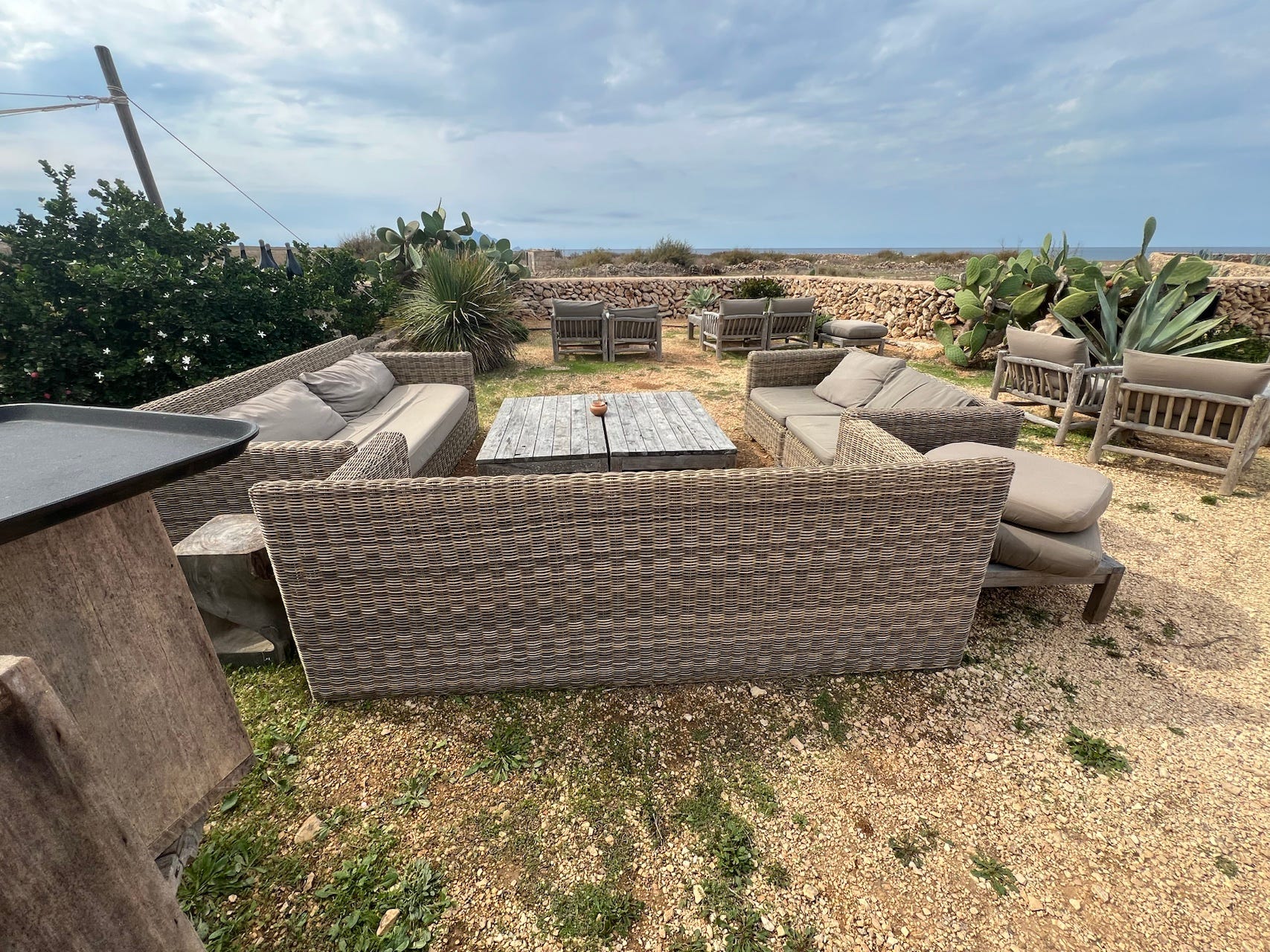
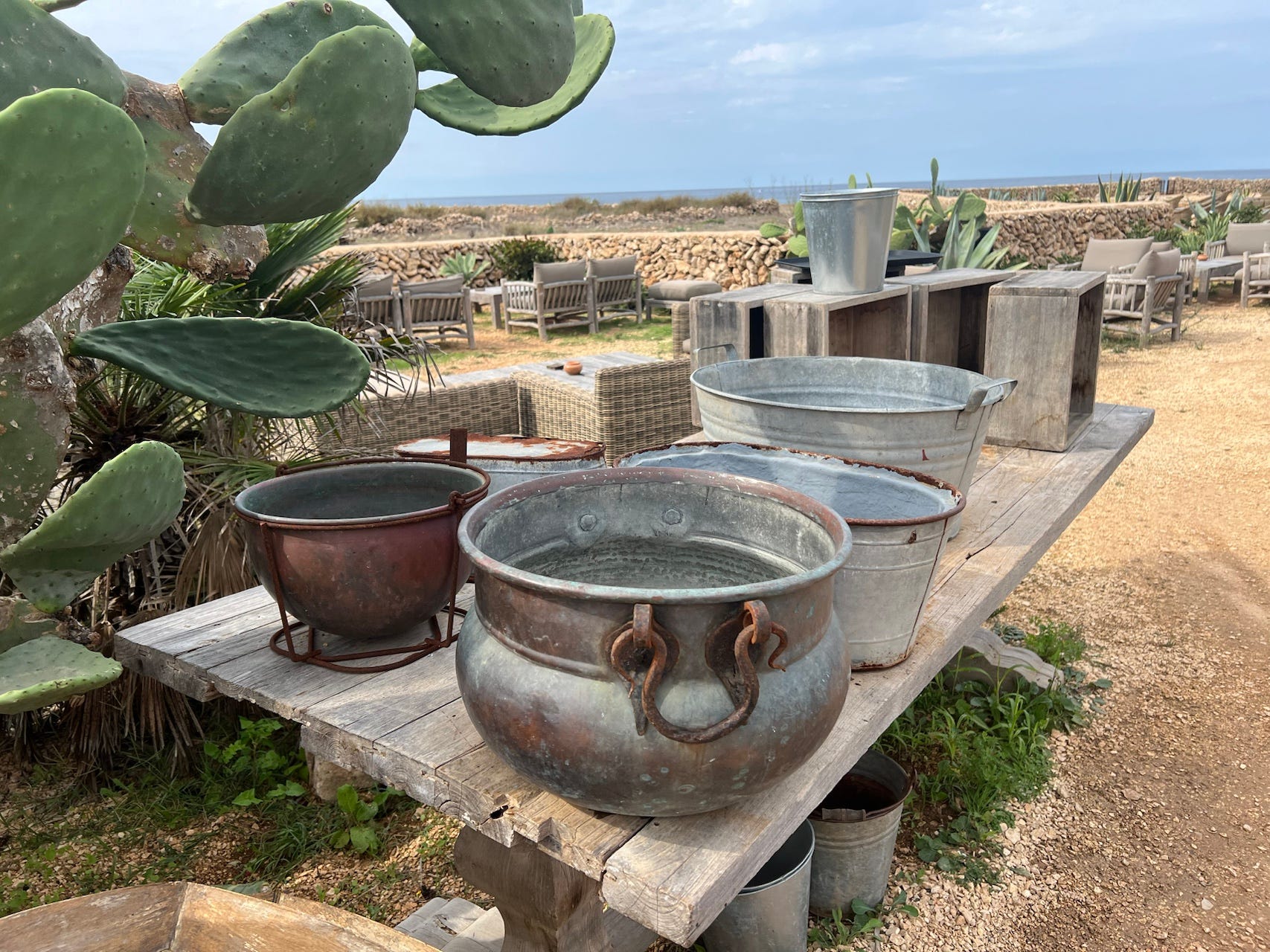
The food at this restaurant comes from their farm, Terre del Favonio. The organic lunch menu featured caponata, made with eggplant, olives, capers, almonds, tomatoes, and celery, and vegetable meatballs with sauces of the day. We tried those for appetizers and then each selected a busiata pasta. The bread was homemade and hard to resist. The menu said the flours were organic, milled from their own wheat, which included ancient Sicilian grains. The busiate pasta was from those grains. The olive oil from the olive trees at the farm.
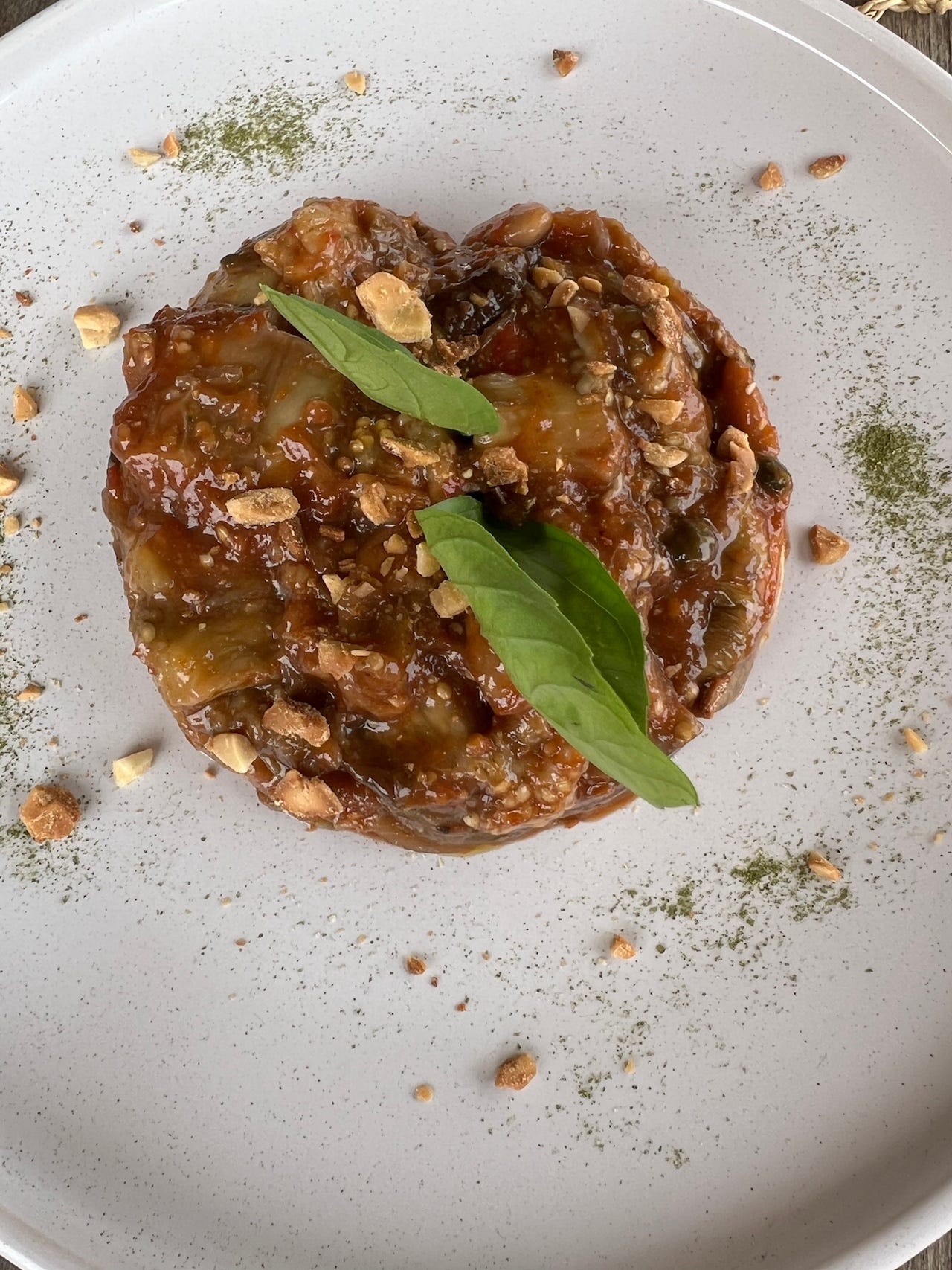
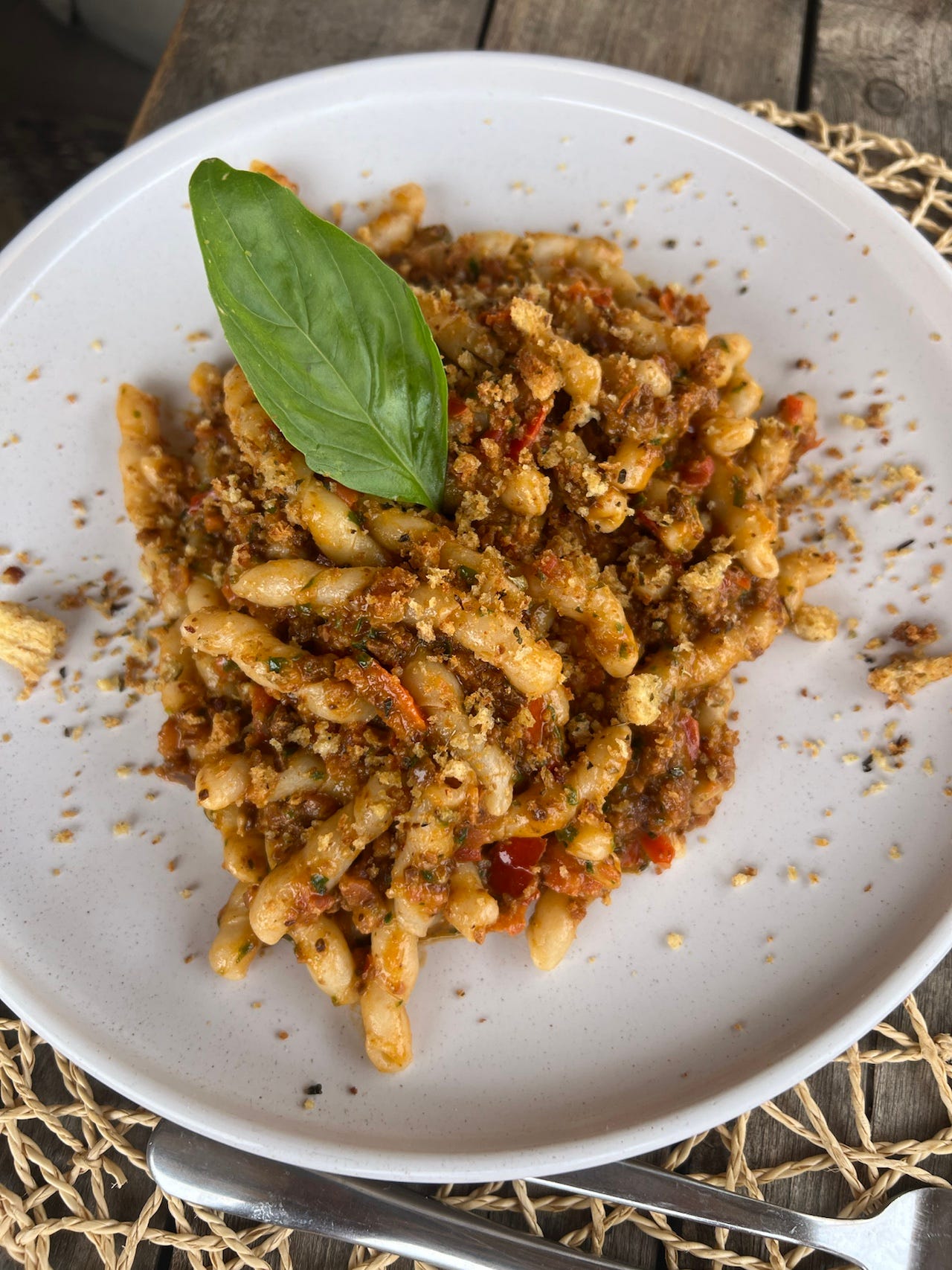
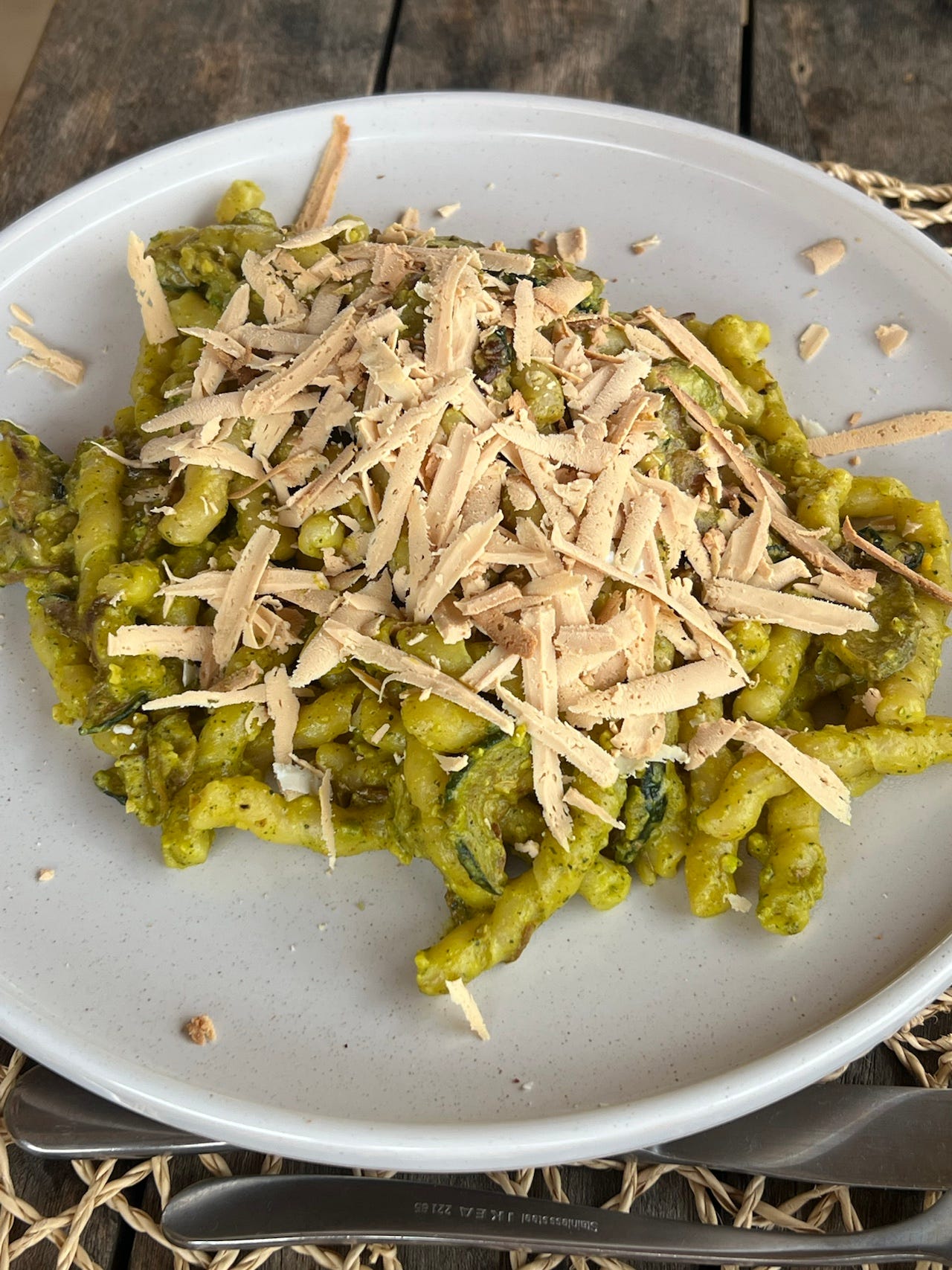
Everything was homemade, and honestly, that was the biggest takeaway for me and for everyone who reads the Fischer Kitchen. Cook. Go homemade. Skip boxed and processed food. You don’t have to be a perfect cook – I’m not. But it is doable.
Each week I give Phil a pad and pen and I stand in front of an open refrigerator door to inspect what we’ve got. I call out what vegetables, proteins, fats and carbs we have in there. He writes them out and with that list, I can figure out what we need. We prep the vegetables by no more than washing them so they’re easy to grab and cook during the week. We make sure we have various proteins and healthy fats on hand.
At this restaurant I’m sure the fresh ingredients come in and they do their own type of prep. Whatever they were doing, it was one of the most delicious meals we had while in Favignana and mirrors exactly what I would do in the Fischer Kitchen.
Everyone cooks. And that included, we were to find out later, Gianluca.
Lady Isabel
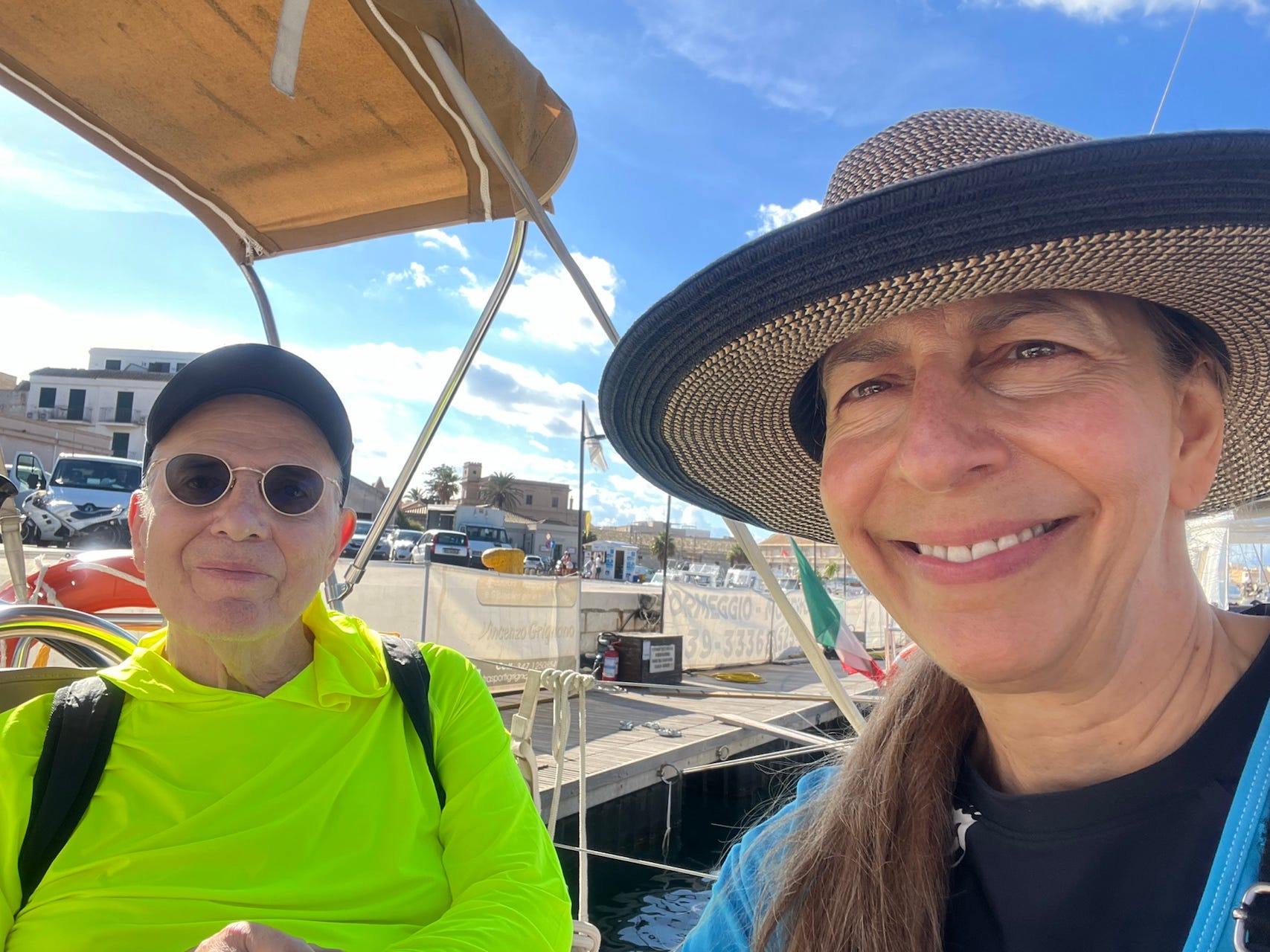
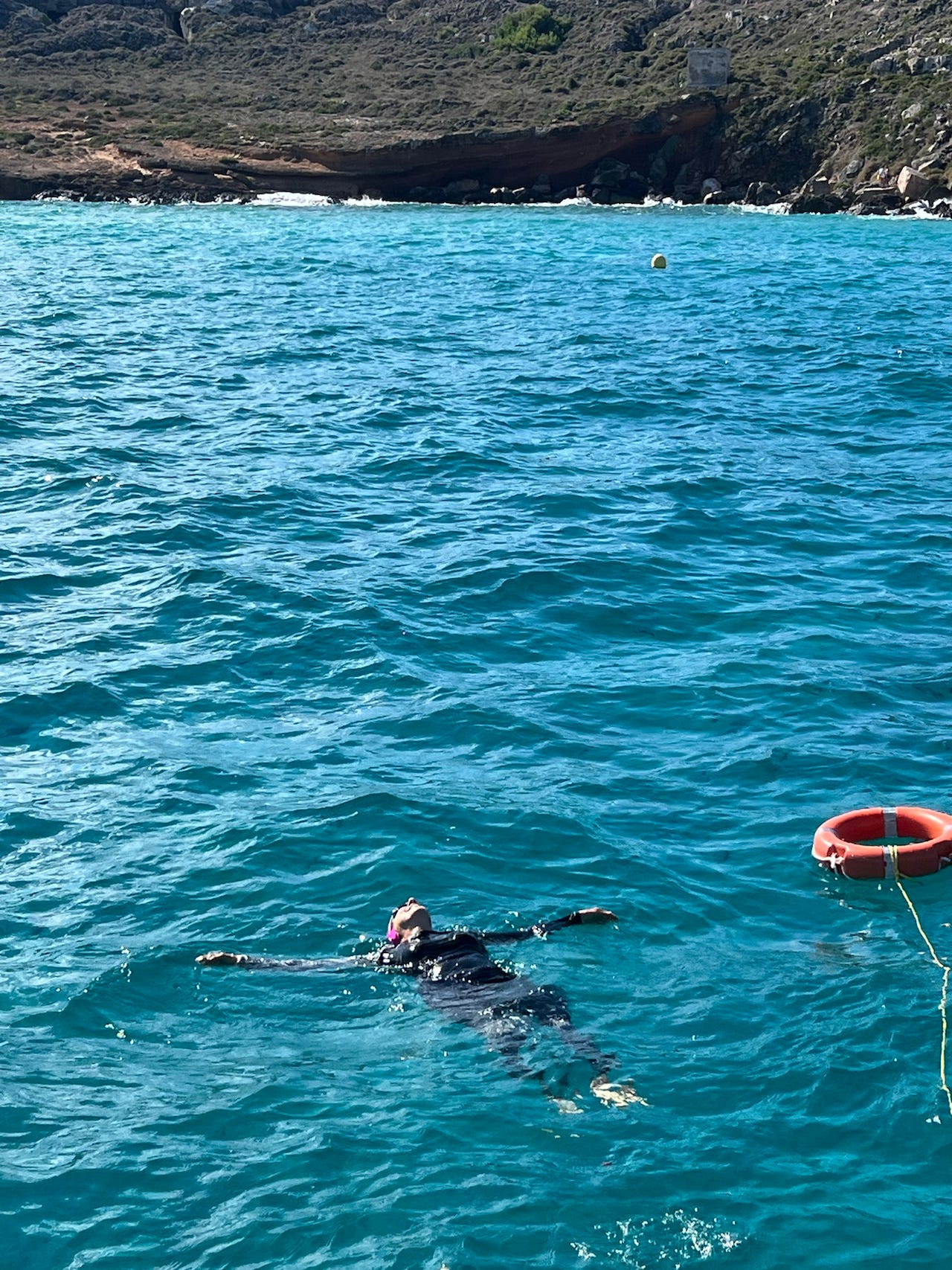
I was the swimmer in our group, and when I found out we could taste a variety of the garden’s food on a boat trip AND I could toss myself overboard in the water, I signed us up. Phil gets seasick, but I figured the boat was big enough he wouldn’t. I hoped. His strategy, aside from wearing a bright yellow shirt so he could be found at all times, was to stay still until the food was served.
Me, I was happy to linger in the water as long as I could. By lunch time, Phil was in good shape and I had enjoyed the waters, especially Cala Rossa. It’s a rocky cove and you can best experience it by water, so the boat was a good option. There’s no beach there. I recall not wanting to get out. I had to be convinced to come back in the boat.
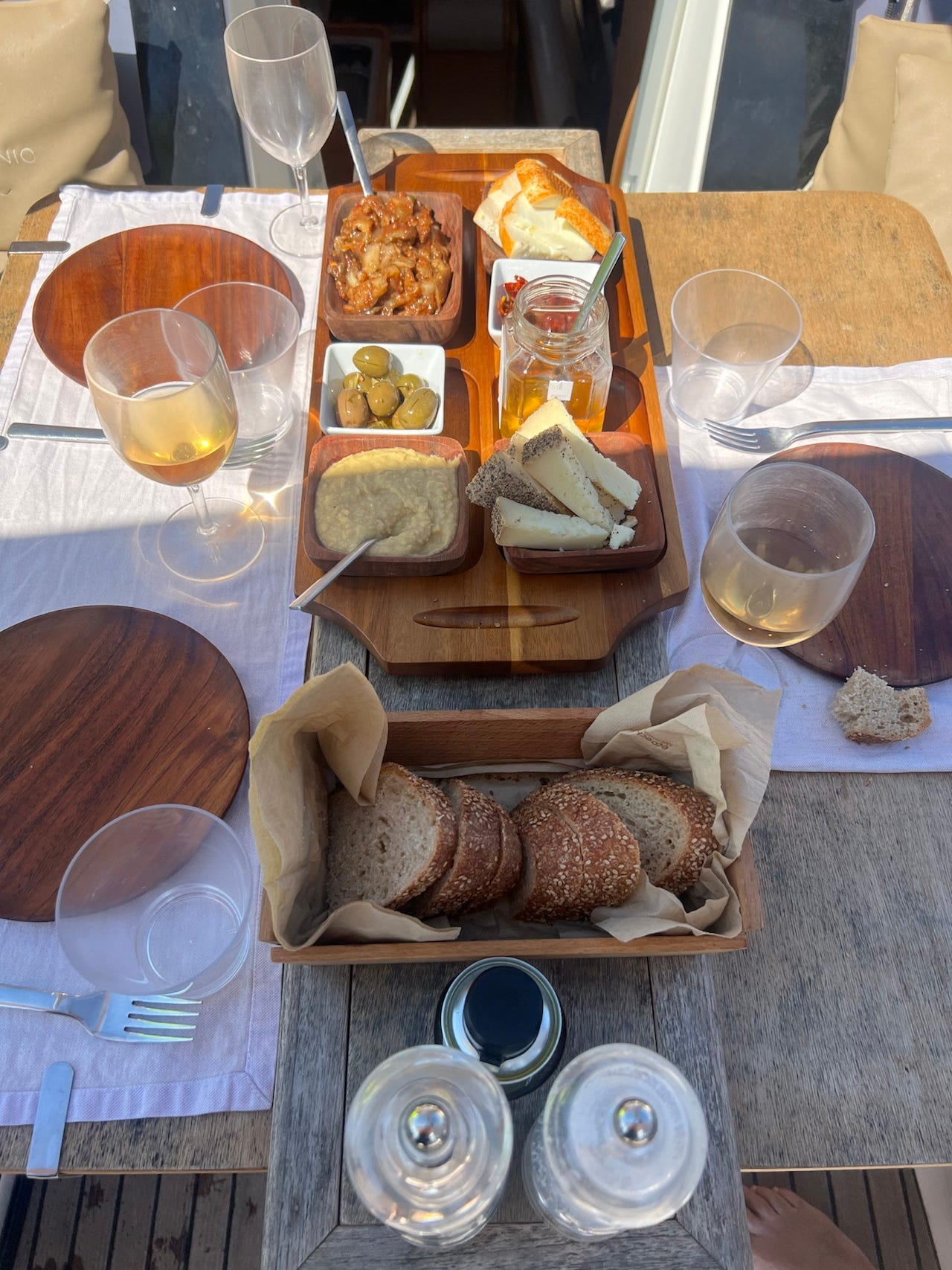
The meal had been prepared in advance and here I got into thinking how nice it would be at home to have these kinds of small dishes to set up anytime instead of a heavy meal. That’s something to think about with trying to keep weight in line, something we’re working on, not with dieting but rather careful selection of the foods.
We did get back to shore, with Phil livening up as we approached the dock.
Dinner at Gianluca’s cottage
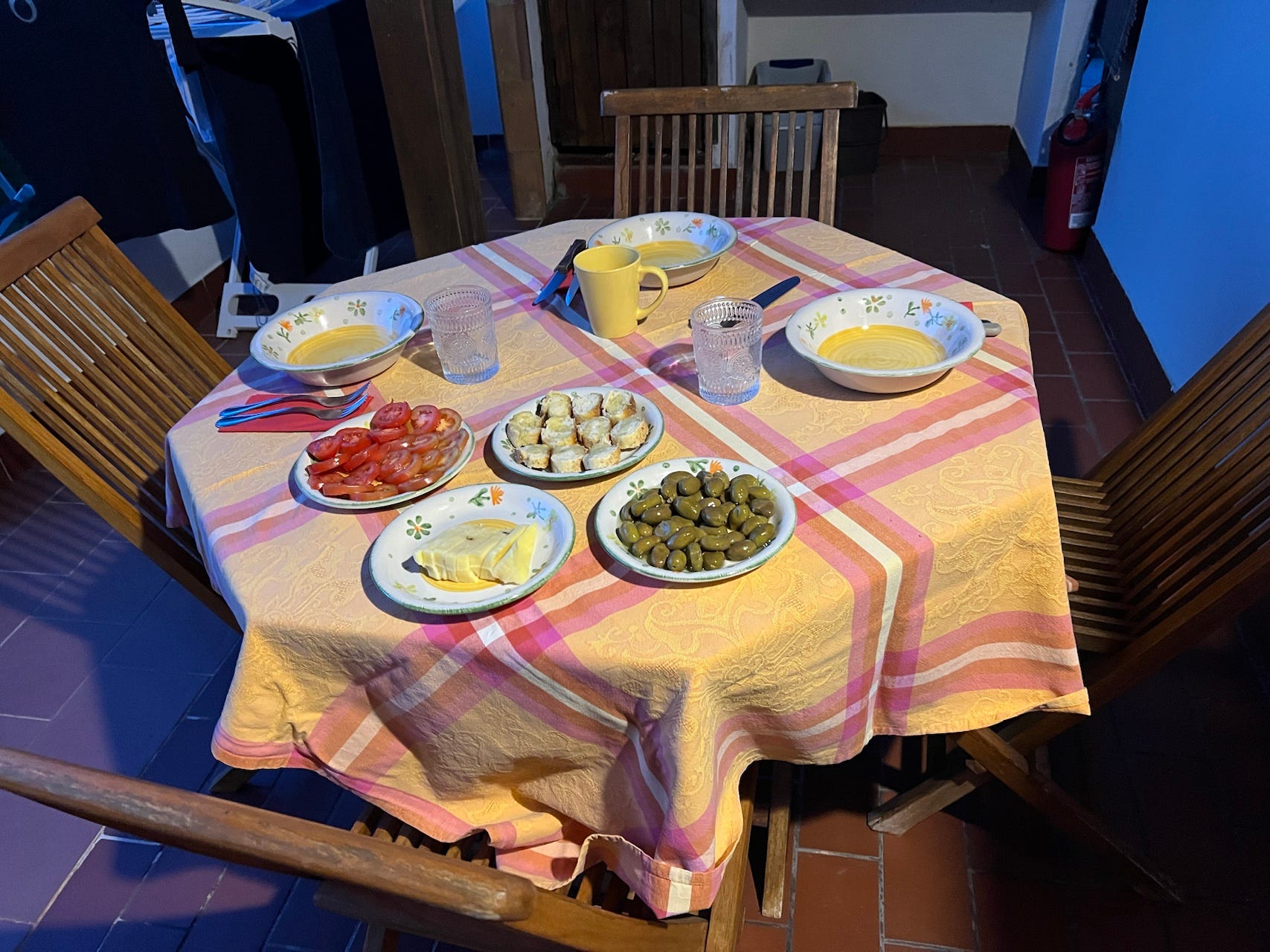
Gianluca spontaneously announced he was going to make dinner for us. He is a dear friend; we’ve known him for more than a decade. I’ve met and adore his family, but still. He shouldn’t have to make us dinner. I’m the Fischer Kitchen, for goodness sake. But he prevailed and decided it would be at least a little of a joint project. We went shopping for pasta and sauce, salt, cheese, olives, bread, and more, easily found while strolling in town.
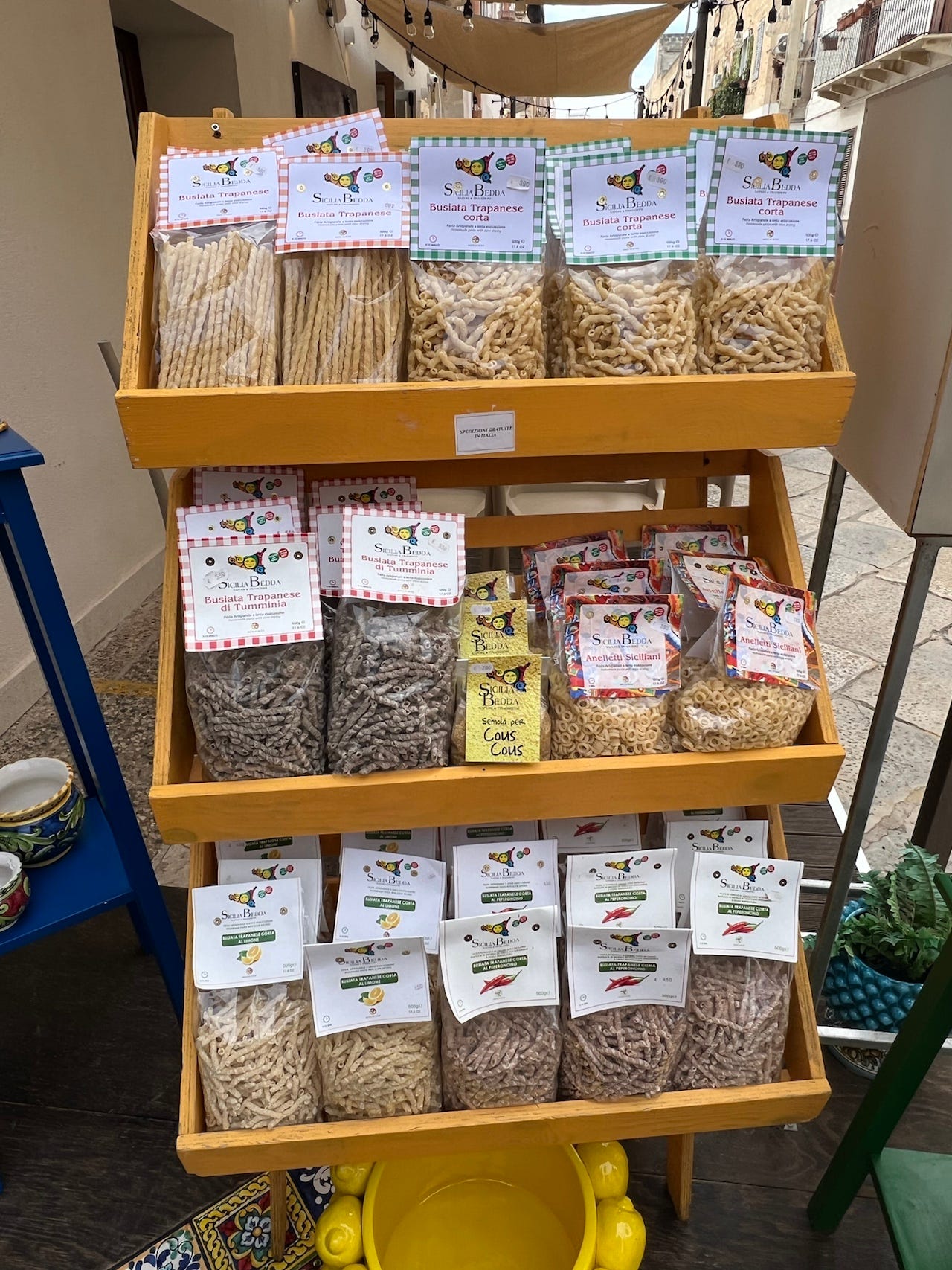
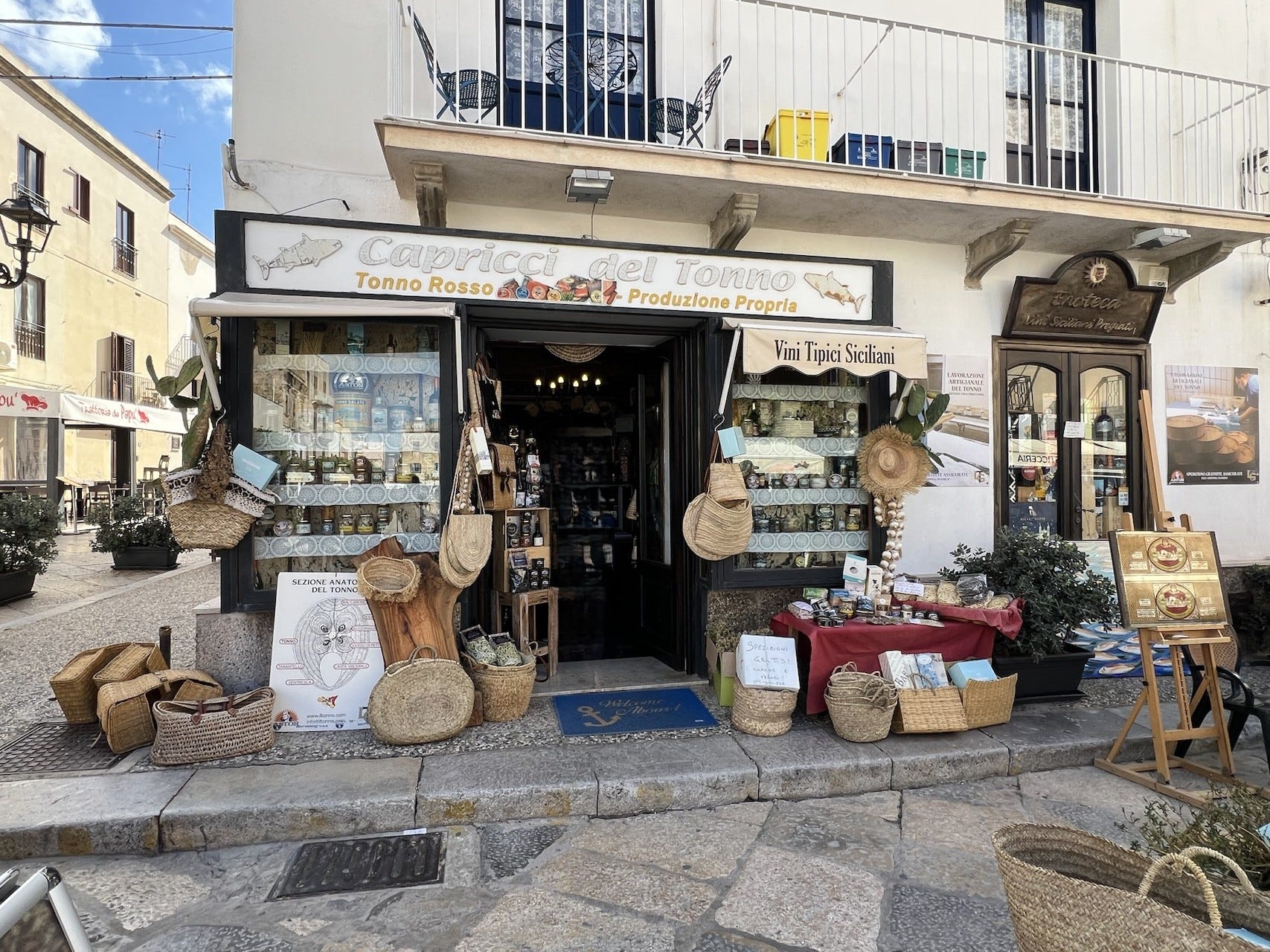
The food was taken to be refrigerated, and then we went to a beach, where I enjoyed the swimming and we all liked seeing the giant orange fruit bar in the shape of what else? An orange. Fresh fruit. We can all do that.
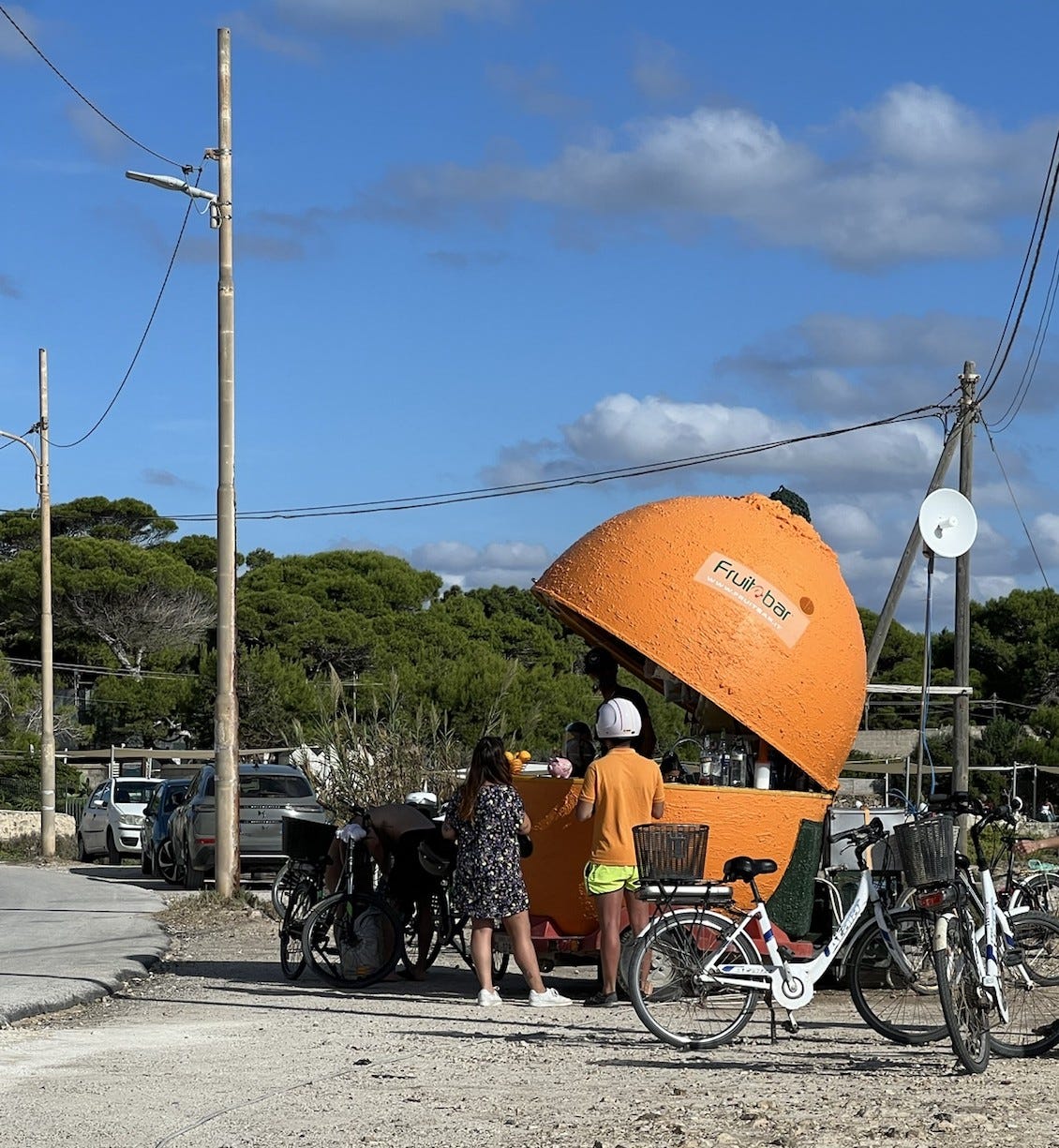
Arancia. Orange. I love oranges. I keep them in a glass container in the kitchen, peeled and ready to eat. They’re the same kind of cold, refreshing orange I might have gotten in that fruit drink at the beach on Favignana. Every one of us probably has a beach moment like that. Find a fruit. Fruits have fiber. They’re part of a balanced diet.
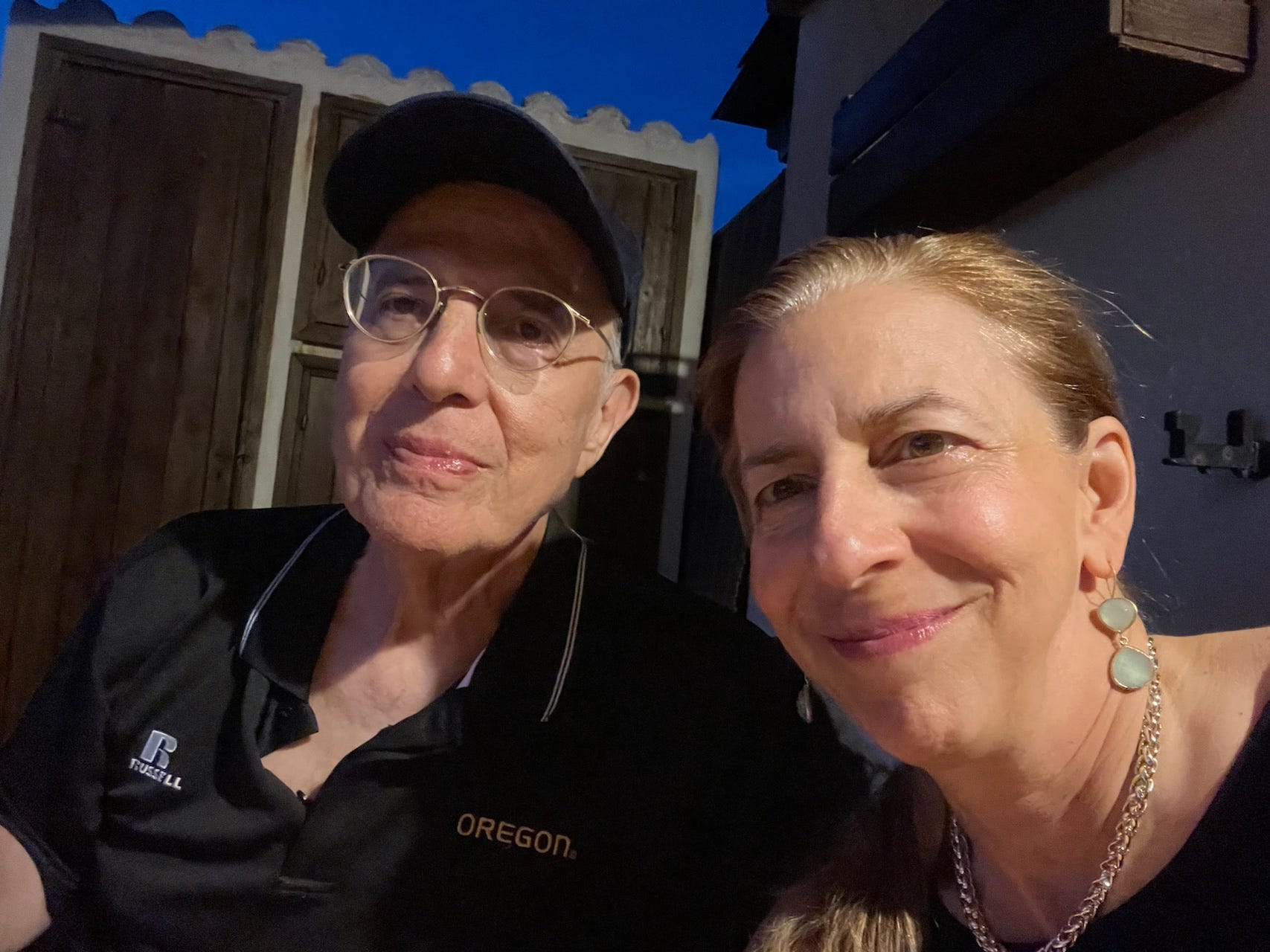
Later on, Gianluca picked us up. His rental was 10 minutes away. He stopped on the roadside, jumped out, and opened the gate. He got back in the car and drove down a small road. It was a low, one-level cottage with a porch in the back. He had set the table with a happy red and yellow tablecloth and laid everything out on it. More was cooking in the kitchen. We recounted the days past, the days to come. Phil was happy a museum was in the plans, and he could dispense with dressing like a stoplight. We all laughed. You don’t need to go far and wide to have a meal together at the table with people you love.
Other noteworthy restaurants
If you’re in Favignana, you have to eat at Quello Che C’è C’è. The menu is chock-full of fresh Sicilian dishes, including seafood, meat from Favignana, and deep-fried dishes. They note that no palm oil is used in any of their cooking, and that produce comes from Piero’s vegetable garden.
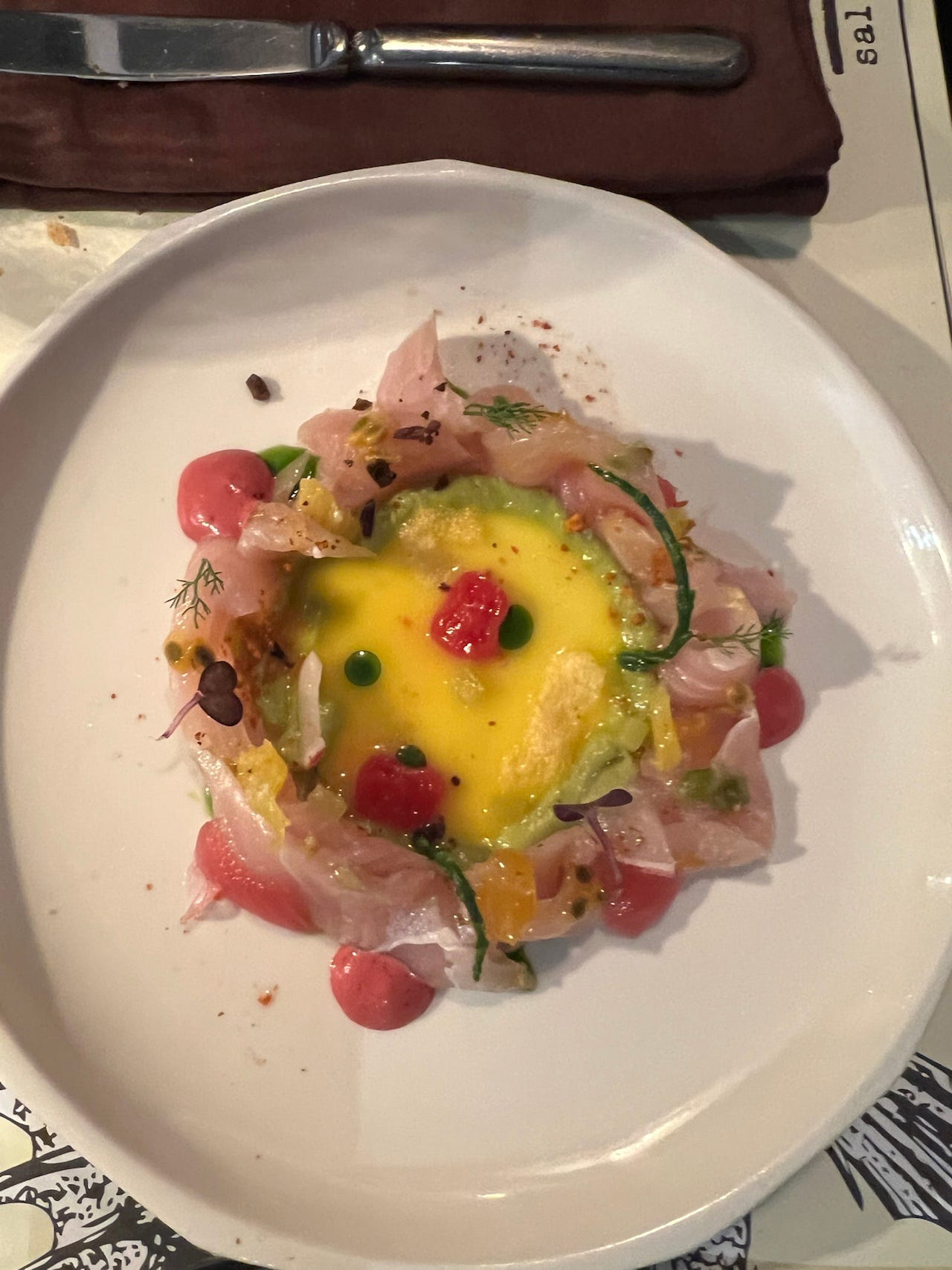
Same with Ristorante Sotto Sale, which has a big fish menu. Some of it was new to me: scorpion fish ravioli, grilled tuna belly, amberjack in black, calamarata pasta, lobster Rossini. It all sounded great to me.
At home, I’m not as inventive with fish. I’m more concerned with simply getting great quality fish. I think that is assumed in Favignana, given it’s on the sea. But in New York, you’re in a concrete jungle, even if I am surrounded by water on the east and the west, because Manhattan is an island. Still, you’re not going to get me eating any fish out of it.
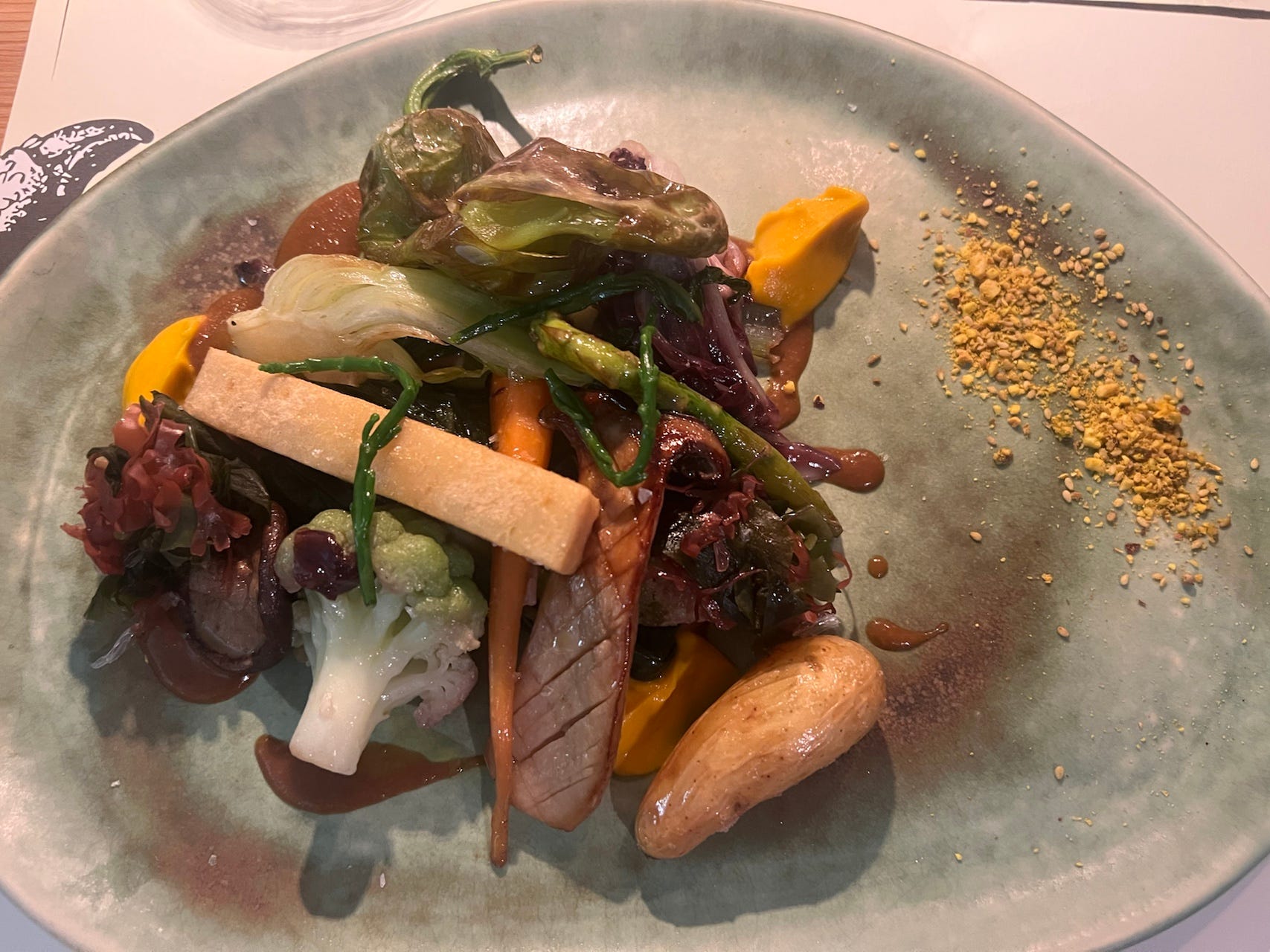
I like fish from Kodiak, Alaska, because I was there many years ago. So I order a mix of ten pounds of salmon, halibut and cod from there, and order more when we are done with it. The most important thing for me about fish is trying to figure out where it’s from. Sometimes the food store is very good at that. Other times not.
One of my concerns about fish is mercury, but mercury is found in most likely all waters, including those in Alaska. It just depends how much. That’s a big topic and probably another whole article since fish is, generally speaking, a good thing to have in your diet.
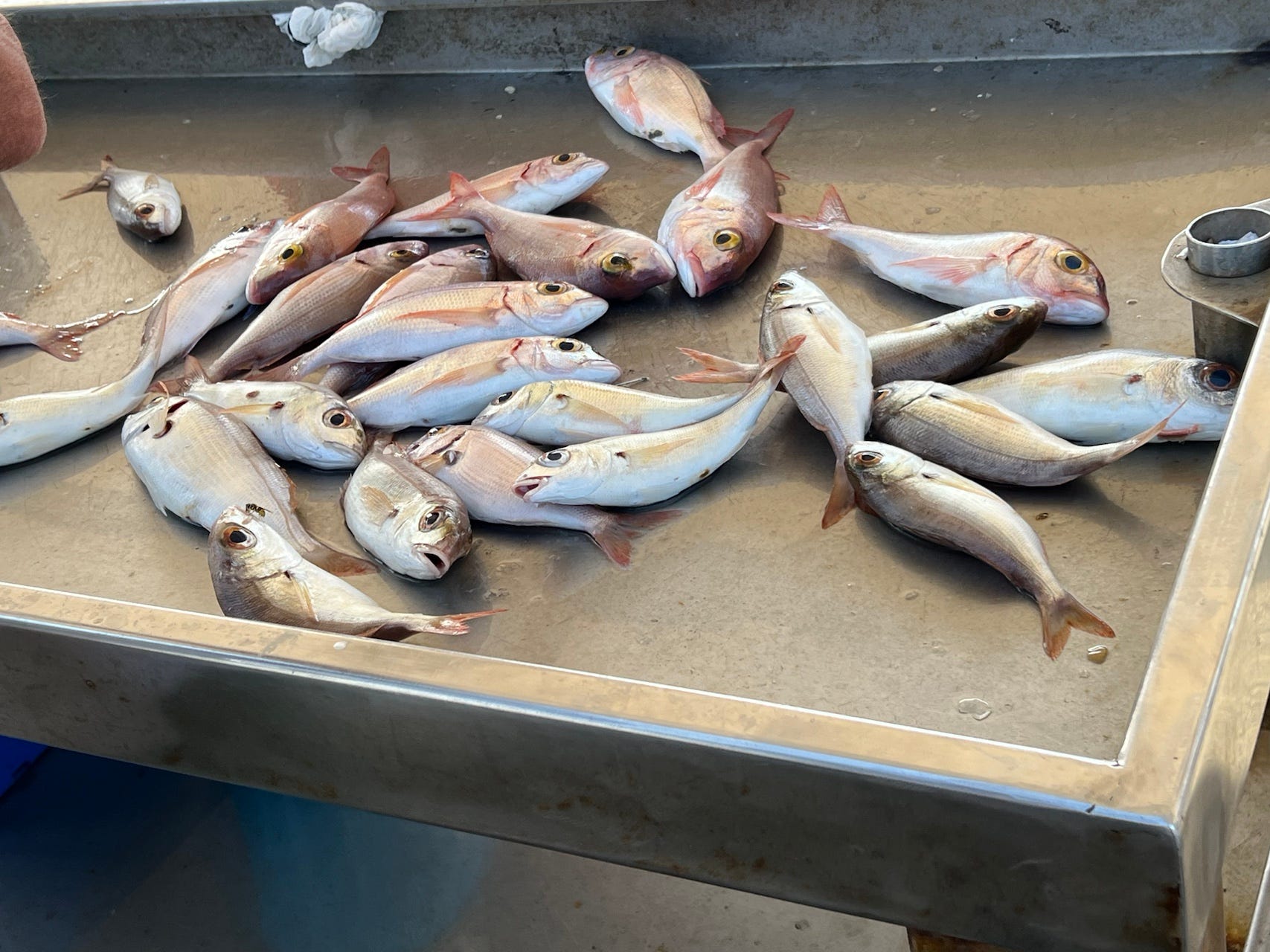
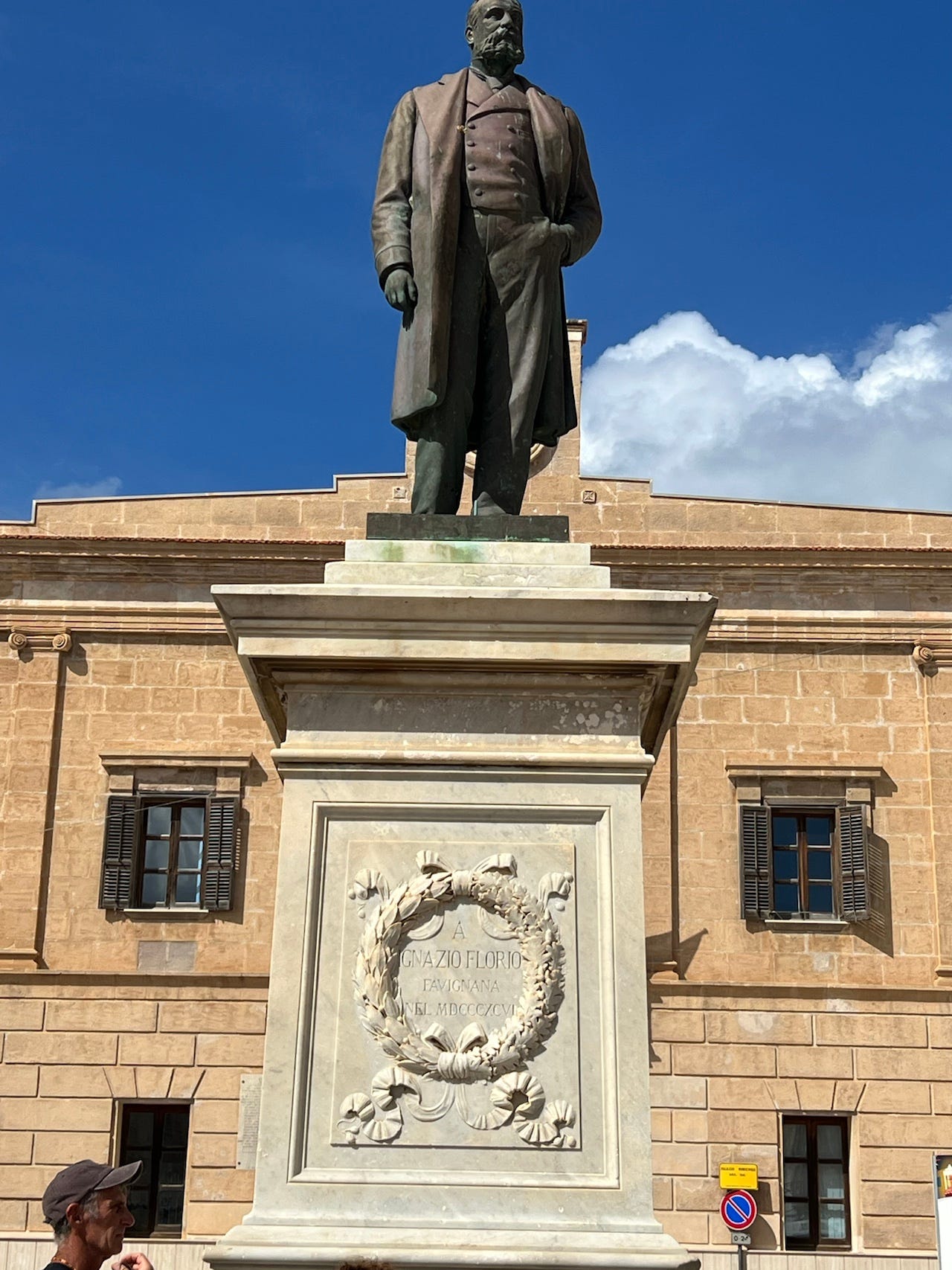
For the rest of our time, I sampled a variety of other restaurants, picked up some local pasta, and learned about the Florios of Favignana. In 1874, Ignazio Florio Sr., son of Vincenzo Florio, bought Favignana and the Egadi islands, including Marettimo and Levanzo. He is the Florio most associated with tuna and with expanding that business. The Florios are credited with figuring out tuna could be safely packaged in olive oil.
There’s so much to the Florio story that it has to be another post, too. To give you a taste of the juicy details, the Florios made millions and were a dynasty in Europe; by the late 1930s, their businesses were sold off. A series was made about them called The Lions of Sicily. I watched it on Hulu – it’s fun, and you’ll learn about the Florios that came from Calabria to Sicily and how they built the foundation of their empire (it was on spices and quinine). You can find it on Disney+ too.
Well, this has indeed been a long post. Time to say goodbye to this island brimming with good food and ideas for all of our kitchens. We’ll meet again for another meal.
Postscript: Homer
And for lovers of the Odyssey, there are so many fascinating passages to pick, but this is one I like. Olives, Favignana, the Odyssey, I happily make my own connections.
From Homer, The Odyssey, Book 5, translated by Samuel Butler, revised by Timothy Power and Gregory Nagy, Perseus Digital Library, Tufts University. Licensed CC BY-SA 3.0.
“In the end he deemed it best to take to the woods, and he found one upon some high ground not far from the water. There he crept beneath two shoots of olive that grew from a single stock - the one ungrafted, while the other had been grafted. No wind, however squally, could break through the cover they afforded, nor could the sun’s rays pierce them, nor the rain get through them, so closely did they grow into one another. Odysseus crept under these and began to make himself a bed to lie on, for there was a great litter of dead leaves lying about - enough to make a covering for two or three men even in hard winter weather. He was glad enough to see this, so he laid himself down and heaped the leaves all round him. Then, as one who lives alone in the country, far from any neighbor, hides a brand as fire-seed in the ashes to save himself from having to get a light elsewhere, even so did Odysseus cover himself up with leaves; and Athena shed a sweet sleep upon his eyes, closed his eyelids, and made him lose all memories of his sorrows.”
Feel free to leave a comment. I’d love to hear from you!