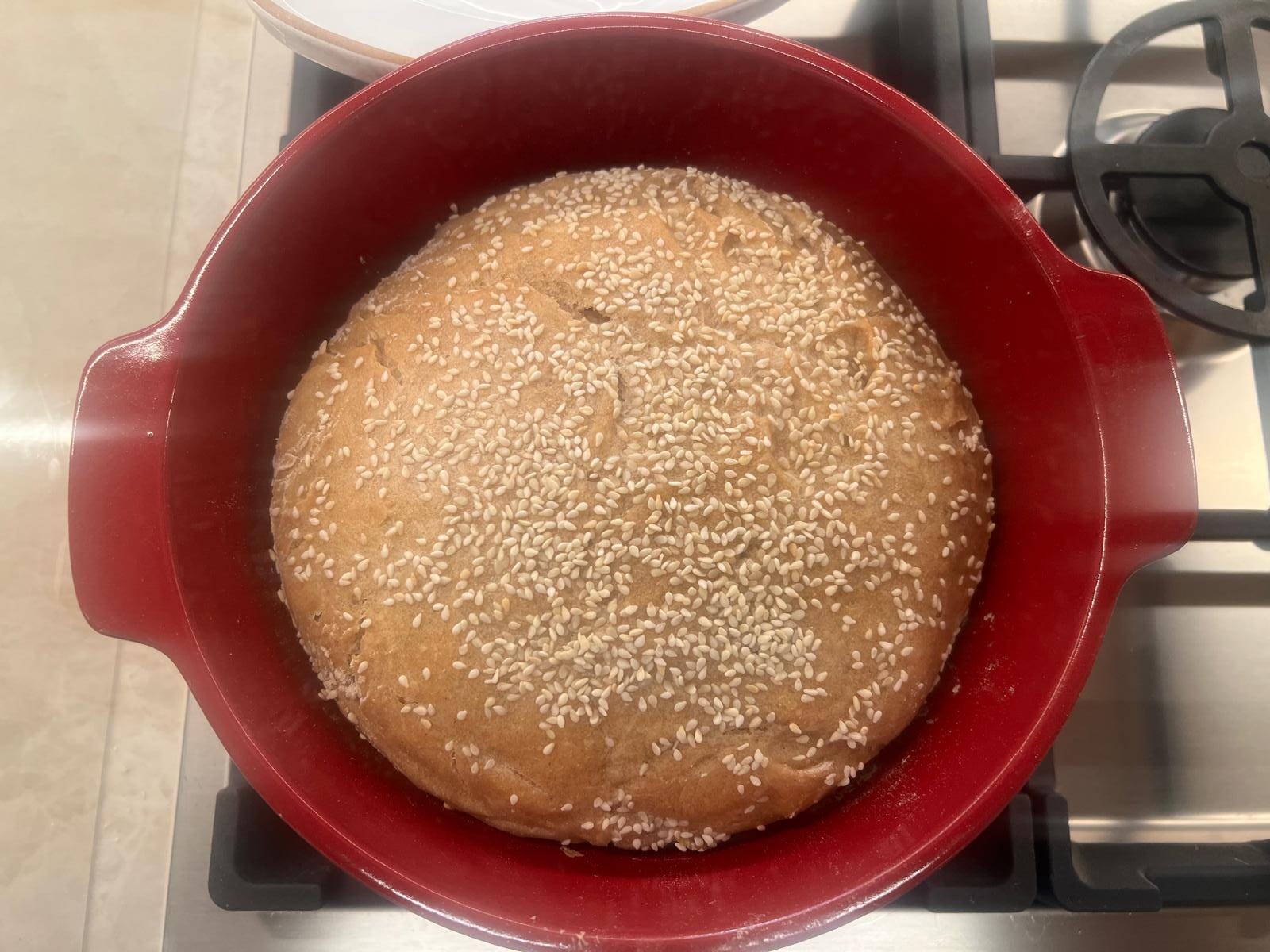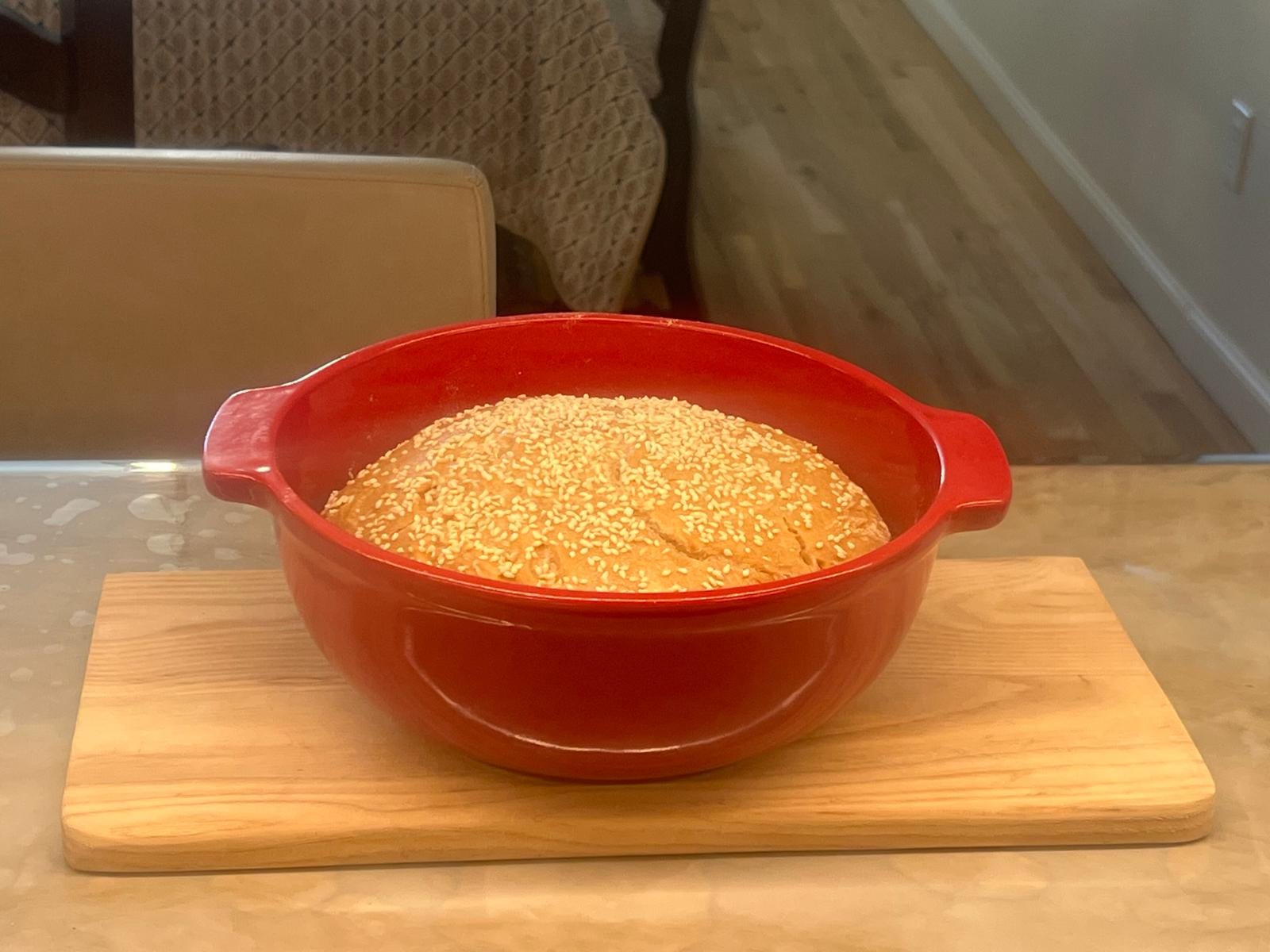
As many of you know, I love bread pots. They’re on my list of favorite kitchen appliances. I have a simple bread pot recipe that I tweak to make variations of fresh bread. Experimenting with flours became an important element of the process. I hadn’t known much about flours before, but all of a sudden I was buying different kinds to test them out. And given that breads are carbs, I wanted to make the best breads I could. While you can’t miss with all-purpose flour, I did some research and was interested in finding flours made with ancient grains. I had read they potentially offered blood sugar control, could help reduce cholesterol and improve gut health.
That wasn’t something I could find in our grocery stores. But I could find it in Sicily, if we went looking for it. It was among the top things I wanted to do on the trip: find a farm with ancient grains.
During our trip to Sicily, I reminded our friend and guide Gianluca I was very interested in ancient grains. Could he help me find them?
Our Sicilian adventure took us from the east to the west coast of the island, but by our 20th city we landed in Buseto Palizzolo, which is a small town east of Trapani. Gianluca hadn’t known of any farms with the ancient grains before the trip, but after his investigation while we were there, and a few calls, we were standing in front of the owner of Miceli Azienda Agricola Bio, a 20-hectare farm. Rosaria welcomed us and jumped right into telling us about the company’s grains, flours, and pastas.
As my husband Phil pointed out in his new book, You Are AI’s Best Friend—From Olives to Algorithms: A Human Guide, in which he talks about how serendipitously we ended up at the olive mill in the Province of Siracusa, we learned Sicilians could be quite welcoming to complete strangers dropping into their lives and business.
Rosaria took us into an area of the house where she had bags of wheat and products in packages. She explained everything in Italian but fortunately there was a brochure in Italian and English. On the cover it read: “Treat the earth well! It is not a legacy from our grandparents but a loan from our children.”
I was in just the right spot. As she spoke to Gianluca at length, and he translated for us, I checked out the brochure. They grow olives to make olive oil, and use the arable land for growing ancient Sicilian grains.
Specifically, they grow perciasacchi, the Senatore Cappelli variety, chickpeas, and pulse vegetables, namely sulla and fava beans. The old local varieties are part of an organic farming effort that protects biodiversity and their natural heritage. They rotate wheat with pulse vegetables, to make the soil more fertile, and they don’t use chemicals.
About six years ago they connected with a stone mill and an artisanal pasta factory and started making their own flour and pasta. The brochure stated that “Traditionally stone-processed, they are not subjected to the high temperatures that are typical of industrial processing, which allows the nutrients to remain intact.”
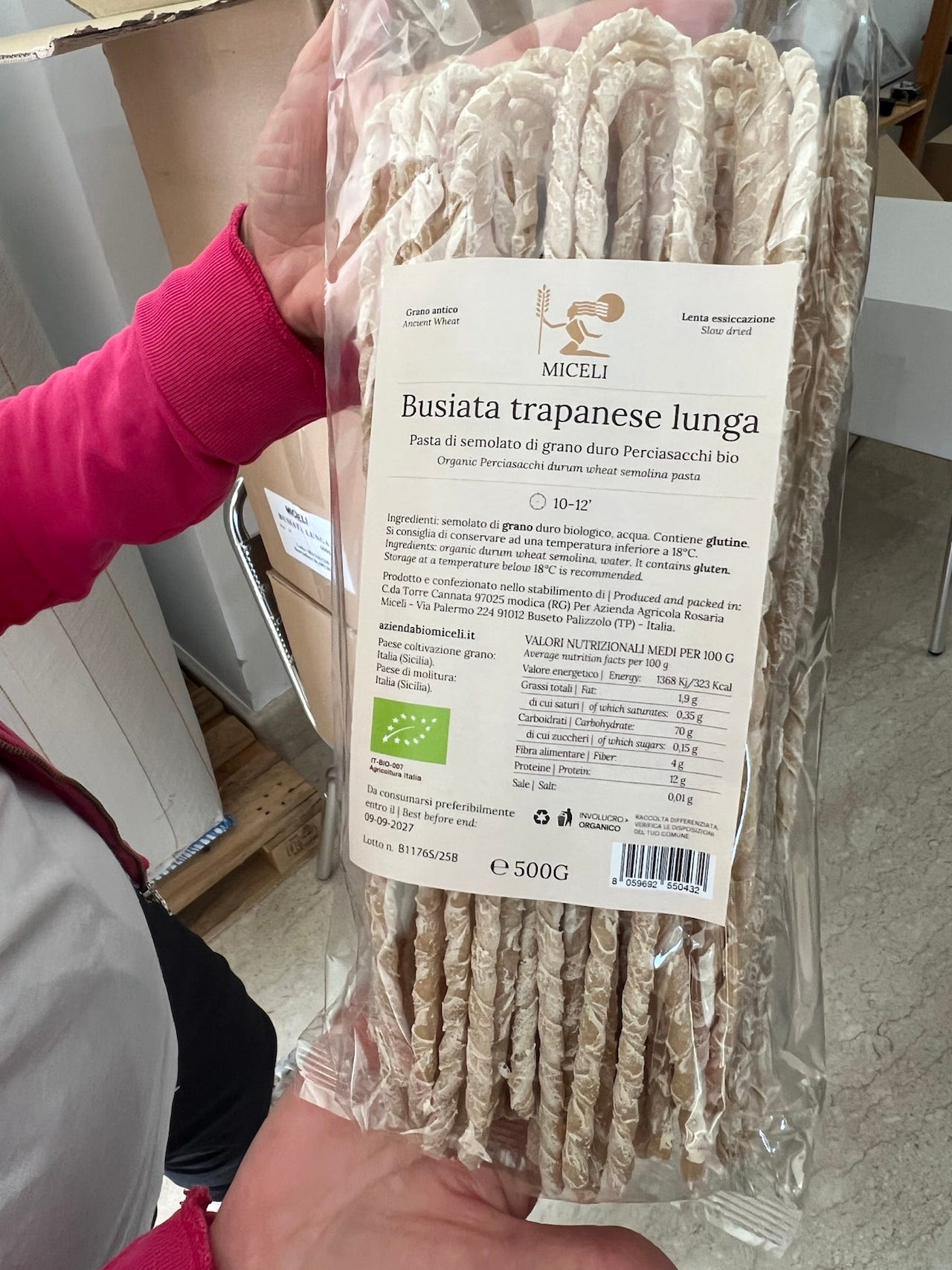
I was thrilled to learn more about these grains. Looking at the labels on the bags of flour and pasta, I read the nutritional information closely. The brochure had said the Sicilian ancient grains were easier to digest and rich in antioxidants.
“Because they are processed in stone mills, they retain the germ, vitamins, fibre, minerals, and all the nutritional properties present in the grain,” the brochure said.
Another benefit: the wheat grows tall, up to 1.80 m, about 5 feet 11 inches, roughly the height of a tall man, so it shades out and outcompetes weeds naturally. The brochure said this is why they can be grown without using pesticides and chemical fertilizers.
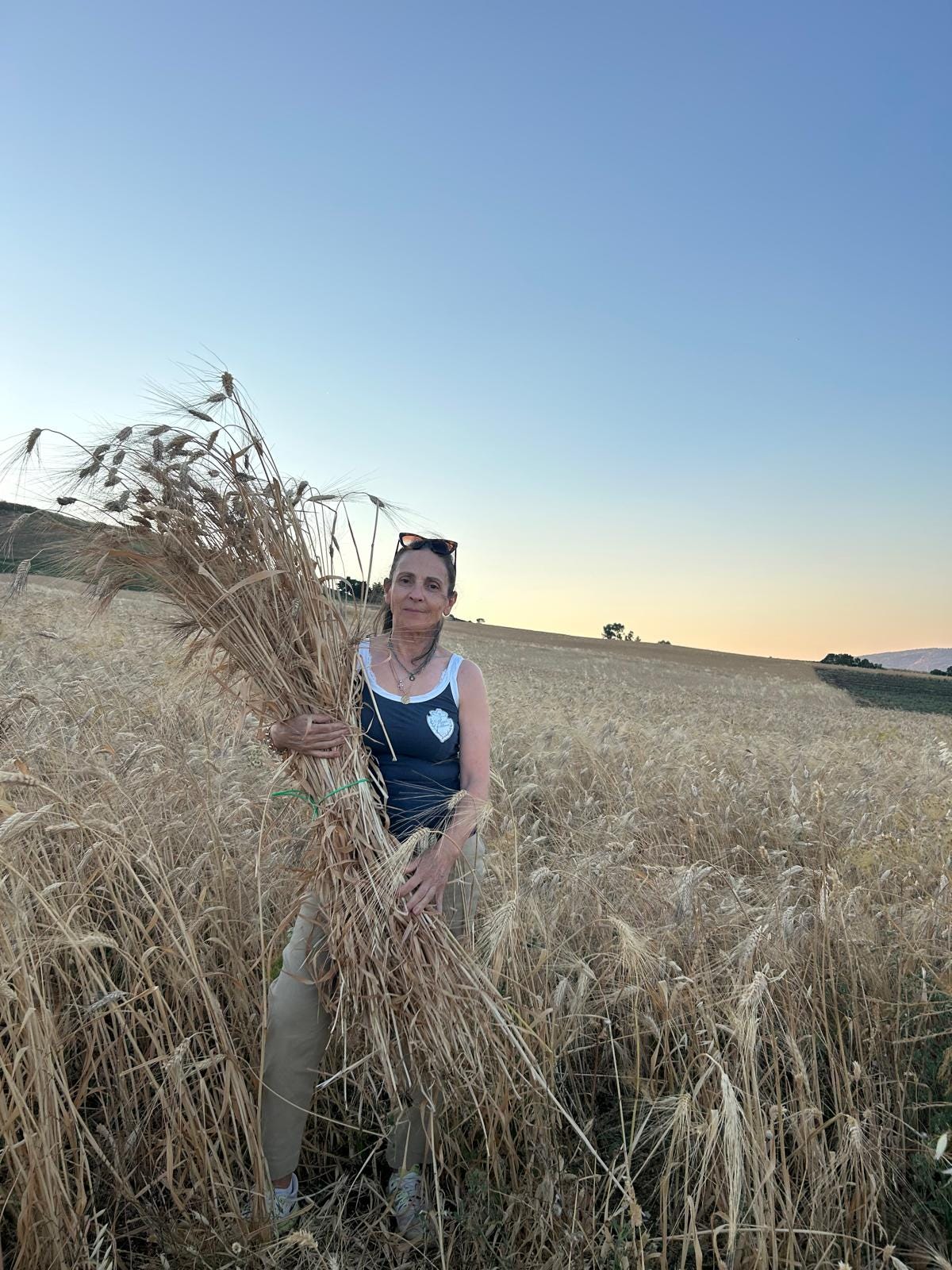
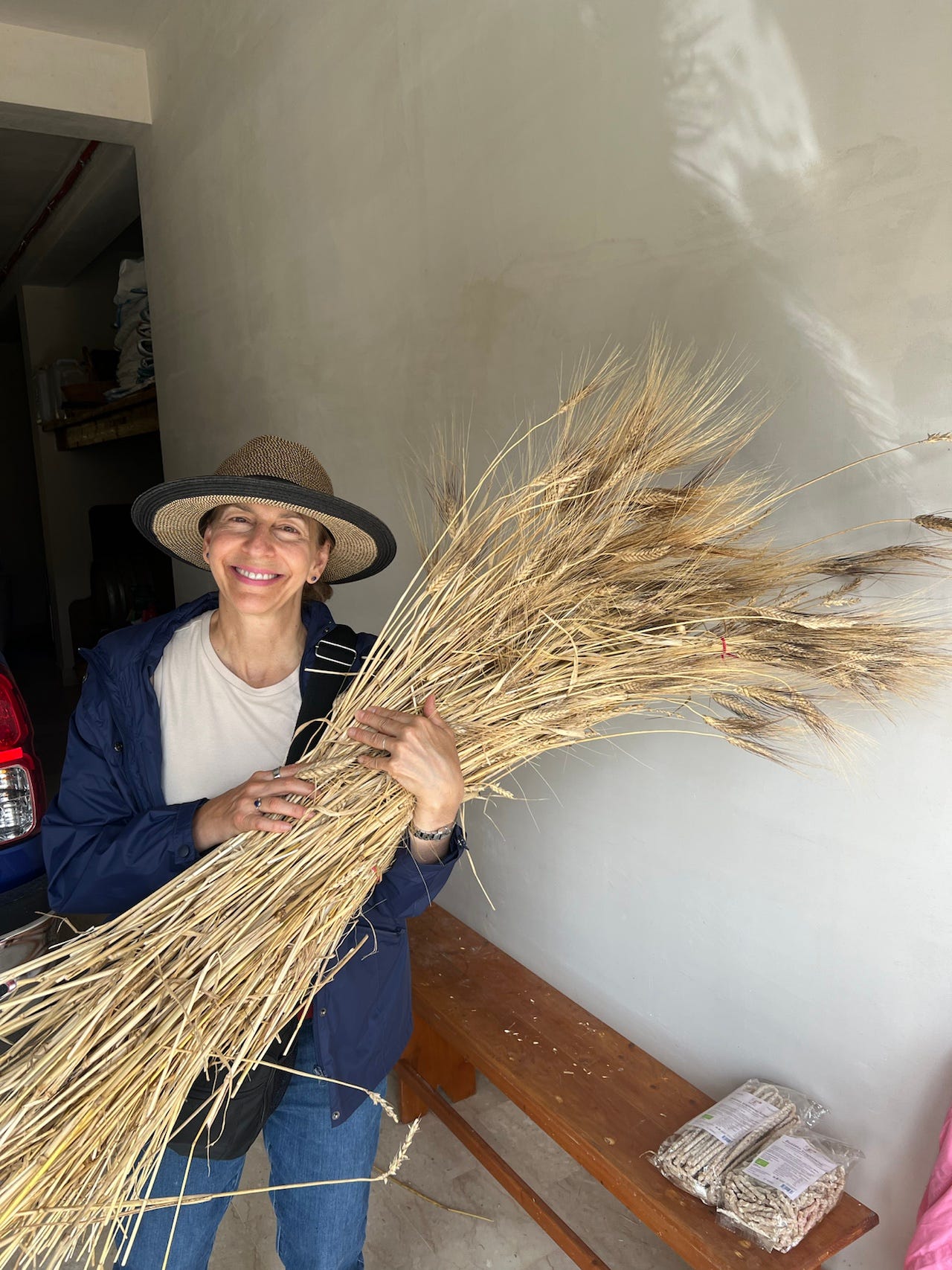
Naturally, I was happy as could be navigating the long stalks of wheat in my arms. It was better than any bouquet I’d been given, though the lovely ones Gianluca gave me upon meeting in Catania were a close second. (Special thanks to Rosaria for the video of the wheat blowing in the field.)
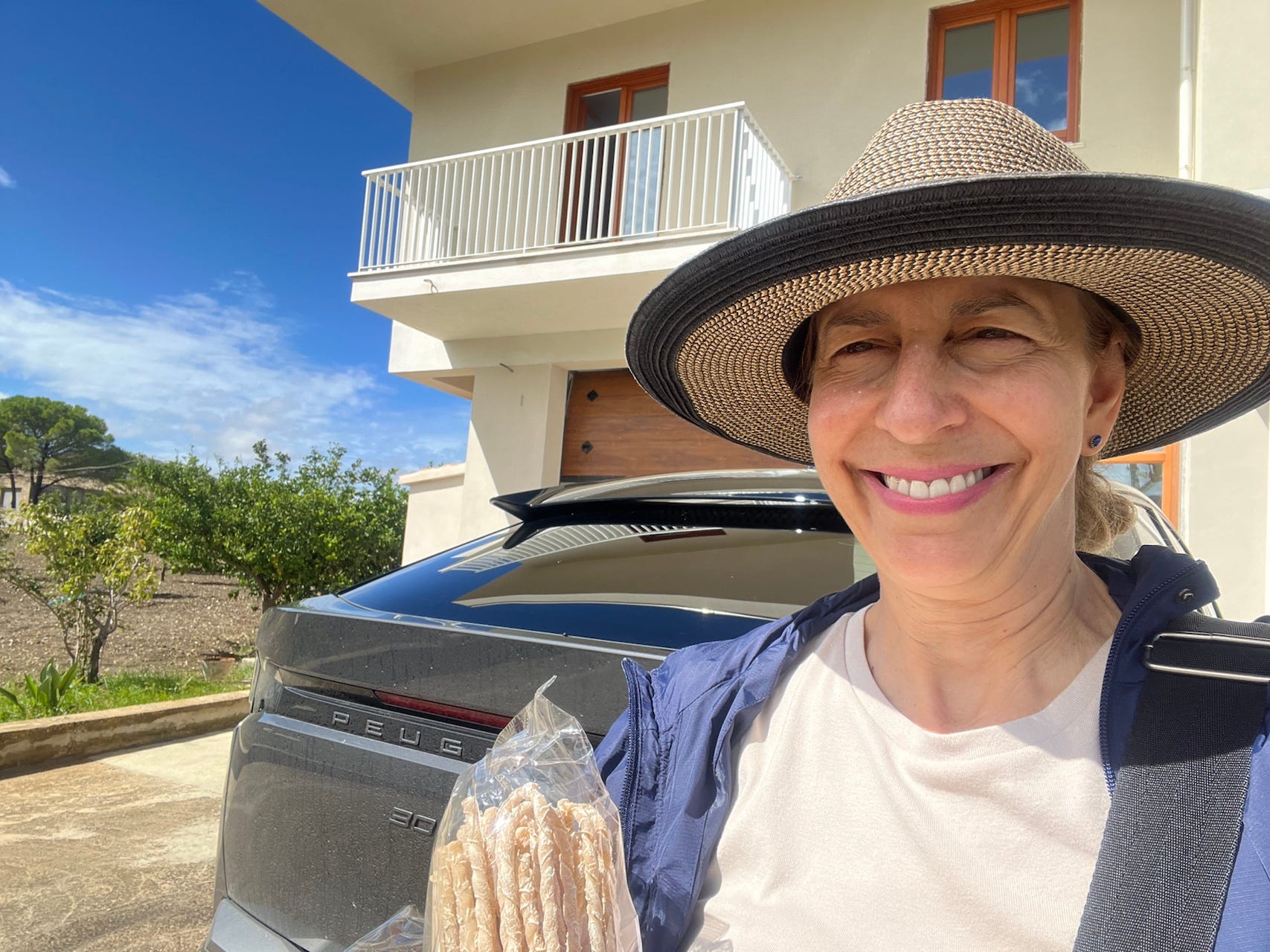
I purchased as much as I could feasibly take back. A few bags of flour, pasta, all commercially packaged. Phil wondered how it was going to work with our luggage already stuffed. I assured him no problem. We could always buy another piece of luggage. He smiled.
Little by little, each food-related stop we made expanded our knowledge of the agricultural scene in Sicily. Buseto Palizzolo is one of the places with the Valli Trapanesi DOP, an olive oil with Protected Designation of Origin.
Phil and Rosaria converged on the wheat grain. I thought about how I could take back more flour. Phil said that for all the technology available to farmers today, this visit showed the culture itself has been retained. Once more, we learned from the land.
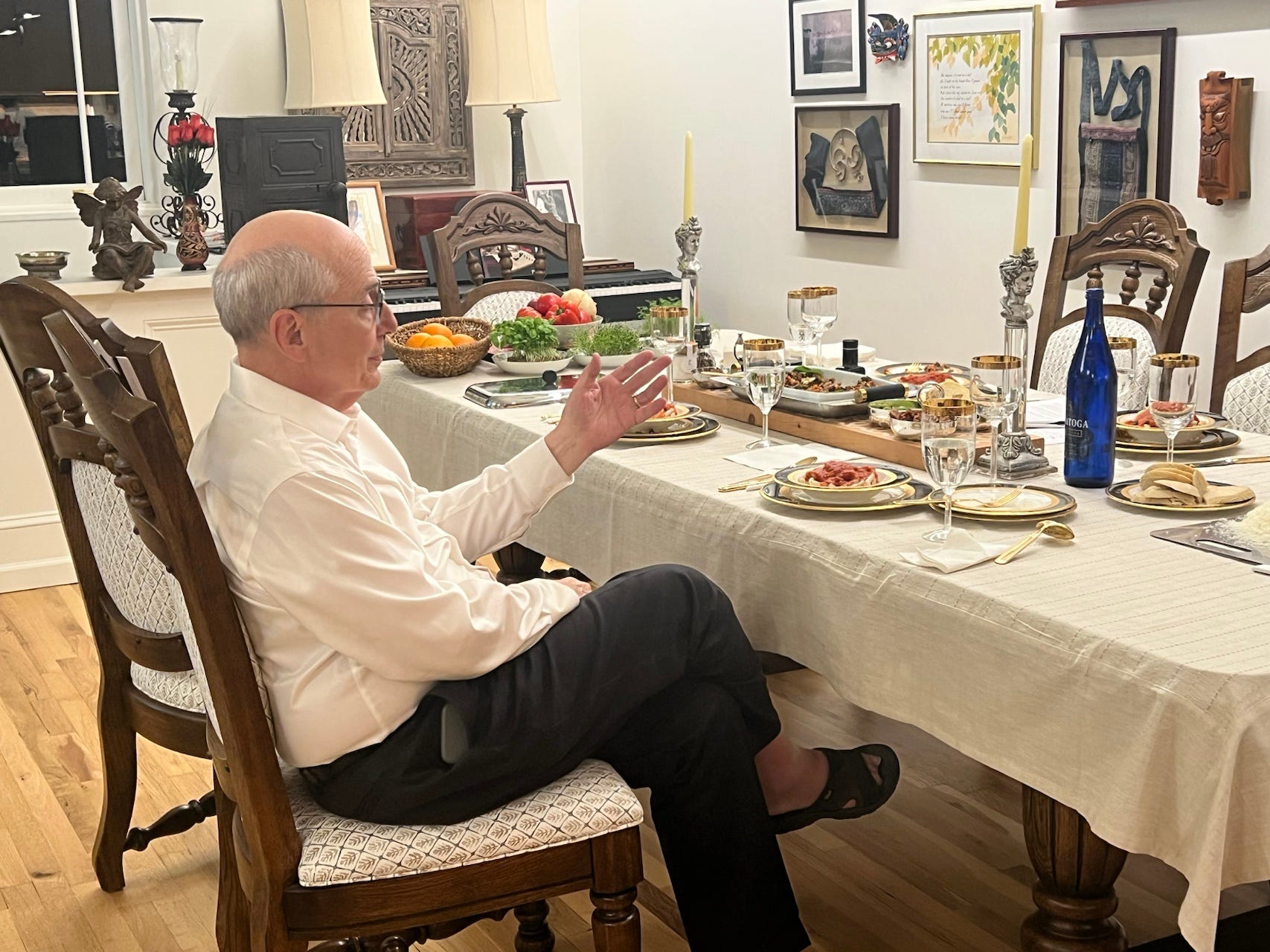
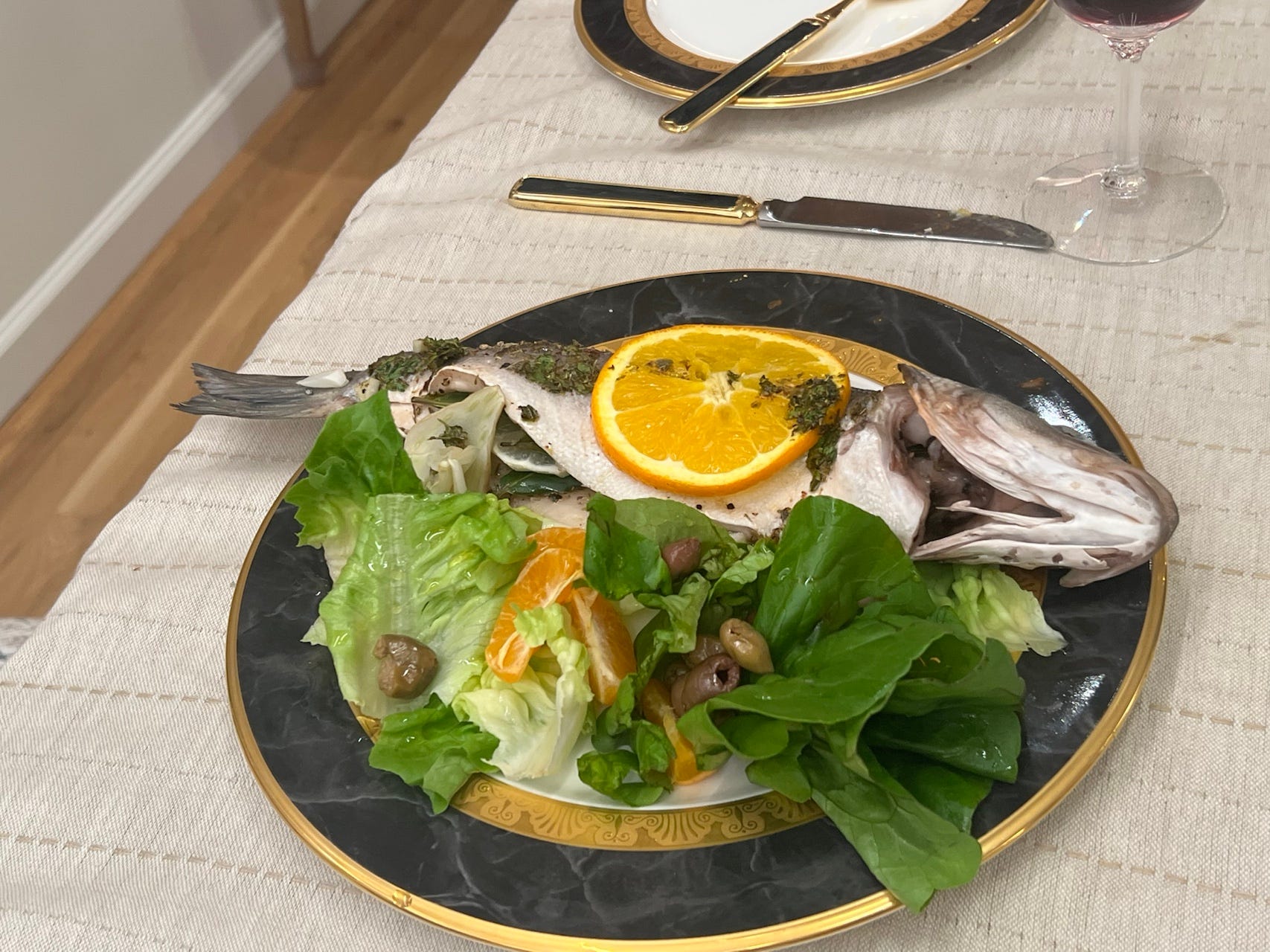
When we got home, I cooked the pasta first. For a Sicily-themed dinner party, I broke into the busiata trapanese lunga, the very long, twisted pasta strands. The pasta was made from the organic perciasacchi durum wheat semolina I’d gone looking for in the first place, so it was exciting and fun to serve.
The flour waited longer. This morning a loaf finally goes into the bread pot.