A Tour of Sicily in Four Courses
Lunch at the Anna Tasca Lanza Cooking School

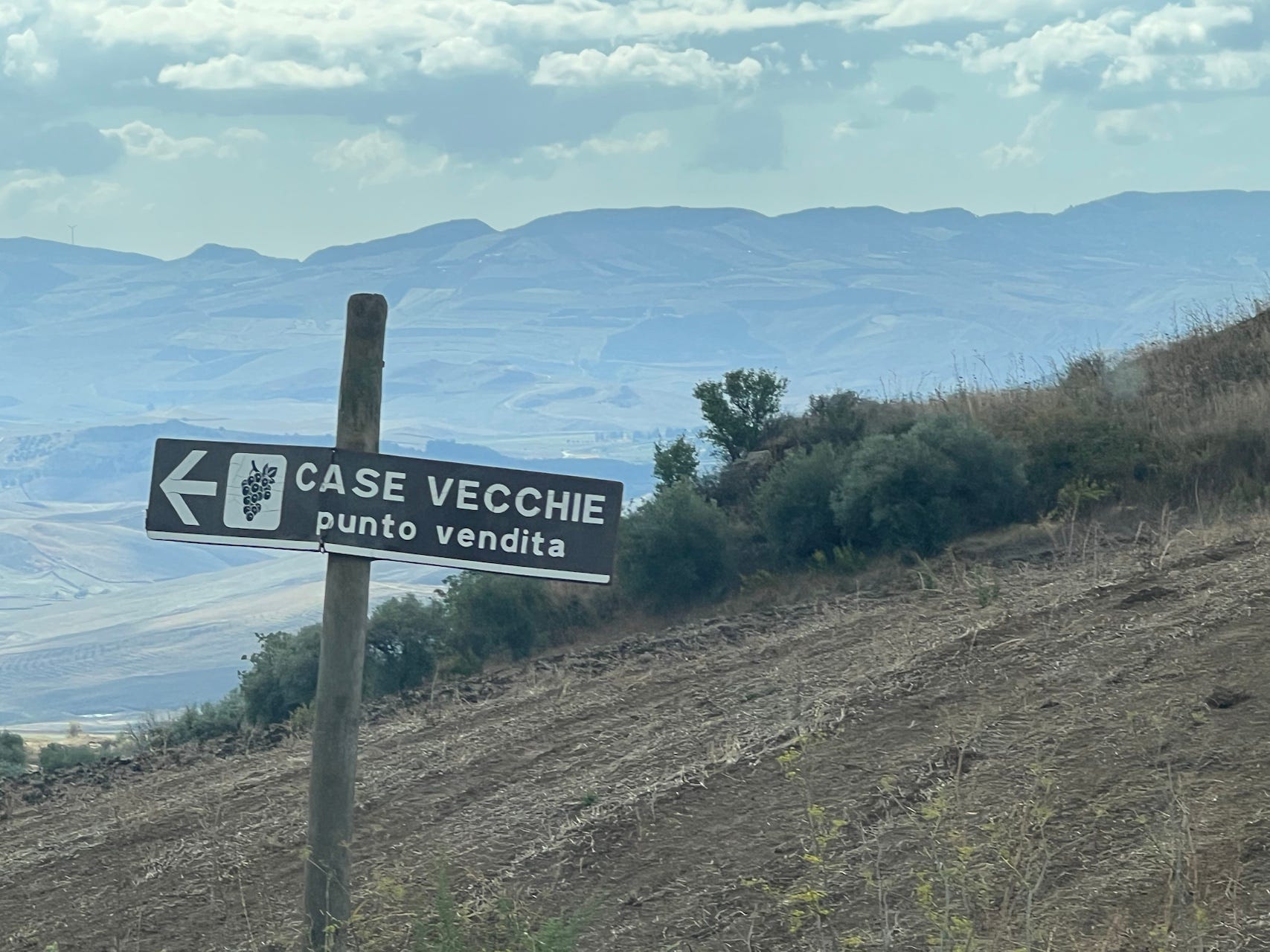
There was no way I wasn’t going to visit the Anna Tasca Lanza Cooking School while I was in Sicily. I’d wanted to go for a decade, but in all that time, my husband Phil was working full-time, life was busy, and I could never pull away. I’m not sure where I first heard about it, maybe I read about it online, but it came to my attention just as I was beginning to care more about food.
I had finished writing The Memory Book in 2014, and Chef Laura Rios had created the Kremsnita cake recipe in the back of it. I asked her to stay on with me because, like Phil, by then I was working, too. I sat at a corner of the dining room table every day, writing press releases, pitching to the media, and running marketing projects with a colleague in India. With all that going on, I needed help making sense of the Blue Apron meal-kit boxes piling up each week.
Sometimes the recipes in the Blue Apron boxes were simple enough, but other times they were involved, leaving me unsure what to do. But I kept them coming because I thought I’d at least get some good food out of it, and it was supposed to be easy enough. Laura stayed. She and I made over a hundred of those boxes between us.
Along the way, I watched Laura cook and slowly grew more interested. It’s a little ironic, because I’d never cooked much before. Watching her move through vegetables, proteins, fats, and carbs and turn out beautiful, simple dishes that tasted so good made me realize I might learn something from her and make something lovely, too. Even if it wasn’t lovely, it would be a personal creation, hopefully edible, with an opportunity to get it better the next time.
Almost but not quite
In truth, I once came within a wire transfer of going. In 2016, I found the program I wanted, the school’s “Autumn Flavors of Sicily” workshop but in the end I couldn’t pin down the date. The timing never quite lined up again, and life swept me back up. And so the Anna Tasca Lanza school stayed on my someday list for almost another decade.
Since then, I’ve developed my own style focused on vegetables, proteins, fats, and carbs. I keep meals very, very simple and try to find the highest-quality ingredients I can; given that, it’s hard to make a bad meal unless you burn it or cook it poorly. And that can and has happened. But you already know I love the Instant Pot (one of my favorite kitchen products just like the bread pot), and as long as I don’t steam the food to death, things work out pretty well.
That’s exactly what struck me about the food in Sicily. It can be simple and delicious precisely because the quality is so high. That’s something I love and try to follow, and I felt the Anna Tasca Lanza school embodied the same principle: a huge estate that is home to the cooking school, where they also produce wine and other foods on the farm.
We didn’t have time to spend a full week taking part in their Cook the Farm program[1], where people get directly involved in food production (the olive oil, the wheat harvest, the honey, and all the other aspects of the farm), but we could certainly come for an afternoon, have lunch with them, and pick up some tips.
On the road
Vallelunga is the nearest town to the Anna Tasca Lanza Cooking School. The road there took us past vegetable stands with homemade price signs, like little flags waving us down. Grapes, lettuce, red peppers, tomatoes, greens: purple, red, green, all the colors of a good plate.
Thank goodness Gianluca was driving. A glance to the right put me eye-to-eye with tall, dry stalks lining the road, and beyond them parched land, scattered trees, and undulating mountains in the distance. I could see ground being readied for planting, cut out from the grass, with rocks heaped nearby. I suppose the whole of it had once been grass and rock. What hard work, I thought. I hoped automation had made it easier to work the land and grow the food.
Wide sweeps of farmland, a paved road winding through them, beckoned us further in. Passing Valledolmo and the signs for the Appennino Bike Tour, we knew we were getting close. Soon a town lay in the distance, and the roads around it were nowhere near as good as the freshly paved stretch we’d enjoyed earlier. Gianluca slowed down, but some bumps still lifted us from our seats. It’s completely understandable why many Sicilians would rather see money spent on local infrastructure than on a bridge to the mainland.[2]
More signs appeared, including one for the Madonna di Miano. With respect, the Madonna would have to wait. I think she’d forgive us. Excellent food and cooking tips were calling. The school had asked us to arrive at 10:30 AM, and suggested 10:15 AM so we’d have time to get acquainted and be shown around before the lesson. Fortunately, when we passed the sign it was still short of 10:30, with only a short drive left, about five to ten minutes to Case Vecchie, which sits in Contrada Regaleali, the rural district outside Vallelunga.
More lush green hills rolled by, rows of olive trees and green stalks shooting toward the sky, the mountains standing as overlords of this docile domain, at least to a tourist’s eye. It was still. No tractors rolling. Calm, waiting for the time the land would be worked.
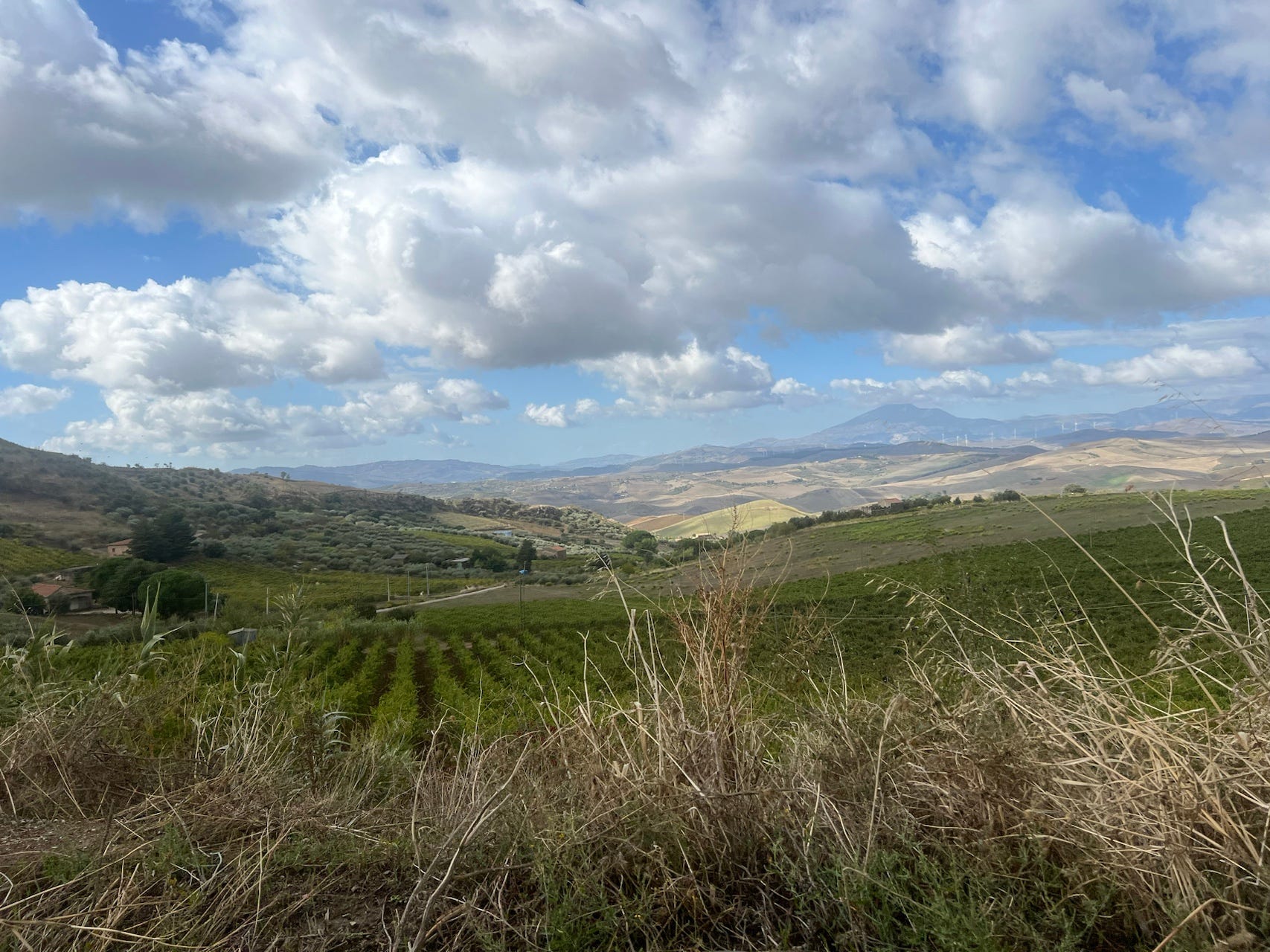
I saw a sign: “Case Vecchie punto vendita,” with a patchwork of greens behind it, slopes and mountains rising beyond. Case Vecchie is the school’s hamlet within the 600-hectare wine estate, Tenuta Regaleali. The Tasca brothers bought the land in 1830, and generations of the Tasca d’Almerita family have cared for it since.[3]
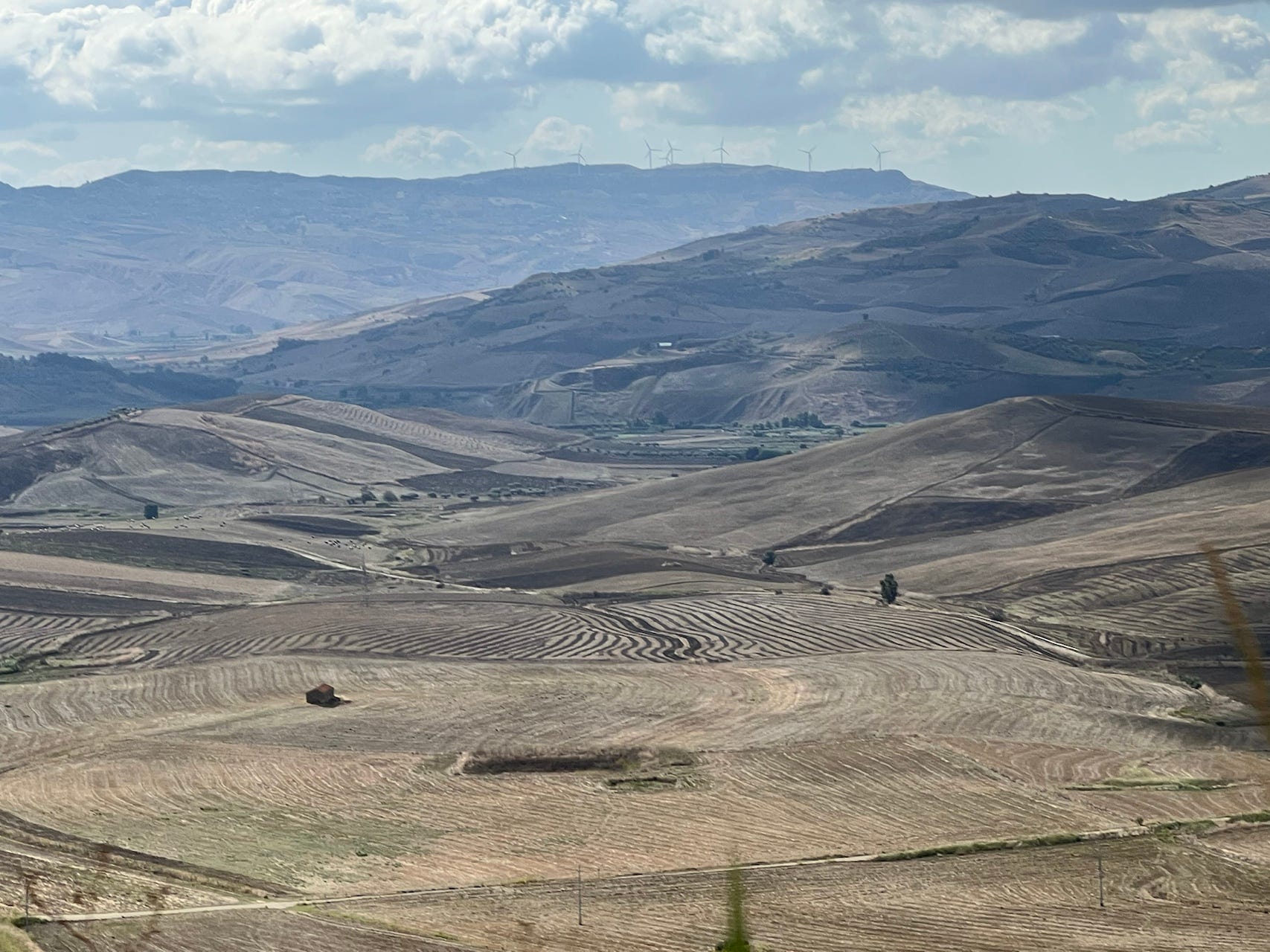
Around we went, the land opening into a maze of harvested fields, the crops already in, the bare earth combed into long contour lines, waiting to be planted again. A lone stone farmhouse sat out in the middle of it, and along the far ridge a line of wind turbines stood against the haze.
Anna Tasca Lanza Cooking School
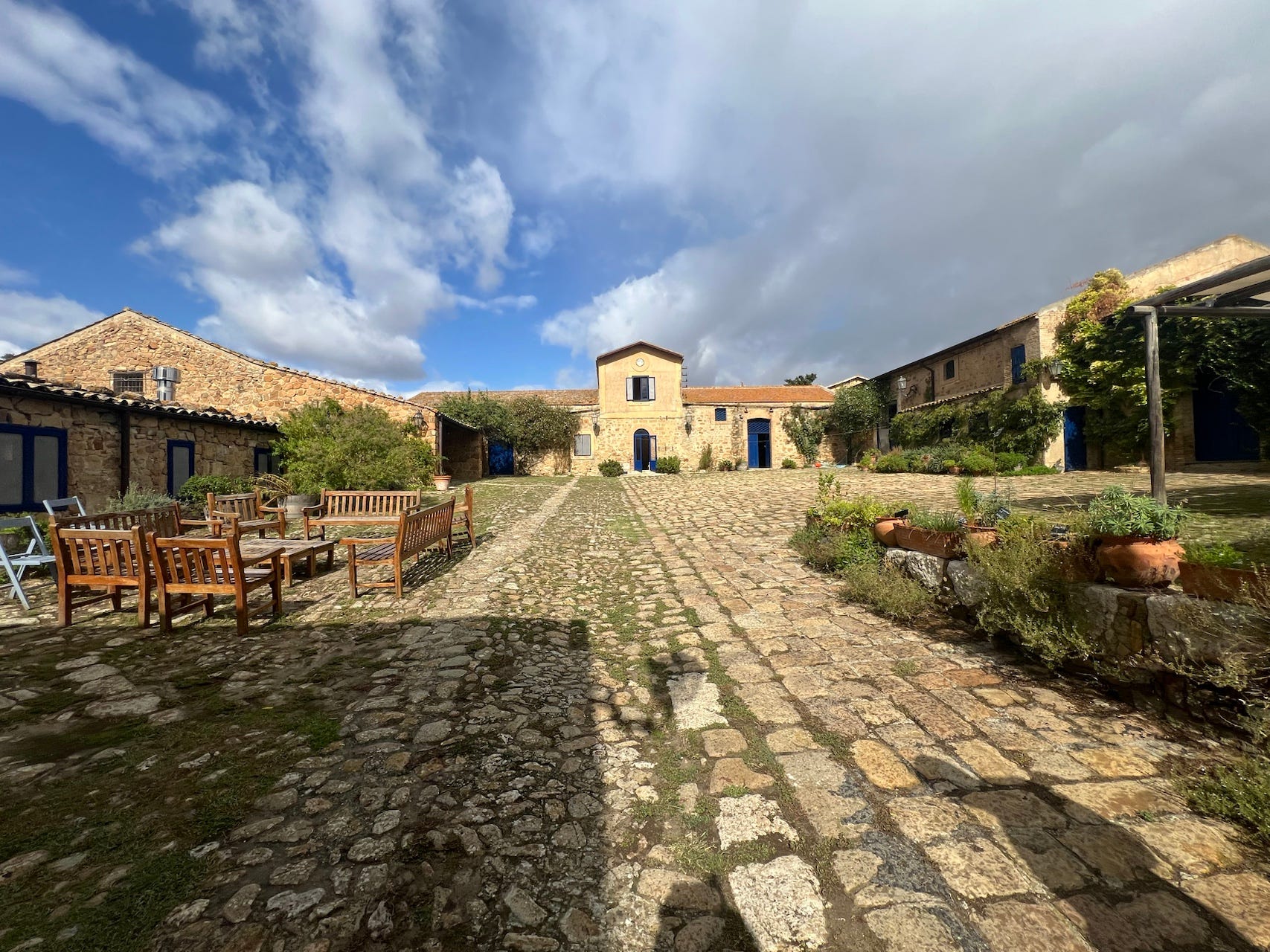
Finally, we pulled in. The school occupies a large honey-stone farmhouse property, with bold blue accents lining the window frames and a gate of the same blue doors with an iron arch fanning out above it.
Viviana Calvagno, the hospitality coordinator, met us and ushered us through the gate into a passageway between two buildings. At the end, we stepped into an inner courtyard, low farm buildings on every side, each with the same blue trim. A few wooden chairs and a table stood to one side, and plants in large pots lined a ledge.
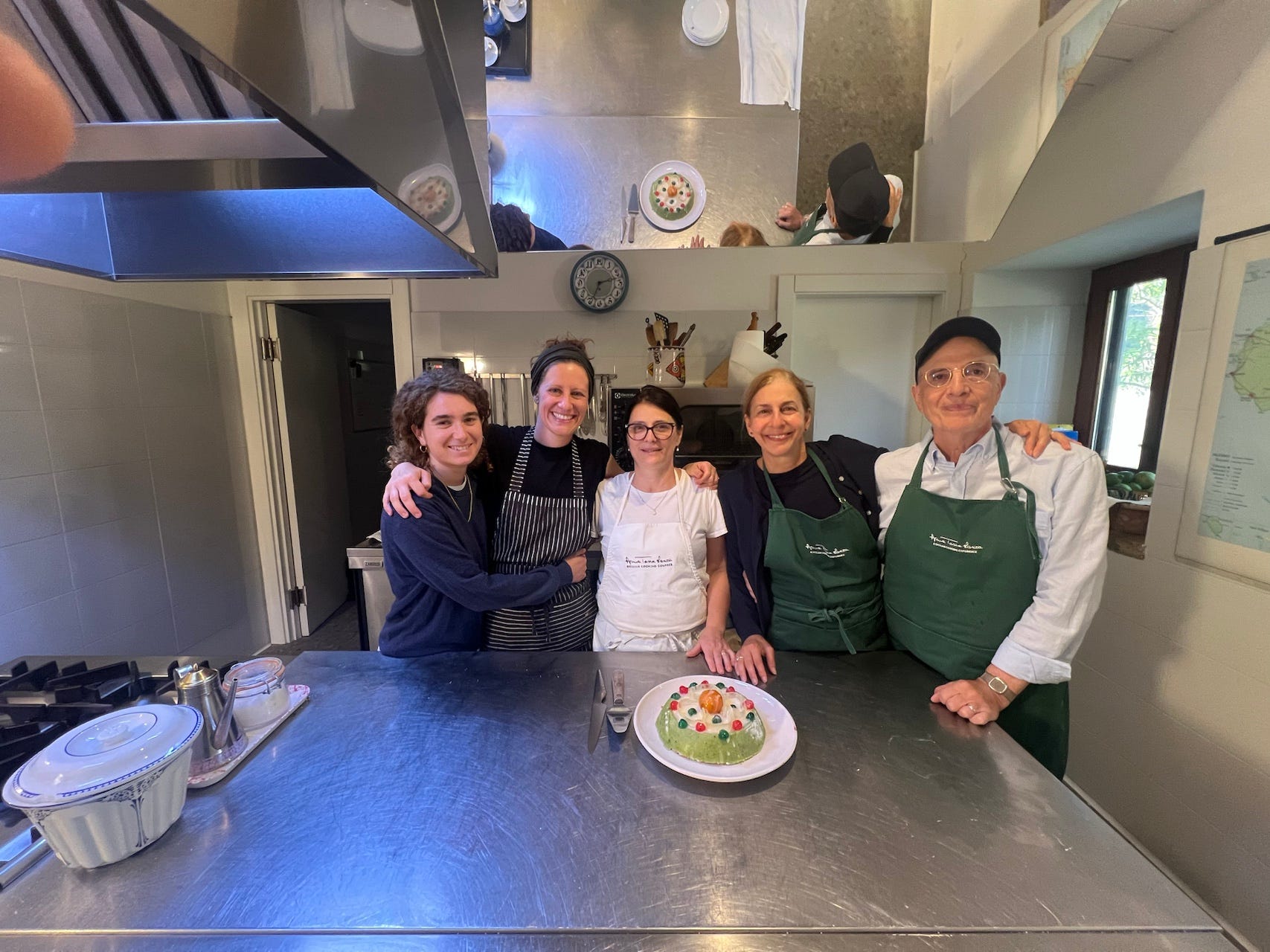
We’d be cooking in the kitchen, and Viv led us there, where we met Leah Morano, the chef in residence. The room was long, with a table that seated twenty. A floor-to-ceiling china cabinet held glassware and serving pieces, and a framed award from the Culinary Institute of America hung nearby with a few photographs. At the far end stood a bright stainless-steel kitchen, and something was already waiting on the counter: flour and water. I looked around. In a niche sat a wooden box stamped with the Almerita and Tasca names, plates standing in a vertical holder, framed artwork of mushrooms, and a vase-like container filled with tall kitchen tools, like long-stemmed plants.
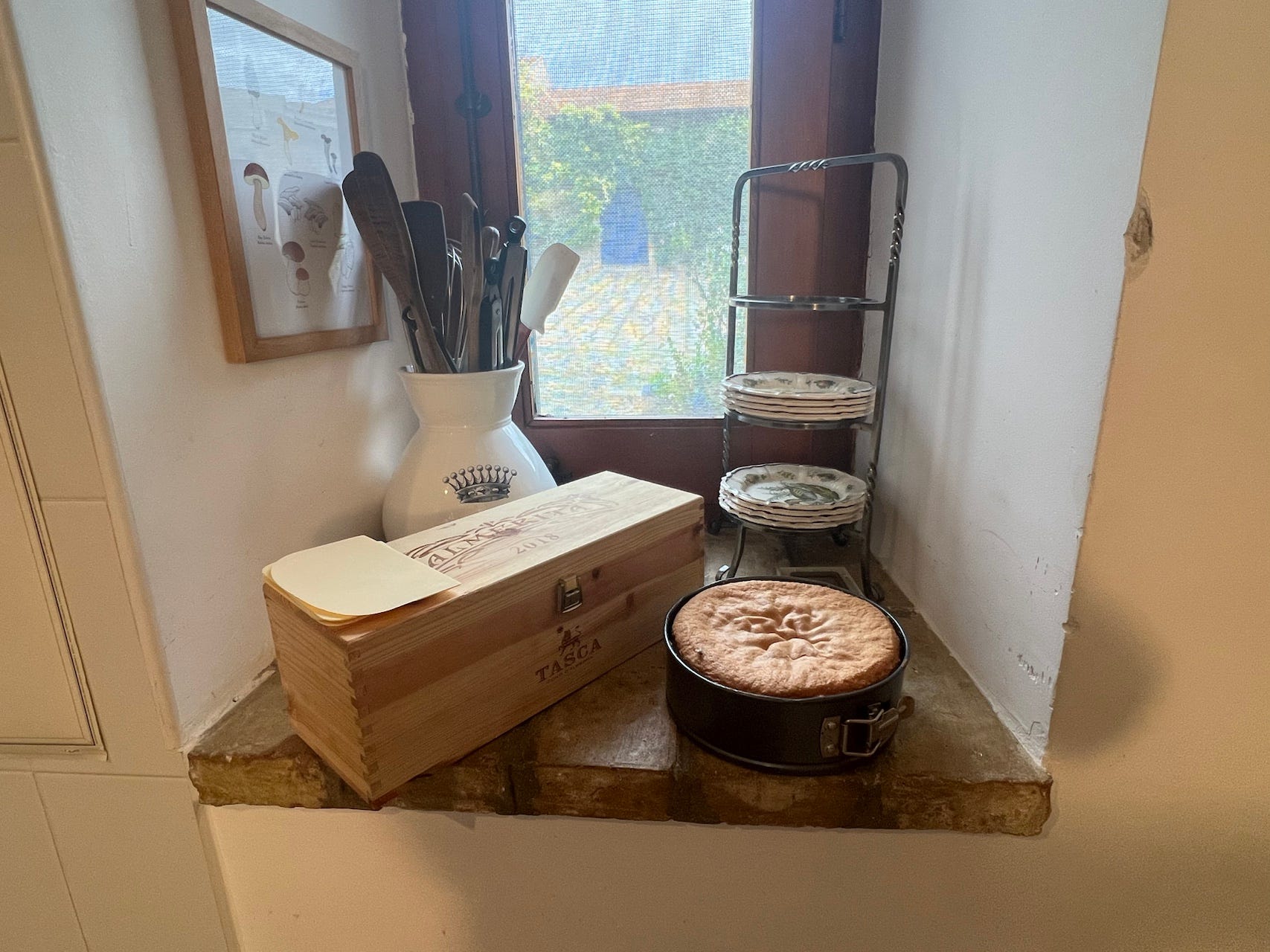
Something freshly baked rested on the stone there, too, and I wondered whether it was part of the day’s dessert, and what we might do with it. I often had that feeling with Laura: not being much of a cook, or a cook at all, I usually had no idea what she had in mind. It would emerge as we went, and I helped where I could. It never escaped me how interesting it was to watch and learn from Laura.
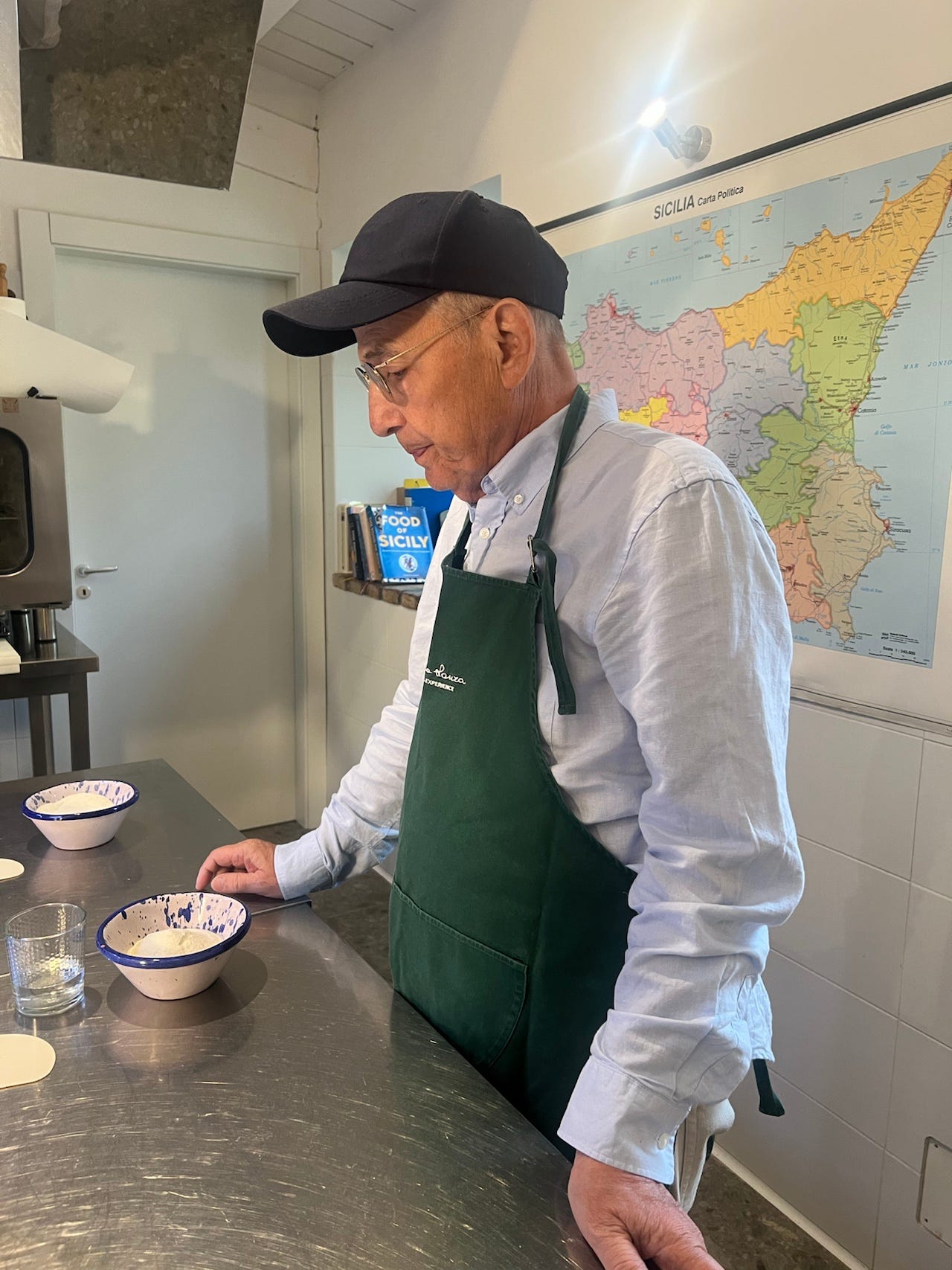
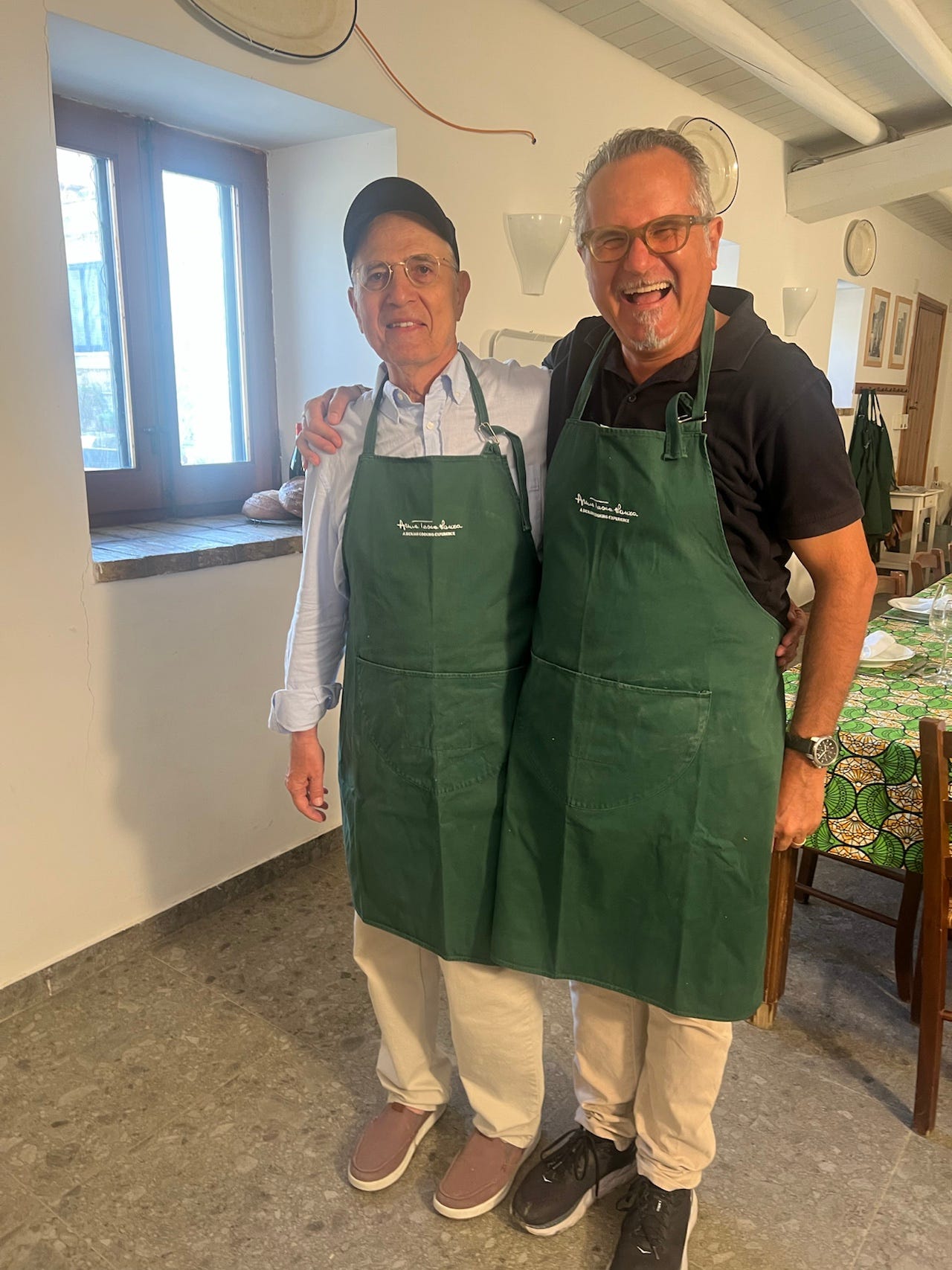
Back to reality in the Anna Tasca Lanza kitchen, we donned aprons, and I got a kick out of watching Phil stare at his little bowl of flour and water. He seemed to be thinking, hmmm… this is going to be interesting. Gianluca, meanwhile, jumped right in, knowing exactly what to do: add water to the flour. Phil watched Leah and got right to it; they handed him a plastic wedge to scoop up his flour and knead it. A fish to water, I thought. Flour to water, actually. Once the little balls were done, they were wrapped in Saran and set aside.
At the stove
Leah turned our attention to flour, salt, and pepper. We’d be making a chickpea paste for the panelle, Sicily’s golden chickpea fritters. She did the honors of getting it going. It could stiffen quickly, so she urged us to keep it moving. She jumped back in to make sure it was the right consistency.
Before long we were slathering it onto a plate, like icing a cupcake end to end. I noticed Phil lifting his head now and then to check how Leah was doing it. Who knew Phil could be so engaged by chickpeas? He took the job to heart, which was good. I’d need him just as interested back home in our New York kitchen.
You can find these fritters on the street in Palermo. They’re a popular street food known as panelle.[4]
Phil smiled, that he could ice cupcakes, or rather spread the chickpea paste evenly across a plate.
We couldn’t revel in small wins for long: Leah already had two large wooden cutting boards in her hands.
Later, once the chickpea paste had hardened, she showed us how to free our slender creations from the plate with a knife. Then she cut them into triangles so they could be slipped into hot oil, turning them “golden.”
Bravo, Phil
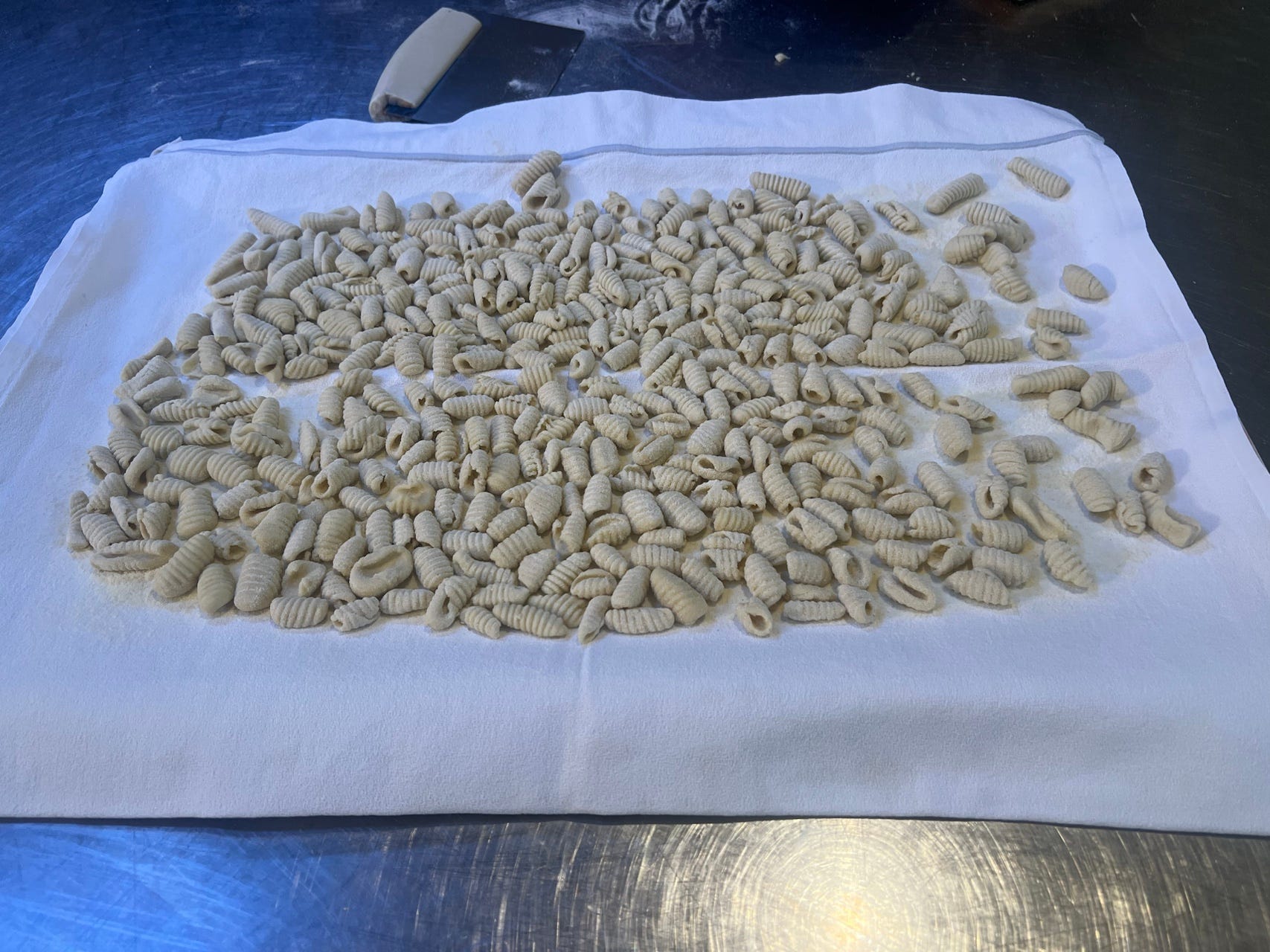
It was great to see the demo of the cavatelli, the little semolina-and-water pasta we’d toss with fresh tomato sauce and ricotta salata. Leah rolled the dough into a long pencil shape, pressing with the lower part of her hand to lengthen it, then cut it into pieces and pressed each against a ridged wooden tool with the side of her thumb, rolling it off so the wood left its marks. In the end you have a little piece of pasta “with all these nooks and crannies for sauce to get into,” Leah said.
“Bravo,” said Gianluca, seeing Phil quickly master the process. Gianluca got into the spirit of it too and was also very good. I was in the background taking a bit of video, thinking about how we could recreate this at home.
The pasta looked easy enough to make: it was just semolina and water, and once you had the right consistency and temperature, the dough rolled out easily, and you could use that little wooden tool to shape the cavatelli.
Phil remained industrious, turning out one little cavatelli one after another while the rest of us stood around chatting about cooking.
The pasta sauce had been made in advance so we were set there.
Stretching the meat
A nearby tray held cut white bread, a quarter-loaf left uncut, bay leaves, red onions, pistachios, ham, cheese, and an egg.
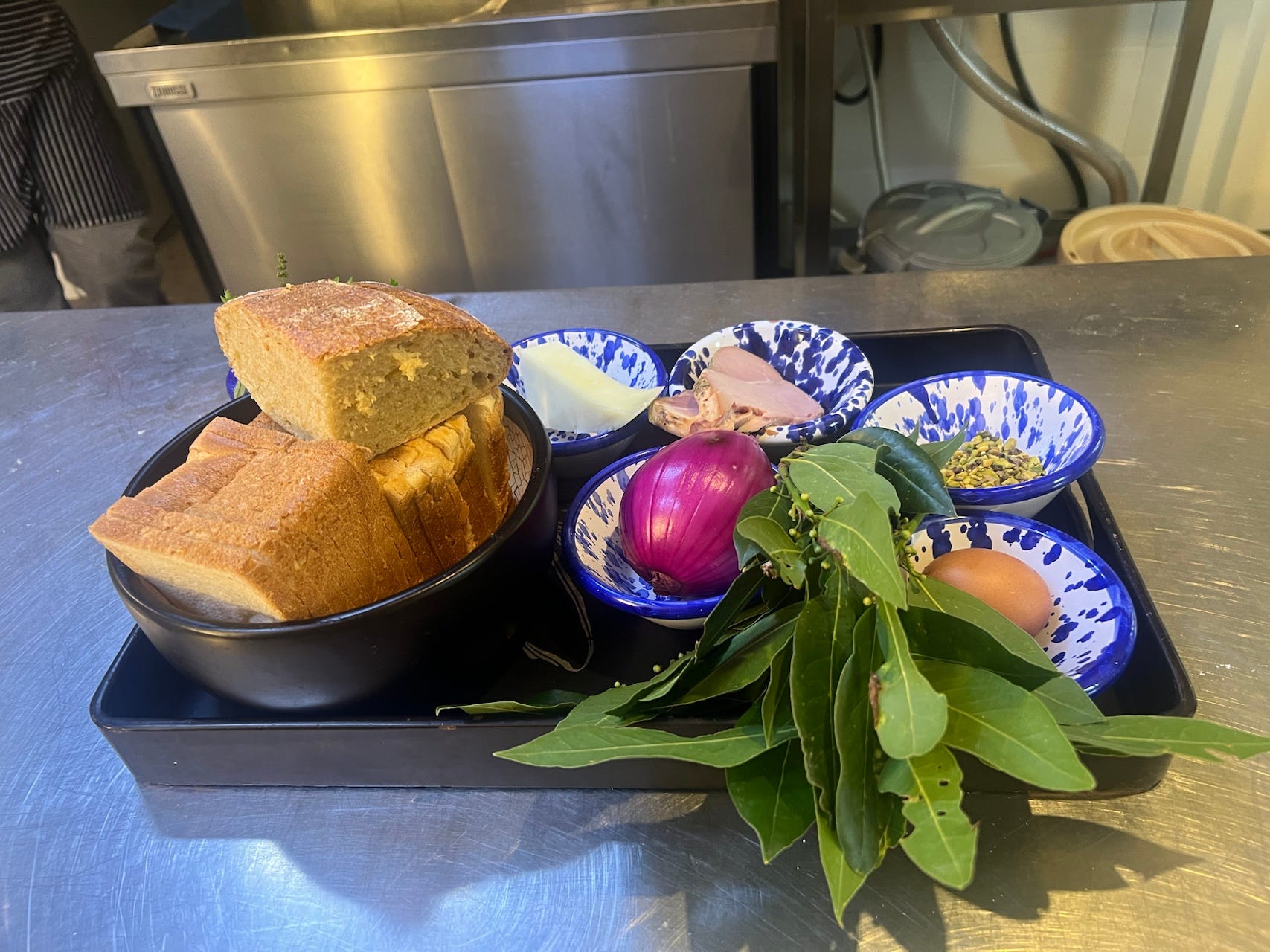
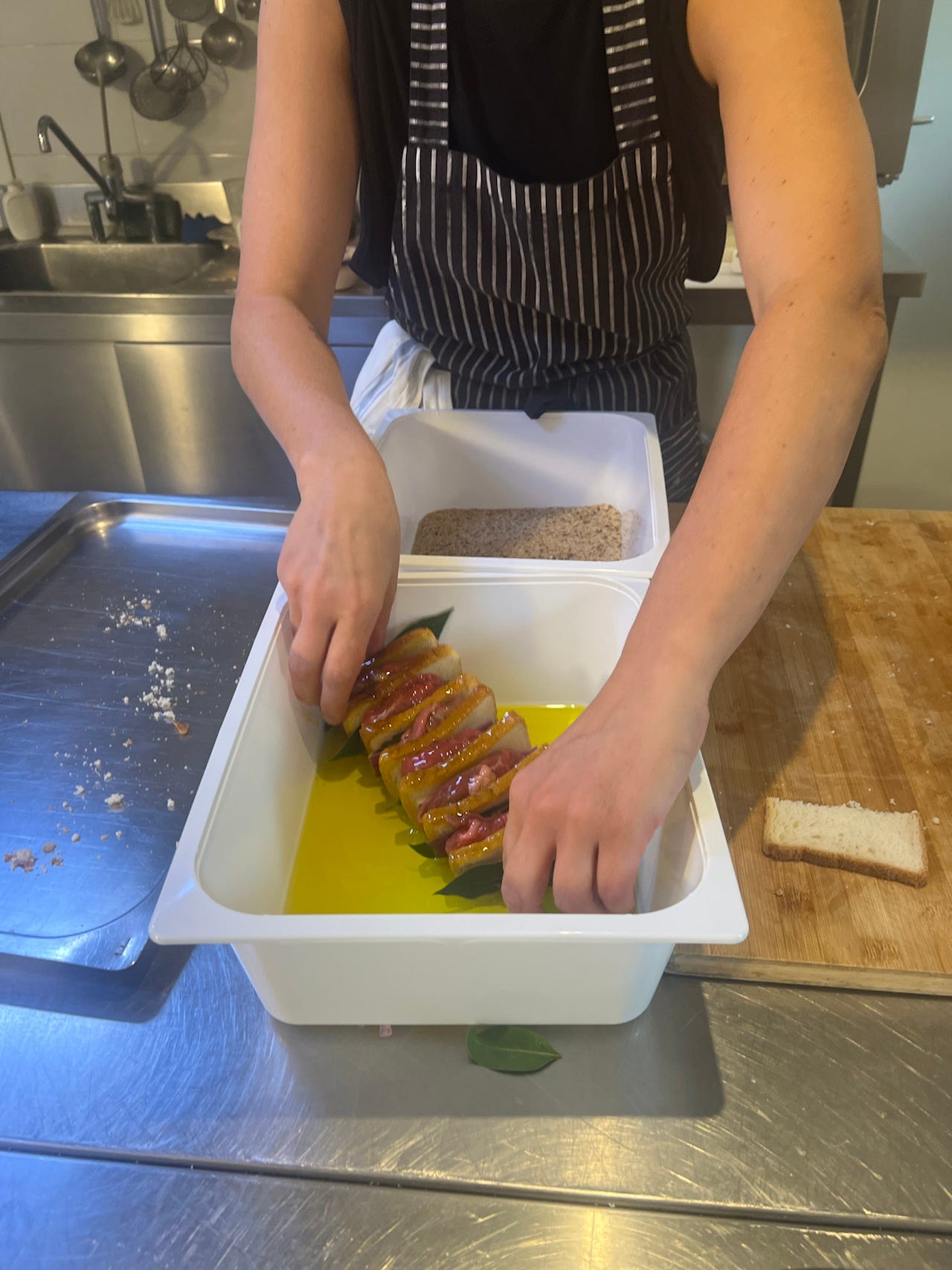
Leah said that we’d use some of these ingredients to make a savory filling, wrap the beef around it “like a burrito.” It was called involtini di carne. Our job was to put some of the filling on the beef, then fold the beef’s corners around it so it looked like a little packet.
Then we were going to skewer that little beef packet with a bay leaf and slices of onion between the bread, roll the whole thing in olive oil and breadcrumbs, and bake it. Phil listened intently and seeing him take to the role of sous chef so naturally really inspired me. This was going to be good. He who had not planned to immerse himself so deeply was knee deep in things.
Leah explained that this was a way to stretch a small amount of meat to feed many more people; carried up into the aristocracy, it was enriched with luxuries like pistachios, ham, and cheese, which turned it into something far more elevated.
Even that was a tip in itself: pistachios, especially crumbled, elevate a dish, and I use them all the time at home, especially as an edible decoration on homemade soups.
Once the skewers were rolled in a deep plastic bin of olive oil and set on a baking dish, Phil and Gianluca stood for a picture, but there was more to go.
Enza’s cake
The dessert was intriguing. I don’t eat much dessert, but this would be the exception. Leah reached for a cookbook and opened it to an aerial view of a cassata near the center. It’s a luscious cake with candies on it. Leah said, “This one is totally about pleasure.”
And honestly, that’s how I see dessert. I eat very healthfully and watch where my ingredients come from, but that doesn’t mean I turn down everything that’s sweet. Everything in moderation, as they say, and this was today’s moderation.
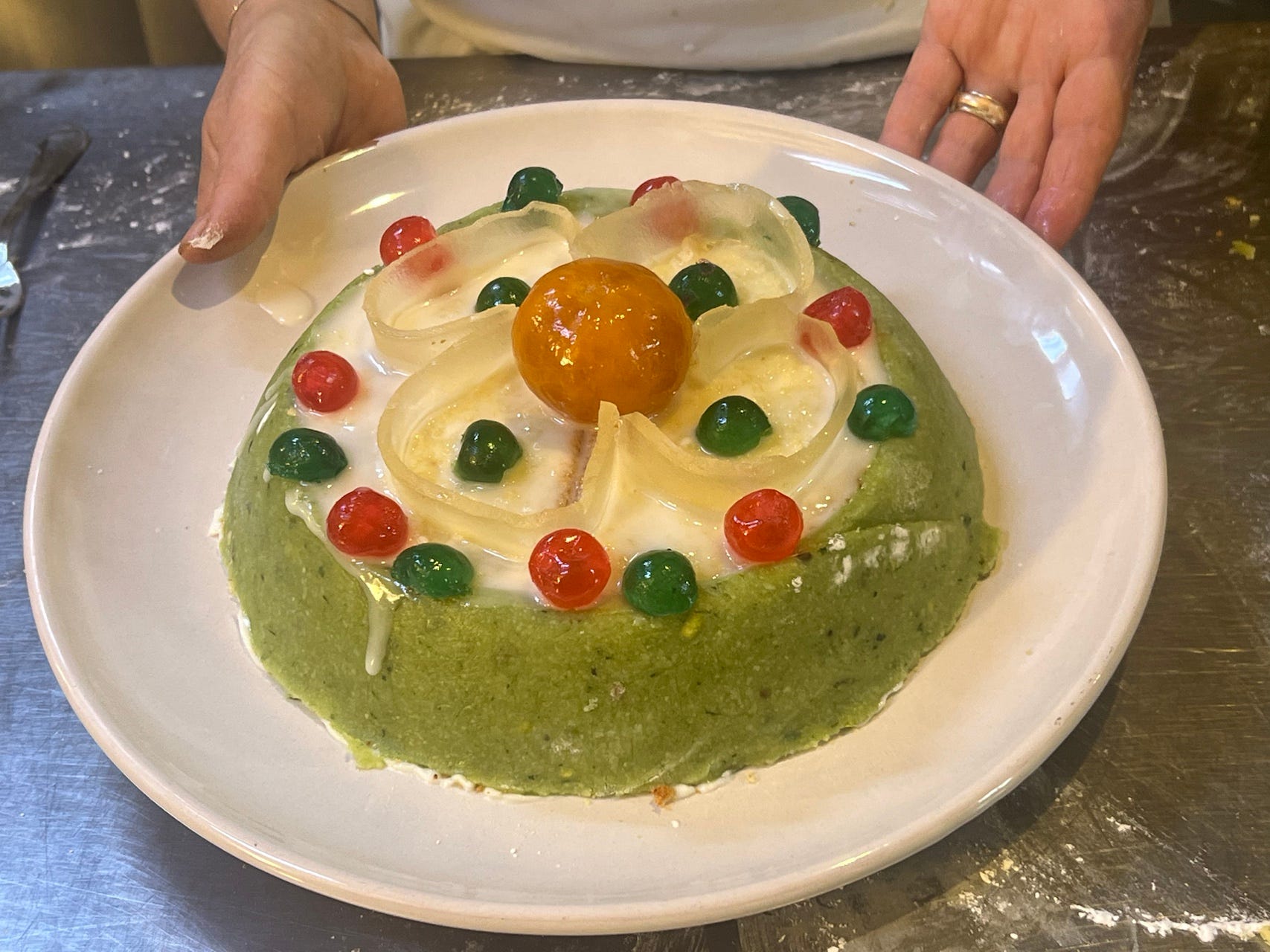
Leah said cassata starts with marzipan lining the pan. A layer of sponge cake soaked in limoncello is the base. That is followed by sweetened ricotta, which she described as “beautiful ricotta from our shepherd.” After that there is another layer of cake. On top of that goes the glaze and candied fruit.
“It’s a very structural, celebratory dessert,” she said. (You can find the recipe in The Food of Sicily: Recipes from a Sun-Drenched Culinary Crossroads, by Fabrizia Lanza and Guy Ambrosino, photographer.)
All the while, pastry chef Enza Di Gangi was working away. Leah told us Enza has loved making pastries, cakes, and sweets all her life, learning from her mother, her grandmother, and the rest of her family. She’d been at the school for 26 years. My goodness, how many cassatas she must have made in that time!
“The beautiful thing about this is that it’s very ornate, and the finished presentation is really beautiful. Yet it’s a pretty forgiving process. We do it in layers, so if you have to patch a little bit, it’s ok. You won’t see it in the front.”
How did Enza make such a well-structured marzipan?
It looked hearty and edible as it was, tempting, even, in a green that said go, like a street sign. The color, Leah explained, comes from blanched or charred greens; to that go almond flour, pistachios, and powdered sugar, rolled out into sheets. Enza lined a pan with a strip of it to form the cassata’s edge, trimming the overhang so it met the rim exactly.
“If you have time, it’s best to let this dessert set in the refrigerator overnight. But you don’t need to bake it or anything like that.”
Remember the cake sitting in the niche? It turned out to be a sponge cake, waiting to be used in the cassata.
Phil was right there alongside Leah when she asked if anyone wanted a taste. He was perfectly positioned, too, when she cut the sponge cake in half and held it to his ear so he could hear it: “sounds like a sponge,” she said, pressing the sides of the cake. The effect comes from eggs alone, which, Leah said, Enza beats for quite a while.
The cake isn’t very flavorful on its own, which is why the limoncello goes in. Enza sliced the sponge into layers and laid them into the pan, trimming any edges that hung over the side.
Enza picked up a spoon and a measuring cup of limoncello, and spooned it over the slices of cake lying in the pan.
“Do you want to taste limoncello?”
“Sure,” said Phil.
In the meantime, Enza picked up a bowl and began spooning out fluffy white puffs of sweetened ricotta. Did she fly into the clouds for this one? Leah invited us to taste it. Phil demurred, but I grabbed a spoon.
I could see exactly what was happening here, even before Leah said it: “You really do have to have all the beautiful elements done to the level Enza managed.”
And this is where I’ve come down to in my kitchen these days. Beautiful ingredients prepared well. Do that, and you have a shot at a great meal. It won’t necessarily be a fancy one, but probably a truly delicious one.
Three more long slices of cake were layered over the ricotta. Then Enza set a plate over the pan and flipped the whole thing, so the bottom of the cake pan became the top. She prepared a lemon-and-sugar glaze, mixing until it reached a thick consistency.
She spread the glaze on the cake. Then came the candied fruit, and one of them, Leah said, was candied squash.
Is it really squash? I asked.
It really was: zuccata[5], made from a long, pale Sicilian gourd that isn’t much to taste on its own but candies into a nice decoration. I’d never heard of such a thing. I’d have to remember that one.
A break for the “chefs”
Viv had set up a table outside with white wine and the panelle. Salted and with lime, the panelle were addictive. And this is coming from someone, me, who never eats anything fried.
The sun shone. I felt a light breeze, and breathed slowly.
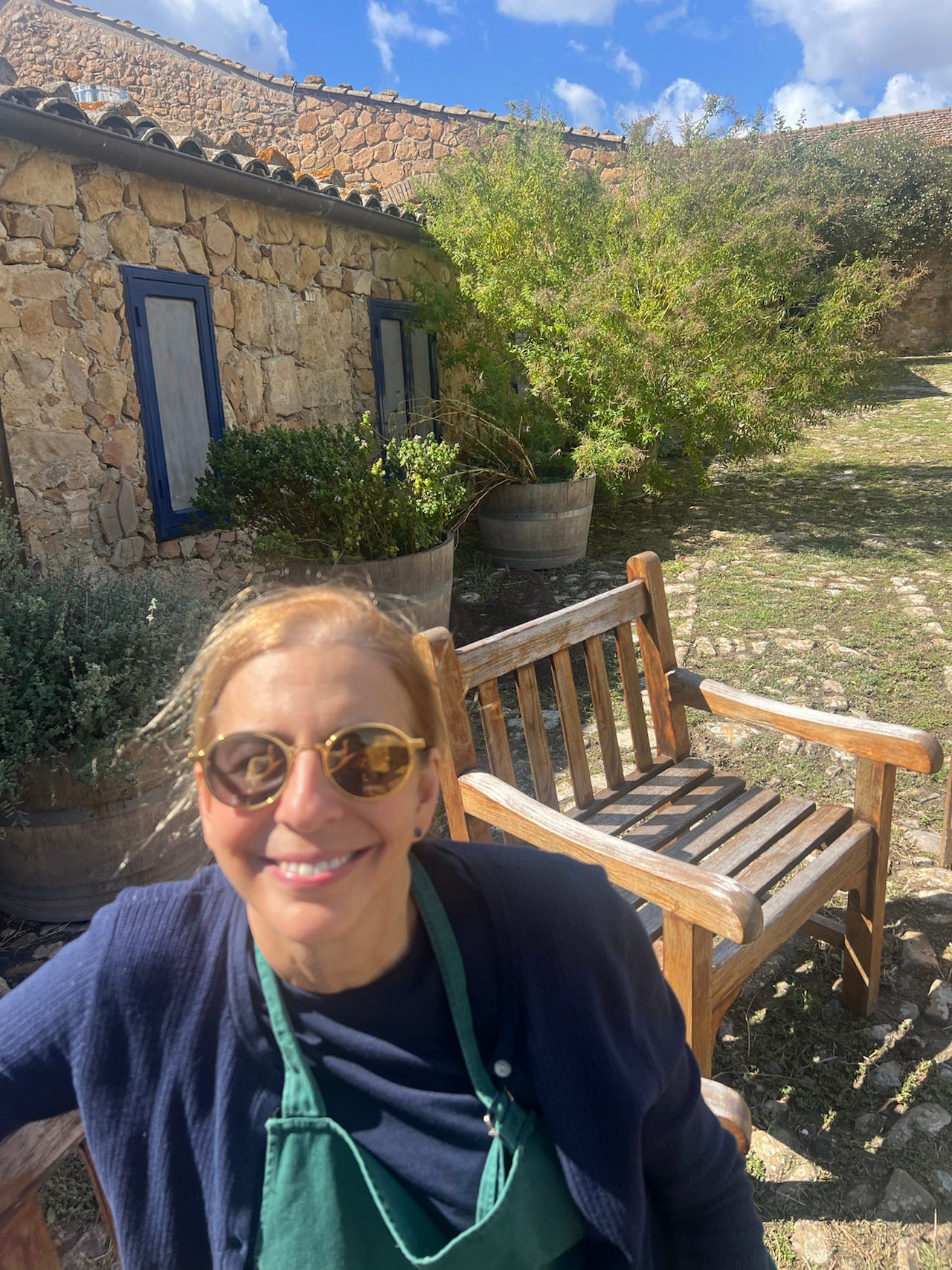
We went back inside and sat down for the meal. As we did, all I could think of was the school had been worth the decade of longing. I was here with Phil and Gianluca, both of whom, especially Phil, had immersed themselves in making pasta, tasting marzipan and turning the chickpea creation on the stove. Food is family and friends. It’s the love it takes to create it, and share it. Perhaps that was the best insight I gained for my own table. I share it for yours.
Getting There
The Anna Tasca Lanza school sits within Case Vecchie, a cluster of old farm buildings on the Regaleali estate near Vallelunga Pratameno, deep in agricultural Sicily. The school puts both Palermo and Catania at about a two-and-a-half-hour drive, with the trip becoming closer to two hours if you’re leaving from central Palermo. Another option is the train. The nearest station is Roccapalumba-Alia, about an hour by train from Palermo, and from there, Case Vecchie can help arrange a shared shuttle to their location.
Note:
Our time at the Anna Tasca Lanza school deepened our understanding of Sicilian living. Food and custom and the land are all bound together here. That theme runs through Phil’s new book, which travels, as its subtitle has it, from olives to algorithms. Philip Fischer’s You Are AI’s Best Friend—From Olives to Algorithms: A Human Guide (Minted Prose) is available on Amazon.
[1] Cook the Farm is the school’s immersive food-education program, founded in 2016: Cook the Farm, Anna Tasca Lanza.
[2] The proposed Strait of Messina Bridge has long drawn local opposition; the “No Ponte” movement argues the money should go to existing infrastructure instead: NPR.
[3] Tenuta Regaleali and its history, the Tasca d’Almerita family, on the estate since 1830: tascadalmerita.it. The Anna Tasca Lanza Cooking School at Case Vecchie: annatascalanza.com.
[4] On panelle as a Palermo street food, see “Panella on Wikipedia.
[5] Zuccata is candied cucuzza, the long, pale Sicilian gourd, traditionally used to decorate cassata and other Sicilian sweets: Specialty Produce.